
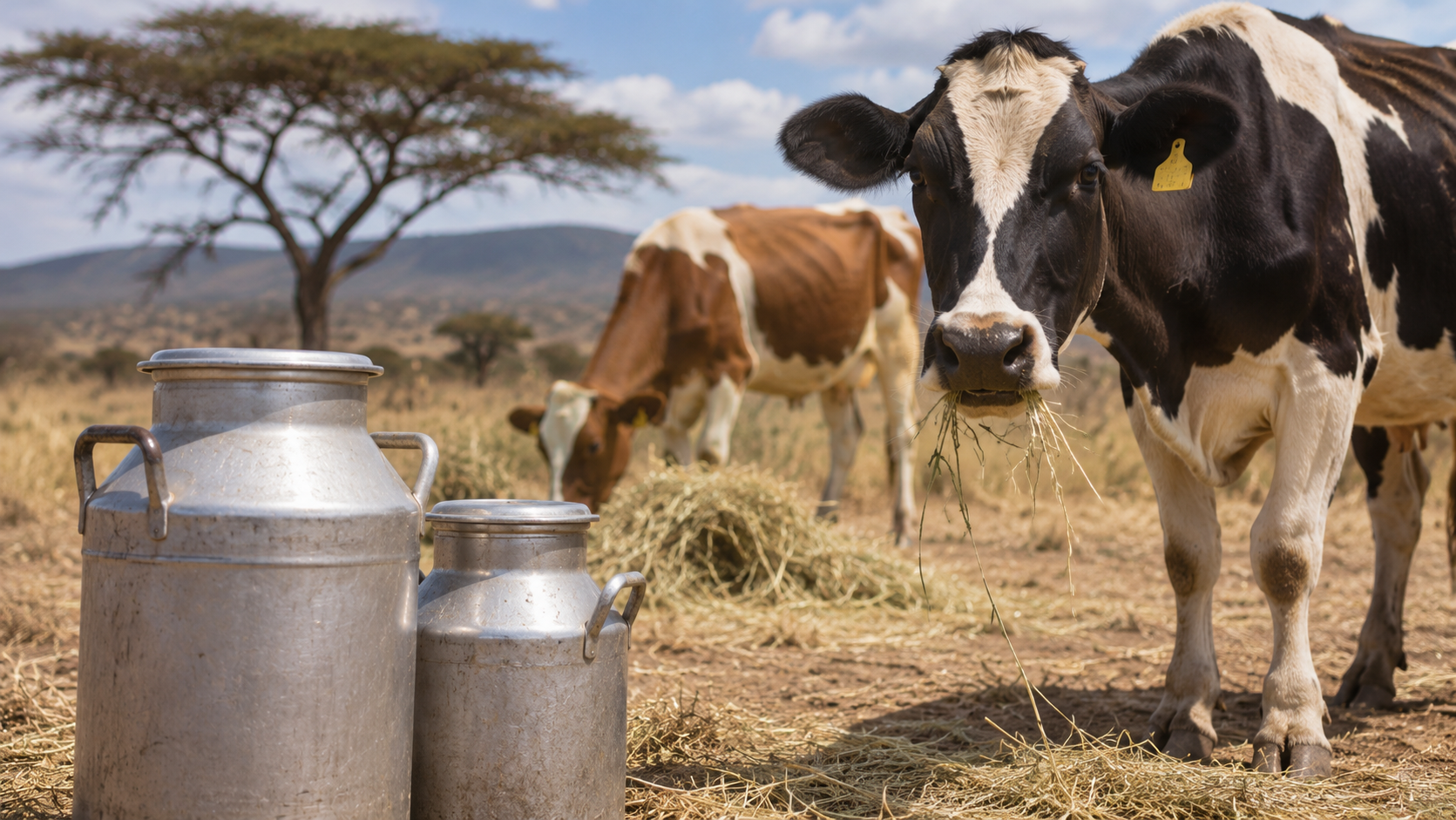
Kenya’s milk shortage is deepening as prolonged drought reduces dairy production, increases livestock feeding costs and pushes up consumer prices.
Dairy farmers are struggling to maintain production as pasture and water supplies decline, according to reporting by Al Jazeera’s Hafsa Abdiwahab Sheikh.
Meanwhile, consumers and businesses in Nairobi face rising prices and limited milk supplies.
Kenya’s milk shortage hits farmers
In Kajiado County, dairy farmers have reported significant production losses over the past three months.
Jennifer Leshinka, a farmer in Bisil, told Al Jazeera that her daily milk production had dropped from 120 litres to just 50 litres.
Furthermore, dwindling pasture has forced farmers to purchase additional hay and move livestock to neighbouring counties in search of grazing land.
Hay prices range between 100 and 150 Kenyan shillings per bale, increasing pressure on farmers’ operating costs.
At least five major women-led dairy cooperatives in Kajiado have also reported a 50 percent decline in milk deliveries.
Milk prices rise across Nairobi
The shortage is increasingly affecting retailers, restaurants and hotels that depend on regular milk supplies.
Popular milk brands in Nairobi are selling for between 79 and 89 Kenyan shillings per 500ml packet.
However, some neighbourhood shops are charging as much as 100 shillings for the same quantity, Al Jazeera reported.
Businesses are also spending hours waiting at processing facilities to secure limited supplies.
Although farmers are receiving higher payments for their milk, declining production and rising feeding costs continue to threaten their livelihoods.
Government outlines response to dairy crisis
Kenya’s Agriculture Cabinet Secretary Mutahi Kagwe attributed the shortage largely to prolonged dry conditions.
National milk production increased from 4.64 billion kilogrammes in 2021 to 5.52 billion kilogrammes in 2025.
However, monthly deliveries to formal processors fell to 74.09 million litres in September 2026, compared with a monthly average of 83.45 million litres in 2025.
The government is monitoring prices and production levels while facilitating regional milk transfers through the East African Community.
Authorities also plan to expand fodder production, improve livestock breeding and distribute milk cooling equipment to farmer groups.
Kenya explores Indian buffalo imports
President William Ruto’s government is also considering introducing Indian water buffaloes to diversify domestic milk production.
However, Kagwe said the proposal remains at an early stage and requires veterinary assessments and adaptability studies.
The initiative represents a potential long-term opportunity rather than an immediate solution to Kenya’s milk shortage.
For now, farmers and businesses remain concerned about the impact of prolonged dry conditions on dairy supplies and production costs.