
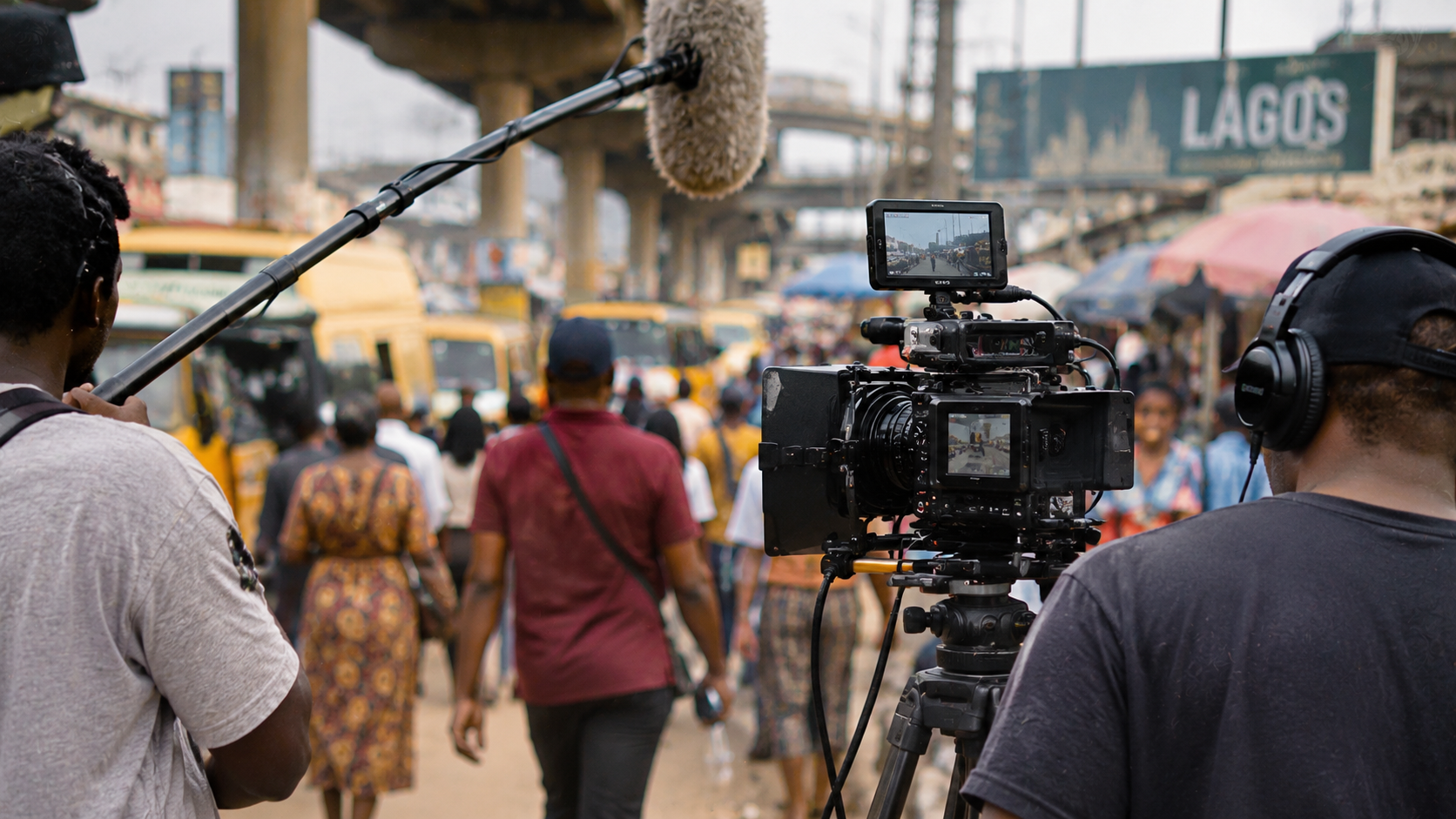
Filmmakers in Lagos say harassment, threats and demands for money are making it increasingly difficult to record videos, produce documentaries and report news in Nigeria’s largest city.
Photographers, journalists and content creators say they face demands for unofficial payments while filming in public spaces.
According to an Al Jazeera investigation published on November 8, some crews have faced violence after refusing to pay.
The incidents have raised concerns about press freedom, public safety and Nigeria’s creative industry.
Lagos filmmakers report violence and extortion
Sound recordist Nurudeen Sanni described a frightening experience while filming a documentary in Ajah, Lagos.
He said several men surrounded his production crew and demanded 100,000 naira, approximately $75, before allowing filming to continue.
During the confrontation, one crew member was reportedly stabbed in the neck and seriously injured.
The men allegedly threatened the crew with knives and cutlasses.
Other filmmakers have described similar incidents.
Music video director TG Omori reported that a night shoot in Ikoyi was disrupted by men demanding payment.
According to Nigerian newspaper PUNCH, a security guard was injured during the incident.
Meanwhile, actress and content creator KieKie said she paid around 700,000 naira after men demanded one million naira following a shoot in Obalende.
Journalists say threats affect news coverage
The problem also affects journalists reporting on important events.
Karina Adobaba-Harry, a camera operator at Nigerian television channel News Central, said men demanded money while her crew covered demolitions in Makoko.
She said similar confrontations had become common during reporting assignments.
Some crews reportedly pay to avoid losing their equipment or facing further threats.
Stanley Ikechukwu, an analyst at SBM Intelligence, warned that such incidents could discourage journalists from covering certain neighbourhoods.
As a result, important stories about floods, protests and public services may receive less attention.
Filming costs rise across Lagos
Independent filmmakers already face expenses for equipment, transport and production crews.
However, unexpected demands for money create additional financial pressure.
Some production teams now consider hiring security personnel before filming.
Nabila Okino, an analyst at Africa Practice, told Al Jazeera that filmmakers are especially vulnerable because moving to another location can be expensive.
Therefore, those demanding payments may use the cost of abandoning a shoot to pressure production crews.
Foreign content creators have also reported difficulties.
Chinese travel creator Xiao Jony said he encountered repeated demands for money while filming in Lagos.
However, the identities of those operating the reported checkpoints remain unclear.
Lagos government condemns illegal payments
Lagos authorities say individuals have no right to demand money from people filming in public.
Gbenga Omotosho, the state’s commissioner for information and strategy, told Al Jazeera that such demands were unacceptable.
He said police should handle complaints involving harassment and extortion.
Meanwhile, analysts have called for clearer filming rules and stronger cooperation between authorities and local communities.
Photojournalist Jean-Fidele E Ananou said safety concerns had forced him to stop regularly photographing Lagos streets.
For Nigeria’s filmmakers and journalists, the issue goes beyond financial losses.
They warn that continued harassment could discourage creative work, restrict reporting and prevent important stories from reaching the public.