
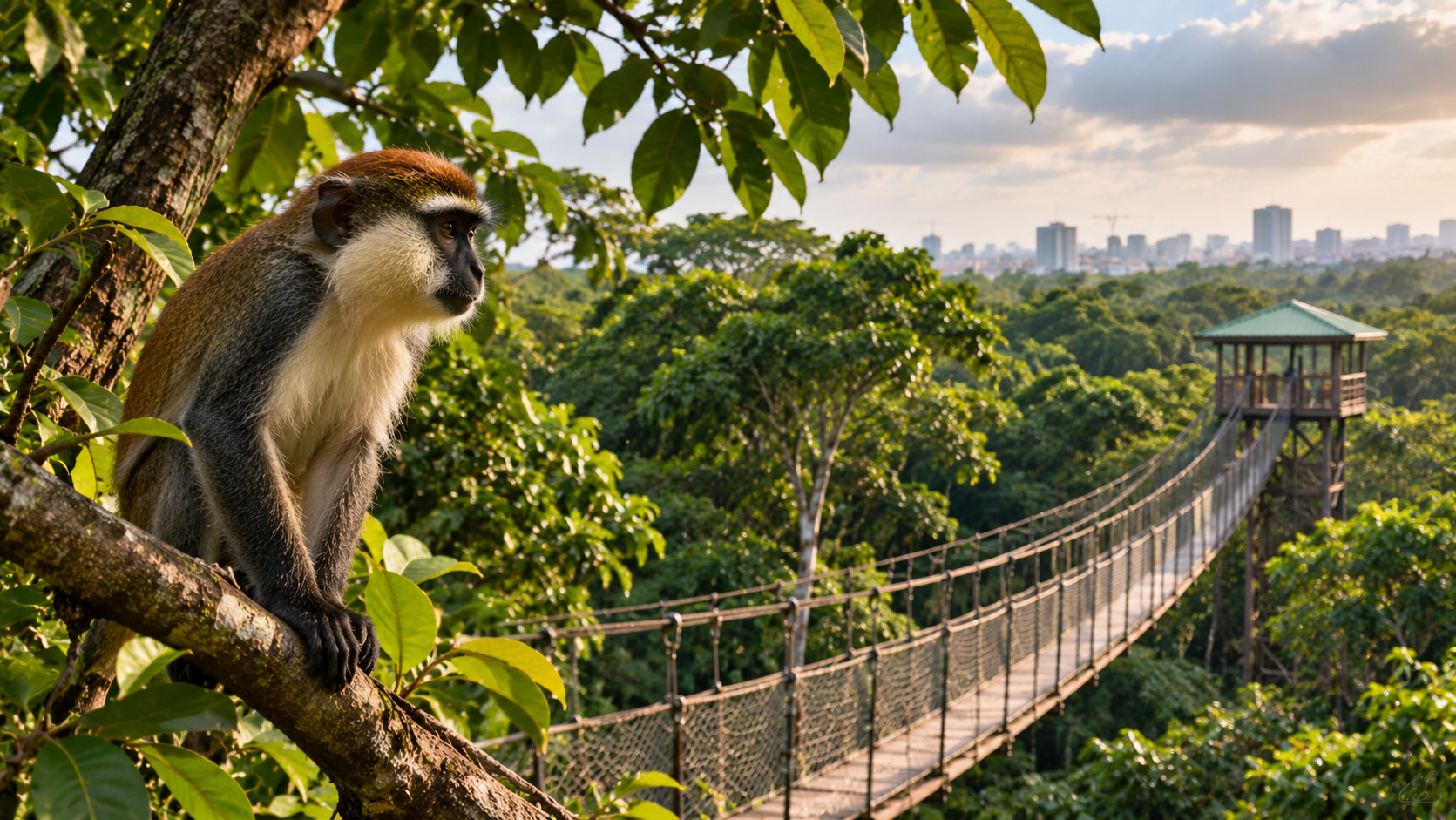
Lagos’ Lekki Conservation Centre is facing growing environmental pressure as rapid urban development threatens one of Nigeria’s most important green spaces.
The 78-hectare nature reserve provides a rare refuge for wildlife in a city increasingly dominated by roads, residential estates and commercial buildings.
According to Africanews, expanding construction and land reclamation activities around the reserve are disrupting natural water flows and threatening its ecosystem.
Conservation officials warn that protecting the centre is becoming increasingly difficult as Lagos continues to expand.
Urban expansion threatens Lekki Conservation Centre
Established in 1990 by the Nigerian Conservation Foundation, Lekki Conservation Centre protects wetlands, forests and wildlife within Lagos.
However, development around the reserve has intensified over the years.
Residential estates and infrastructure projects are increasingly surrounding the protected area.
Stephen Aina, the centre’s project manager, told Africanews that nearby construction and sand-filling activities are creating serious environmental challenges.
These activities can interfere with natural drainage systems and alter how water moves through the wetlands.
As a result, water is accumulating inside parts of the reserve.
Aina said the flooding is damaging facilities and affecting trees within the conservation area.
Why Lekki Conservation Centre matters
Lekki Conservation Centre plays an important role in protecting biodiversity in Nigeria’s largest city.
The reserve provides habitat for wildlife and preserves part of the natural environment that existed before Lagos experienced extensive urban development.
It also offers visitors opportunities to explore forests and wetlands.
Beyond conservation, the centre supports environmental education and encourages greater awareness of Nigeria’s natural heritage.
For residents of Lagos, it provides a peaceful alternative to the city’s busy streets and crowded neighbourhoods.
Visitors interviewed by Africanews praised the centre’s maintenance and natural surroundings.
Tourist Sarah Omorodion highlighted the importance of maintaining public attractions.
Meanwhile, Andrea Nicolucci described the reserve as a valuable opportunity to experience nature within a rapidly growing city.
Africa’s famous canopy walkway attracts visitors
One of the centre’s best-known attractions is its suspended canopy walkway.
The structure stretches approximately 401 metres and rises around 22 metres above the forest floor.
Africanews describes it as Africa’s longest canopy walkway.
The walkway allows visitors to experience different levels of the forest.
According to canopy walk supervisor Abanj James Kejin, visitors can observe the forest floor, understory, canopy and emergent layer.
This experience helps visitors understand the complexity of forest ecosystems.
It also highlights the importance of protecting the trees and habitats that support wildlife.
Conservation efforts face growing challenges
Despite its popularity, Lekki Conservation Centre faces continuing pressure from surrounding development.
Sand filling, land reclamation and expanding residential construction threaten the wetlands that help regulate water movement.
These changes could damage habitats and make it more difficult to maintain the reserve’s facilities.
The centre’s management continues to promote conservation and environmental awareness.
However, its long-term protection will also depend on how urban development is managed around the reserve.
Protecting nature in Africa’s growing cities
Lagos continues to experience rapid population growth and urban expansion.
While new housing and infrastructure support economic development, they can also place pressure on remaining natural spaces.
Lekki Conservation Centre demonstrates why protecting wetlands and forests matters in major African cities.
Its future will depend on balancing development with environmental conservation.
For now, the reserve remains an important reminder that urban growth and the protection of nature must be considered together.