
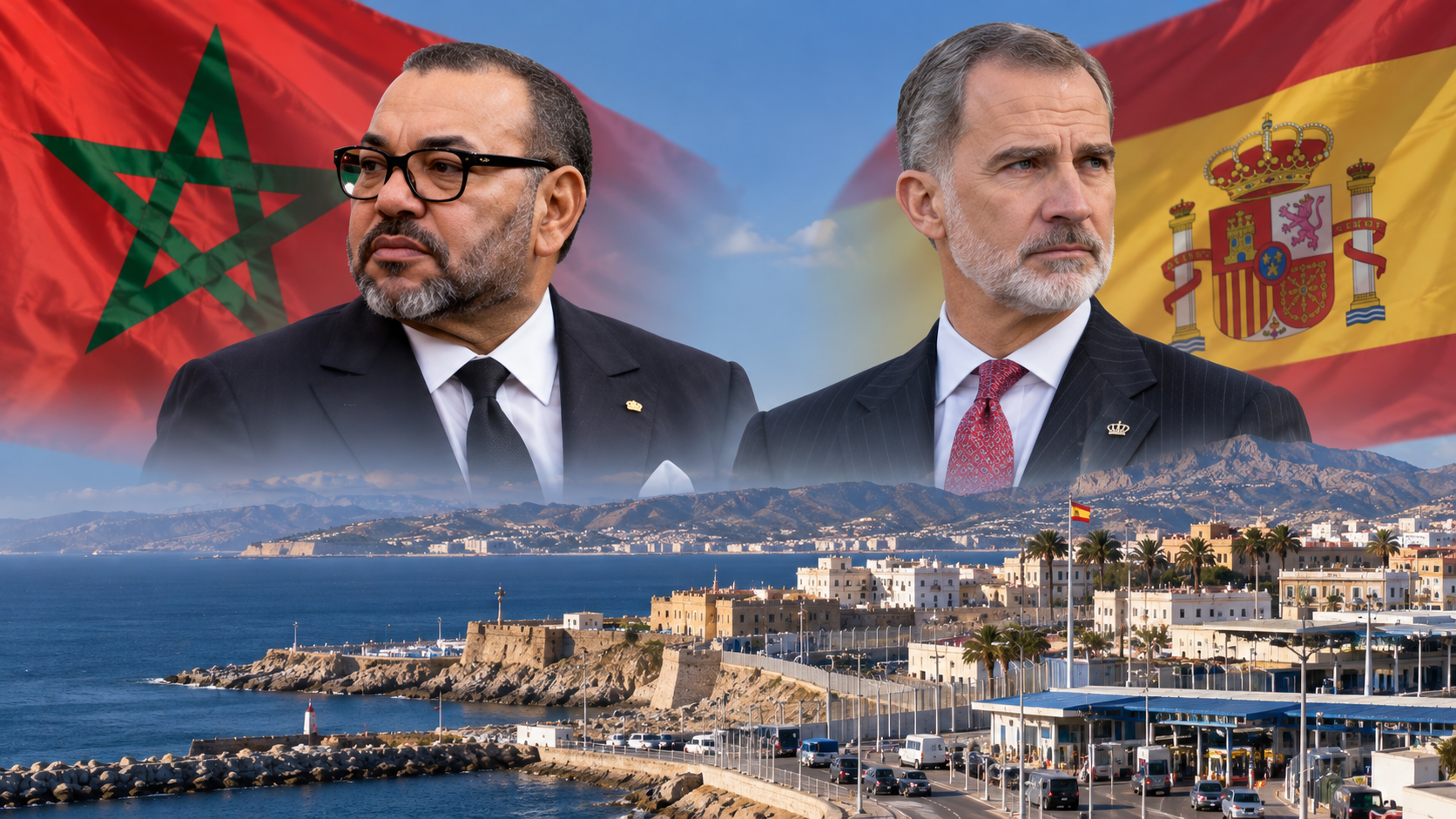
Morocco-Spain migration tensions have returned to the spotlight as King Mohammed VI calls for a new approach to bilateral cooperation ahead of a significant royal visit to Ceuta.
Spain’s King Felipe VI and Queen Letizia are scheduled to visit the Spanish-administered North African city on Tuesday, October 13, before travelling to Melilla the following day.
The visit comes after a major migration crisis in July and renewed debate over border management, diplomatic cooperation and sovereignty.
Morocco claims both Ceuta, known in Arabic as Sebta, and Melilla, while Spain considers the territories part of its national territory.
Morocco-Spain migration tensions intensify
King Mohammed VI has called for changes to the existing migration partnership between Morocco and Spain.
Speaking before parliament on Friday, the Moroccan monarch said his country’s efforts to limit irregular migration had produced results.
However, he argued that the current cooperation framework was no longer sufficient to address recurring challenges.
According to Business Insider Africa, Mohammed VI also criticised aspects of Spain’s legal and judicial approach to migration.
He raised concerns about obstacles affecting the return of unaccompanied minors and people whose asylum claims Morocco considers unfounded.
The king stressed that Morocco’s cooperation with Spain should remain a sovereign decision.
He rejected the idea that bilateral relations could be shaped by pressure, threats or political demands.
Spanish king makes significant Ceuta visit
King Felipe VI’s visit carries particular diplomatic significance.
It is expected to be the first visit by a Spanish monarch to Ceuta and Melilla since 2007.
Both cities are located on the North African coast and have long been sensitive issues in relations between Madrid and Rabat.
Spain administers the territories, while Morocco maintains sovereignty claims over them.
The royal visit comes as the two countries continue to cooperate on trade, security and migration.
However, recent border developments have brought renewed attention to their differences.
July migration crisis puts pressure on Ceuta
The latest tensions follow a major increase in crossings from Morocco into Ceuta in July.
Business Insider Africa reported that more than 70,000 people entered the city during the period.
That figure has not been independently verified in the information available.
According to the report, many subsequently returned to Morocco, while others remained in Ceuta.
The arrivals placed pressure on reception facilities and created additional challenges for local authorities.
Spanish police later conducted operations to clear informal settlements used by migrants.
One operation took place near the El Guano esplanade, where people had been living in temporary shelters.
Reports indicated that more than 350 officers participated in the operation.
Some migrants were transferred to reception centres, while others reportedly left the area before police arrived.
The developments have raised questions about accommodation, border procedures and the treatment of vulnerable migrants.
Morocco rejects accusations over border controls
Moroccan authorities have rejected allegations that they deliberately allowed the July crossings to take place.
They have attributed the situation to several factors, including misinformation circulating on social media and activities involving human traffickers.
Morocco has also pointed to the interpretation of a Spanish court ruling as a contributing factor.
These explanations reflect the Moroccan government’s position and have not been independently established as the causes of the crossings.
Meanwhile, the crisis has highlighted the difficulties both countries face in managing migration across their shared borders.
The protection of migrants, including unaccompanied children, remains an important consideration.
Mohammed VI proposes new cooperation framework
Despite the tensions, Morocco has signalled that it wants to develop a different model of cooperation with Spain.
Mohammed VI proposed a framework focused on shared development, economic competitiveness and regional stability.
The proposal suggests that Rabat wants migration cooperation to form part of a broader partnership rather than remain centred primarily on border enforcement.
Relations between the two countries improved in 2022 after Spain backed Morocco’s autonomy proposal for Western Sahara.
However, the latest migration dispute shows that disagreements remain.
The countries continue to have important economic and security ties, making cooperation significant for both sides.
Ceuta visit highlights wider diplomatic challenges
The Spanish royal visit comes at a sensitive moment for Morocco-Spain relations.
For Spain, Ceuta and Melilla remain part of its territory and national institutions.
For Morocco, the cities are connected to longstanding sovereignty claims and broader questions about relations with its European neighbour.
The migration crisis has added another dimension to these disagreements.
However, both countries have expressed an interest in maintaining cooperation.
The coming period may show whether Morocco’s proposed framework can lead to further discussions on migration, economic development and regional stability.
For people affected by the border situation, safe treatment, access to appropriate procedures and respect for human dignity remain essential.