
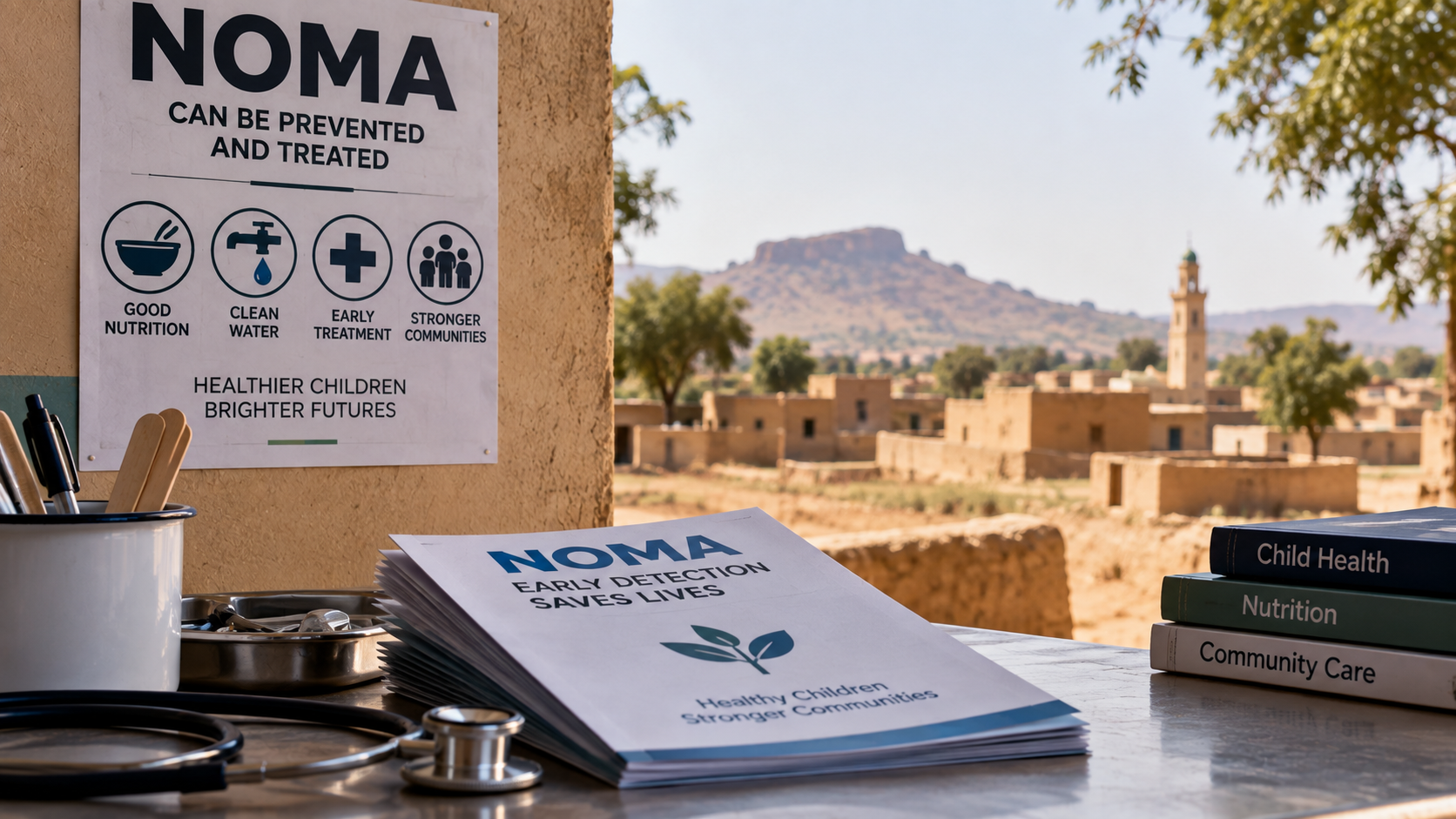
Health workers in northern Nigeria are raising concern about noma, a serious disease that can cause severe damage to the mouth and face if treatment comes too late.
The disease mainly affects young children living in vulnerable communities.
Doctors say early treatment can greatly improve outcomes.
However, many children still reach hospitals after the disease has already caused significant damage.
What is noma?
Noma is a fast-moving infection of the mouth and face.
It often begins with inflammation of the gums before spreading to nearby tissue.
Without treatment, the disease can quickly become life-threatening and cause lasting damage.
Children between the ages of two and six are among those most affected.
Experts say severe malnutrition and extreme poverty are major risk factors.
The World Health Organization classifies noma as a neglected tropical disease.
Early treatment can make a difference
Treatment during the early stages can include antibiotics, wound care and improved nutrition.
However, children with advanced cases may require reconstructive surgery.
Doctors Without Borders, also known as MSF, provides free operations for noma patients in Nigeria.
Some children need several operations during their recovery.
Health workers are also trying to improve awareness so parents can recognise the disease and seek treatment earlier.
Northern Nigeria sees more patients
Medical workers in northern Nigeria say they are seeing more acute cases.
MSF says some children arrive too late to prevent serious tissue damage.
A study published in The Lancet Global Health reported more than 50,000 noma cases across 12 northern Nigerian states between 1999 and 2024.
Meanwhile, more than 500 children from across northern Nigeria received treatment at a specialist hospital in Sokoto between 2023 and 2025, according to data reported by the Associated Press.
Nigeria currently has two specialist noma hospitals.
One is in Sokoto, while another opened in Abuja in 2023.
Poverty and malnutrition increase risk
Noma is closely associated with difficult living conditions.
The WHO describes the disease as a marker of extreme poverty.
Poor nutrition can leave children more vulnerable to infection.
Limited access to healthcare can also delay diagnosis and treatment.
Experts say better nutrition, early detection and access to medical care can reduce the impact of the disease.
Health workers are therefore calling for greater awareness so children can receive treatment before noma causes severe and lasting damage.