
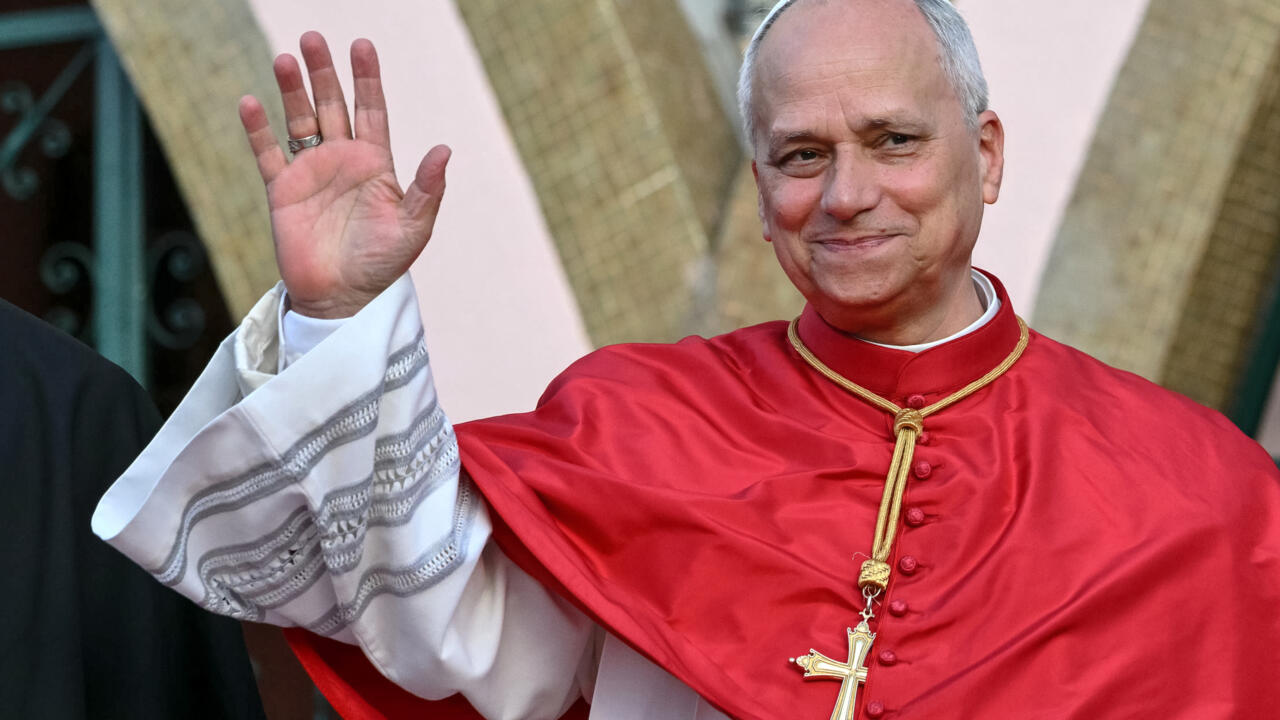
Pope Leo arrived in Equatorial Guinea on Tuesday, the final stop of his four-nation Africa tour, after issuing sharp criticism of authoritarianism and inequality across the continent.
The visit places the pontiff in a country ruled by Teodoro Obiang Nguema Mbasogo, the world’s longest-serving president, who has held power since 1979. The oil-rich Central African state has long faced allegations of repression and corruption, which the government denies.
Leo traveled from Angola, where he warned that many people were being “exploited by authoritarians and defrauded by the rich,” underscoring a more outspoken tone that has marked his Africa tour. His remarks have also drawn criticism from Donald Trump, reflecting broader political sensitivities around his messaging.
During the flight to Malabo, the pope paid tribute to his predecessor, Pope Francis, marking the first anniversary of his death.
Leo is scheduled to meet Obiang and address political leaders, with rights advocates urging him to press for accountability and reforms. Tutu Alicante, a U.S.-based human rights lawyer from Equatorial Guinea, said the visit presents an opportunity to reinforce the principles of justice and governance.
More than 70% of the country’s 1.8 million people identify as Catholic, giving the visit particular religious significance.
The pope’s itinerary includes a visit to a high-security prison in Bata, one of several facilities that Amnesty International has described as notorious for detaining prisoners, including political opponents, without due process. Authorities reject such claims, insisting the country operates under an open democratic system.
Leo will also travel to the site of a 2021 explosion at a military barracks in Bata that killed more than 100 people. The government attributed the blast to improperly stored munitions, while activists have called for an independent investigation.
The Equatorial Guinea leg is part of a 10-day Africa tour spanning four countries, involving 18 flights and covering nearly 18,000 km, making it one of the most logistically complex journeys undertaken by a Catholic leader.