
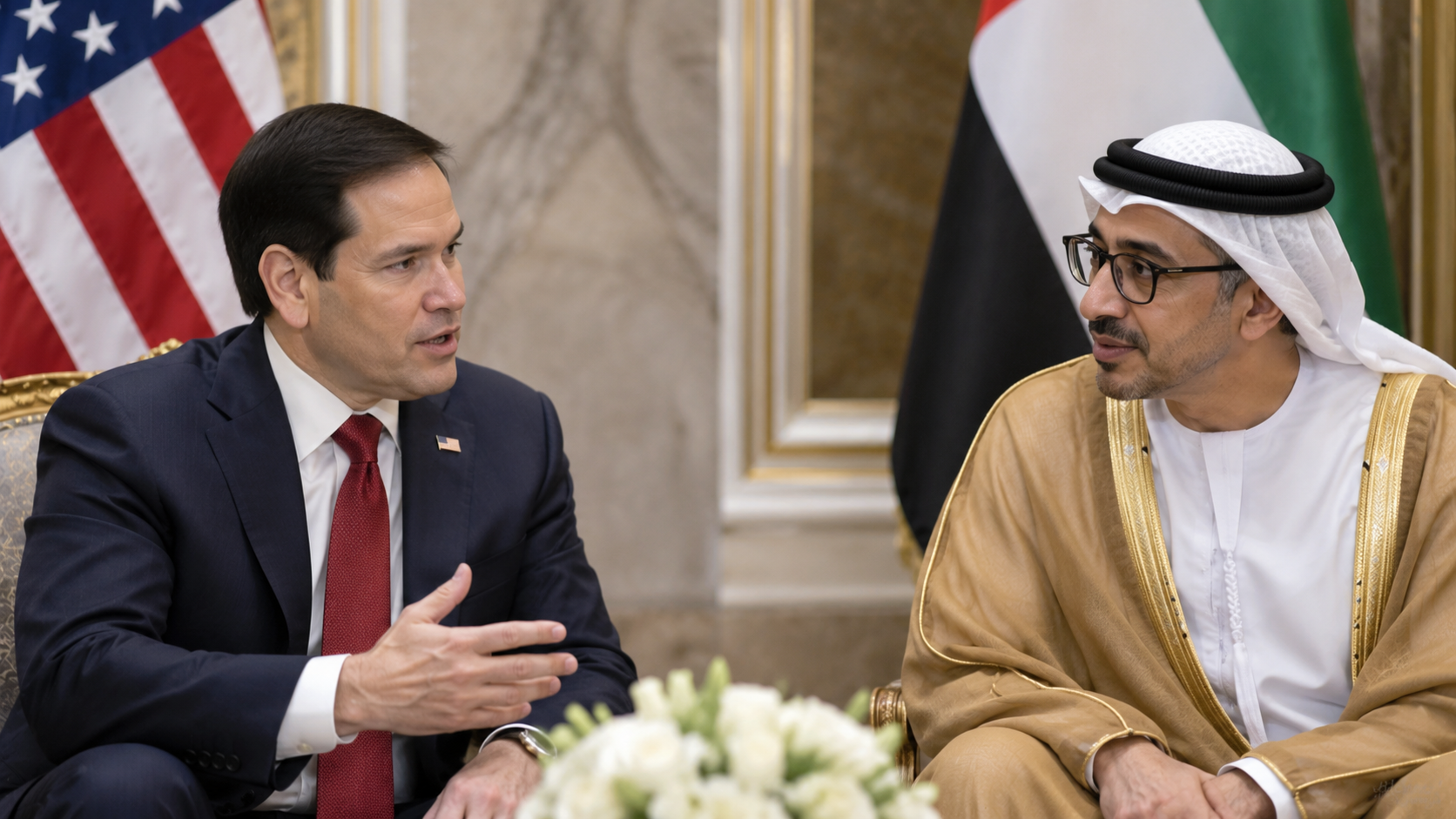
Rubio stressed the importance of securing a humanitarian truce and creating conditions for lasting peace in Sudan.
The US State Department said Washington remained focused on ending the conflict and supporting a transition to civilian government.
Meanwhile, Sheikh Abdullah reaffirmed the UAE’s support for an immediate and unconditional ceasefire.
The UAE Foreign Ministry said the country backed international and regional initiatives aimed at ending the suffering of Sudanese civilians.
It also emphasised the need for a comprehensive political process led by civilians.
However, neither government announced a new ceasefire agreement or a timetable for negotiations.
Sudan peace efforts continue through diplomatic Quad
The latest discussions follow renewed diplomatic activity involving the United States and its regional partners.
Washington and Abu Dhabi are members of the diplomatic Quad alongside Saudi Arabia and Egypt.
The group has promoted a roadmap aimed at ending Sudan’s conflict through several stages.
First, the proposal calls for a humanitarian truce to allow aid deliveries and reduce civilian suffering.
Next, the parties would work towards a permanent ceasefire.
Finally, the process would support a civilian-led political transition.
The Quad has also stressed that Sudan’s future government should emerge through an inclusive process that is not controlled by either warring party.
The initiative reflects international efforts to address both Sudan’s humanitarian emergency and its long-term political future.
Nevertheless, disagreements between the warring parties continue to complicate progress.
Civilian rule remains central to Sudan peace talks
Sudan’s future political system remains a major issue in efforts to negotiate an end to the war.
The proposed ceasefire process faces political and military obstacles, with the warring parties yet to agree on a comprehensive settlement.
Meanwhile, Sudanese political and military groups have presented different visions for the country’s future.
The Sudan Founding Alliance, known as TASIS, announced a parallel administration in Nyala in 2025, presenting it as the Government of Peace and Unity.
The alliance has advocated a federal, secular political system and reforms to Sudan’s security institutions.
However, international diplomatic initiatives have generally prioritised ending hostilities before negotiating detailed political arrangements.
The latest US-UAE discussions reinforced international calls for civilian governance, although Sudanese political groups remain divided over how such a transition should take place.
Fighting continues as humanitarian needs grow
Despite diplomatic efforts, fighting continues in several parts of Sudan.
Military operations and shifting territorial control have increased pressure on communities already affected by years of conflict.
Since April 2023, the war has displaced millions of people and severely damaged Sudan’s economy and infrastructure.
Health facilities have been destroyed or forced to close, while disruptions to agriculture and trade have worsened food insecurity.
Humanitarian organisations have also warned that insecurity and restrictions on access continue to obstruct aid deliveries.
As a result, many displaced families remain dependent on emergency assistance.
No breakthrough announced in latest talks
The conversation between Rubio and Sheikh Abdullah reflects continued diplomatic engagement over Sudan’s future.
Both governments reiterated their stated commitment to a humanitarian ceasefire and civilian-led political settlement.
However, the discussions did not produce a publicly announced agreement or new negotiating framework.
The next steps remain uncertain as fighting continues and international mediators seek ways to bring the parties closer to a negotiated settlement.
For Sudanese civilians, progress towards a ceasefire remains critical to improving humanitarian access and reducing the impact of the war.