
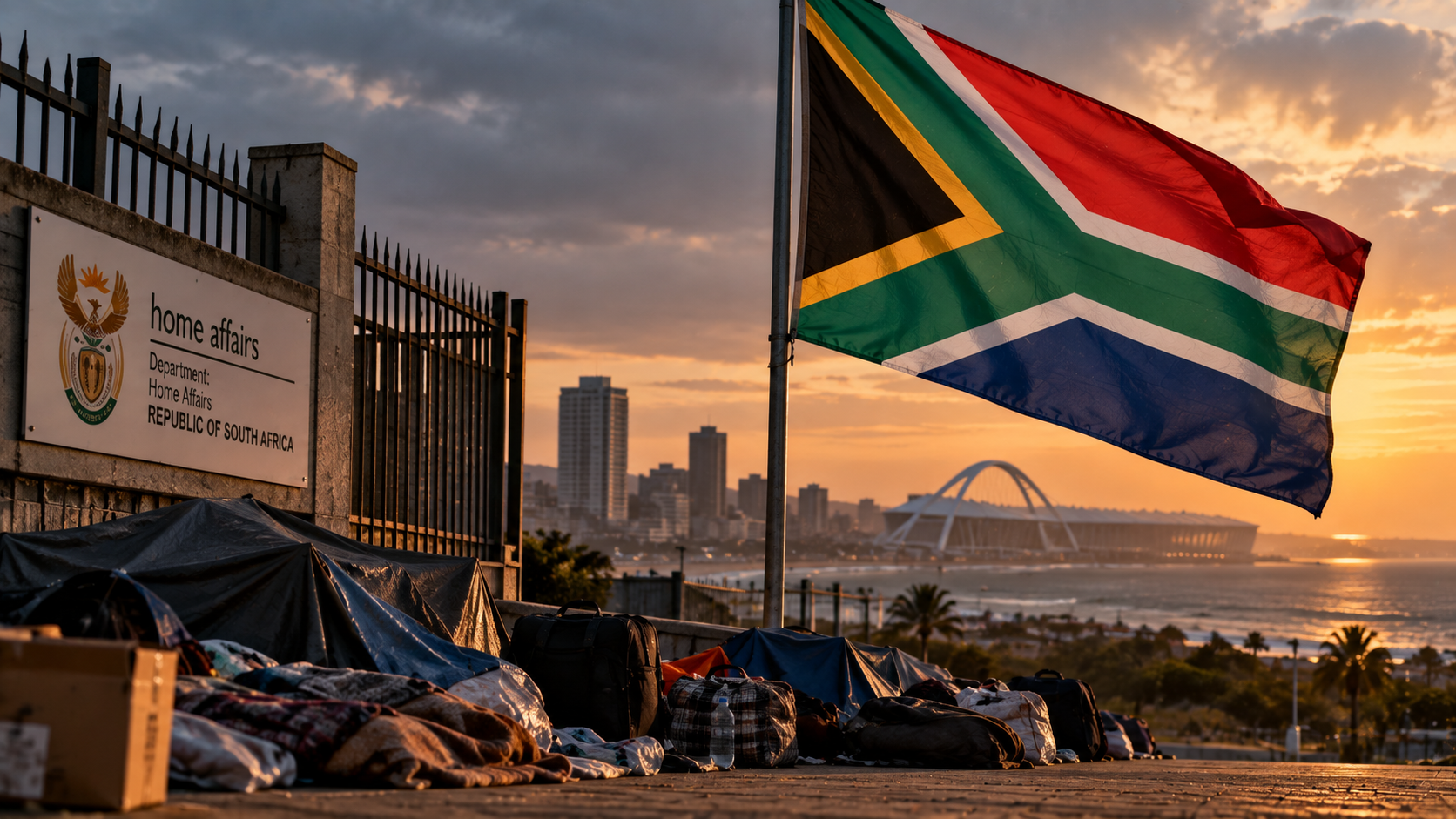
Refugees in South Africa fear violence as September 30 deadline approaches
Refugees and asylum seekers in South Africa say they fear renewed attacks as a September 30 deadline set by an anti-immigration movement approaches.
March and March, a group that has organised protests across the country, has called on undocumented foreign nationals to leave South Africa.
The group has also warned of further demonstrations if its demands are not met. However, the deadline has no legal authority.
The South African government says private citizens cannot carry out deportations. Yapıştırılan metin Yapıştırılan metin
Refugees in Durban fear renewed attacks
Concerns are particularly high among refugees in Durban.
For months, hundreds of refugees and asylum seekers stayed outside the Durban Refugee Reception Centre. Many came from the Democratic Republic of Congo and Burundi.
Others came from Uganda, Mozambique and Tanzania.
They said they had left their communities because they feared attacks against foreigners.
For around four months, families slept outside the centre. They relied on civil society groups and volunteers for food and other basic needs. Yapıştırılan metin
Tensions escalated on September 3. Members of March and March confronted people living outside the centre, according to Al Jazeera.
Violence broke out before police intervened. At least four people were reported injured.
March and March says its campaign targets undocumented immigration rather than foreigners in general. Its leaders have also rejected accusations that the movement is xenophobic. Yapıştırılan metin
Some refugees moved hundreds of kilometres away
The government moved to clear the makeshift camp in mid-September.
Refugees were given the option of returning to their communities or moving to temporary accommodation at the Lindela facility in Gauteng.
Lindela is a government-run immigration detention facility. It is hundreds of kilometres from Durban.
On September 15, authorities transported 274 people from Durban to Lindela. Around 150 others remained in Durban and sought alternative accommodation. Yapıştırılan metin
Some refugees told Al Jazeera they were still afraid to return to their former neighbourhoods.
South Africa steps up immigration enforcement
Meanwhile, South Africa has increased immigration enforcement.
Government figures show that authorities processed 86,596 foreign nationals for deportation and repatriation between June 14 and August 20.
Malawians made up the largest group. Zimbabweans and Mozambicans followed.
According to government data, 90 percent of those repatriated had entered South Africa illegally. It also said 95 percent had crossed outside official ports of entry.
The government says these operations are part of efforts to strengthen border management.
However, officials have also warned private groups not to enforce immigration laws themselves. Yapıştırılan metin
September 30 deadline has no legal authority
Police say they do not plan to change their normal approach because of the September 30 deadline.
They have also said protesters must remain within the law.
March and March says it wants undocumented immigrants to leave South Africa. Refugees interviewed by Al Jazeera, however, said they fear hostility could also affect people with legal status.
Some pointed to previous periods of violence against foreign nationals. In 2008, such attacks killed dozens of people and displaced thousands. Yapıştırılan metin
The approaching deadline has therefore increased uncertainty among refugee communities in Durban.