
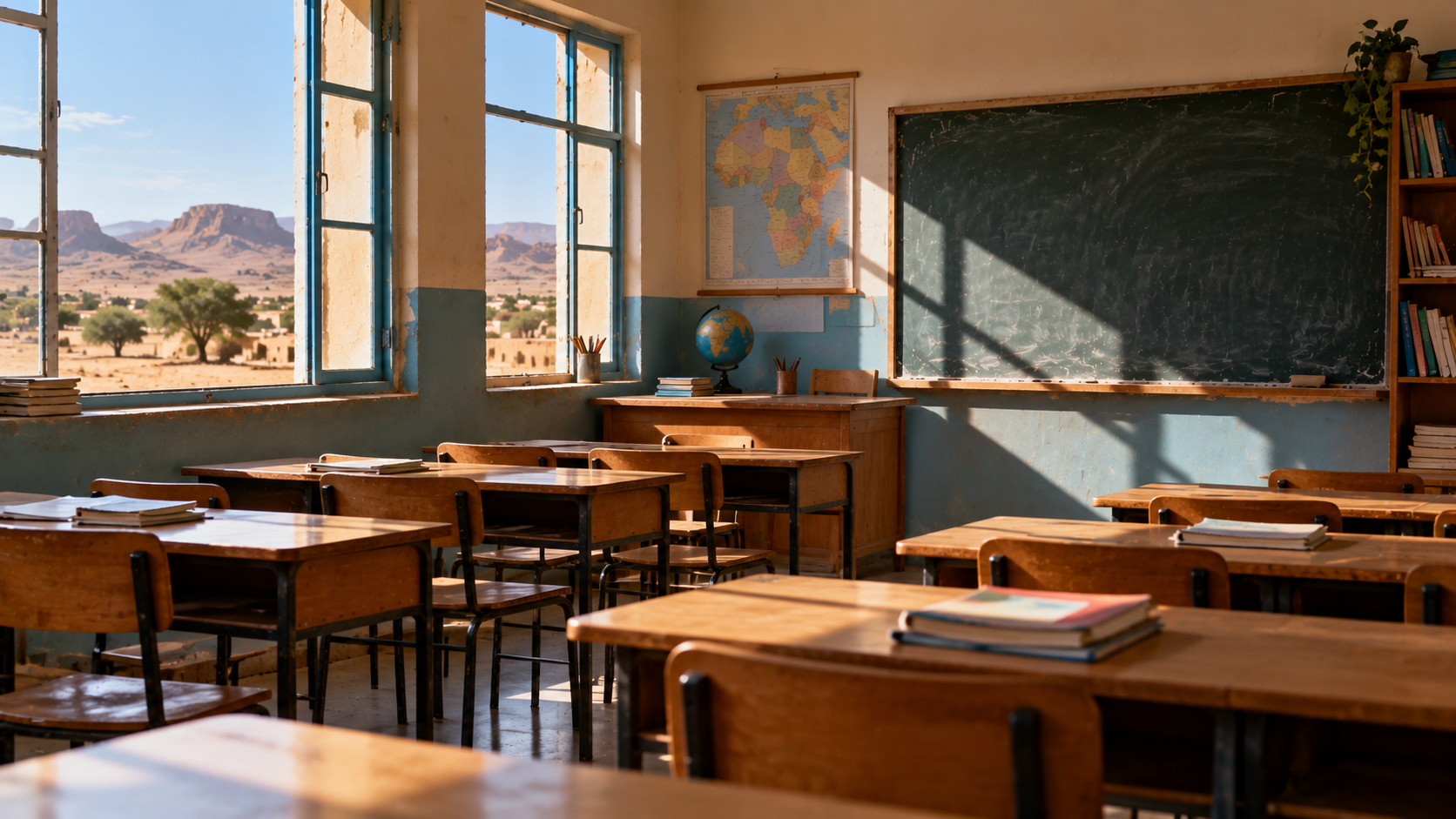
Sudan’s education crisis has left more than eight million children out of school. Humanitarian organisations are calling for urgent funding to restore classrooms and protect children’s futures.
Years of conflict have disrupted education across the country. Many schools remain closed, while others lack teachers, supplies and basic facilities.
As a result, millions of children face an uncertain future.
Humanitarian organisations warn that education must become a greater priority alongside food, water and healthcare.
Sudan education crisis affects millions of children
Sudan is facing one of the world’s largest education emergencies.
According to UNICEF, more than eight million children remain out of school.
The country has approximately 17 million school-aged children. However, many have experienced prolonged interruptions to their education.
The situation is particularly difficult in Darfur and Kordofan.
In these regions, displacement and insecurity have disrupted access to schools.
Some classrooms have been damaged. Others now shelter displaced families.
Meanwhile, many teachers have been unable to return to work.
Consequently, children are missing essential years of learning.
Schools struggle to reopen across Sudan
Reopening schools remains a major challenge.
According to UNICEF’s mid-2026 assessment, approximately 63% of Sudan’s schools were operational.
However, the situation varies significantly between regions.
In Darfur, 81% of schools remained closed.
Even where schools have reopened, many lack basic resources.
Students need textbooks, desks and safe classrooms. They also require clean water and sanitation facilities.
Furthermore, teachers need financial support to continue working.
Without these resources, reopening schools alone will not solve Sudan’s education crisis.
Humanitarian funding falls short
International organisations have launched several programmes to restore education.
In August 2026, Education Cannot Wait announced a $22 million investment.
The three-year programme aims to support nearly 200,000 children and adolescents.
It focuses on West Darfur, South Kordofan and Gedaref.
Similarly, UNICEF and Save the Children launched an initiative to restore learning opportunities for more than 328,000 children.
However, these programmes reach only a small proportion of those in need.
By June 2026, humanitarian education programmes had received just 15% of their required funding.
Therefore, additional international support remains essential.
Education provides more than learning
Schools play an important role in children’s lives beyond academic education.
They provide routine, stability and opportunities for social interaction.
For displaced children, safe classrooms can also offer emotional support.
Moreover, education programmes can connect vulnerable children with protection services.
Humanitarian organisations are therefore supporting temporary classrooms and alternative learning spaces.
These initiatives allow children to continue studying when permanent schools are unavailable.
However, expanding such programmes requires sustained funding.
Sudan’s children need greater international support
The Sudan education crisis requires coordinated humanitarian action.
International donors can help rebuild schools and provide learning materials.
They can also support teachers and expand temporary education programmes.
Meanwhile, humanitarian organisations need reliable access to affected communities.
Schools and other educational facilities must remain protected.
All parties have a responsibility to respect civilian infrastructure and ensure children can learn safely.
Local educators and community organisations also need additional resources.
Their work remains essential to keeping education available during the crisis.
Sudan’s future depends on education
Sudan’s humanitarian emergency extends beyond hunger and displacement.
Millions of children are also losing access to education.
Each additional year outside the classroom increases the risk of long-term learning losses.
However, timely investment can help children return to school.
Rebuilding classrooms, supporting teachers and expanding education programmes are important steps.
Ultimately, Sudan’s recovery will depend partly on protecting the opportunities available to its youngest generation.
Humanitarian aid can help children survive today’s crisis. Education can help them build a better future.