
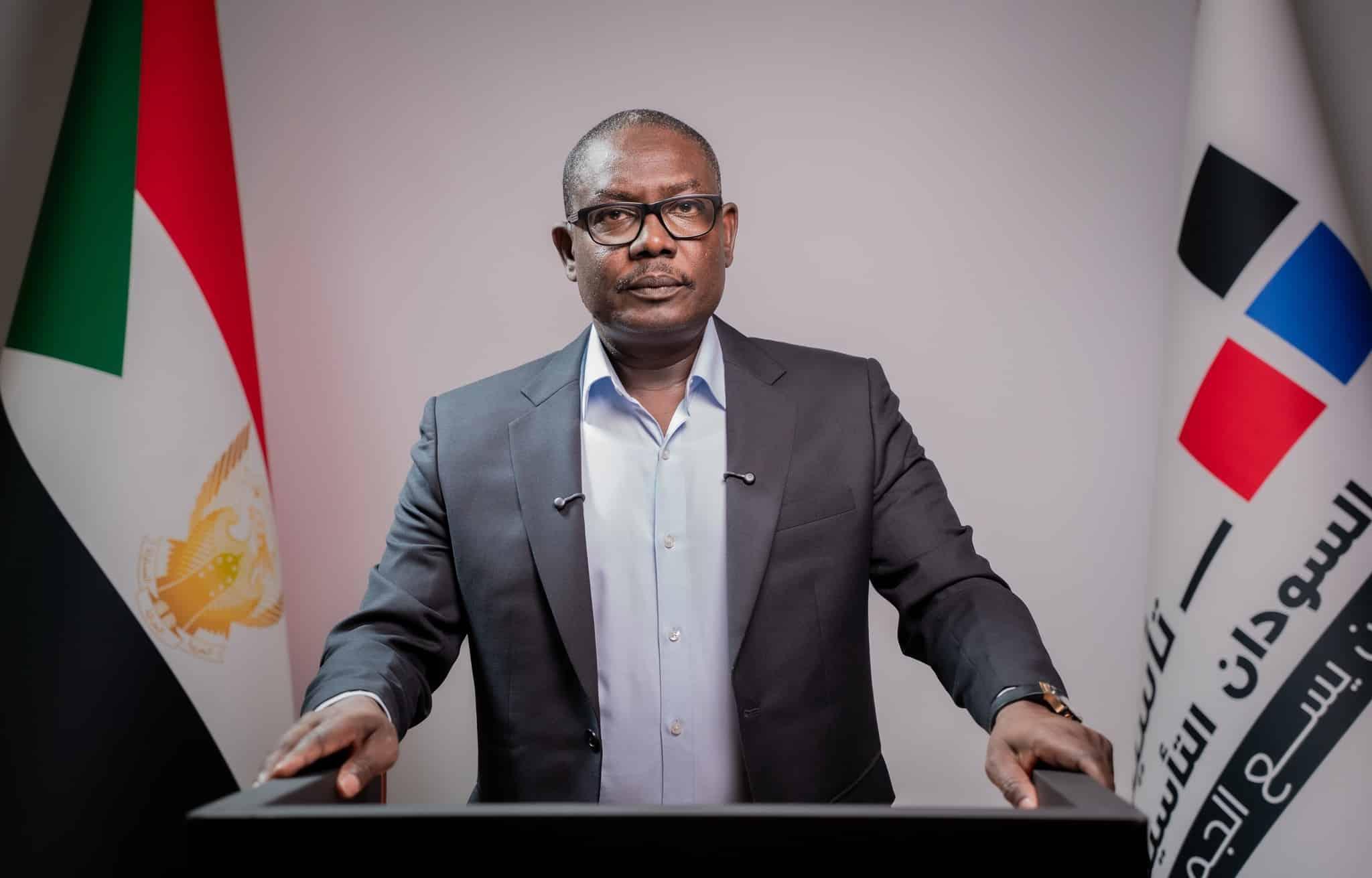
Sudan’s self-declared Government of Peace and Unity has announced a new round of ministerial appointments, in a move officials say is aimed at consolidating governance structures and preparing for a potential political transition amid renewed calls for a ceasefire.
Prime Minister Mohammed Hassan al-Ta’ishi unveiled the appointments on Tuesday, naming ministers across key portfolios including justice, finance, media, transport, and social development, according to statements carried by Sudanese media.
The reshuffle expands the administrative footprint of the parallel authority formed by the Sudan Founding Alliance, which has sought to position itself as a civilian-led alternative to the military leadership in Port Sudan.
Governance push amid fragile truce signals
The appointments come at a moment of heightened diplomatic activity around Sudan, with regional and international actors pushing for a humanitarian truce and broader political talks to end the war.
Officials aligned with the Peace Government say strengthening civilian institutions is essential to any credible transition process, arguing that “state structures must be rebuilt in parallel with ceasefire efforts.”
The move also reflects an attempt to formalise governance in areas under the control of forces aligned with the alliance, which declared the Government of Peace and Unity in 2025 as a rival authority to the internationally recognised administration.
Analysts say the timing is deliberate.
By expanding the cabinet now, the leadership is seeking to demonstrate readiness to govern beyond wartime arrangements — a signal aimed at both domestic constituencies and international mediators.
Competing visions of the state
The civilian government, backed by factions aligned with Mohamed Hamdan Dagalo and allied movements, has promoted a decentralised political model with regional representation and a civilian-led executive structure.
Its proponents argue that this framework addresses long-standing grievances around marginalisation and centralised power in Khartoum.
Critics, however, warn that the proliferation of rival authorities risks deepening institutional fragmentation and complicating peace negotiations.
The developments underscore the widening gap between competing centres of power in Sudan — with General al-Burhan’s SAF maintaining its base in Port Sudan, while the Peace Government seeks to entrench itself politically in territories outside its control.
No military solution
Despite the political manoeuvring, international actors continue to stress that the conflict cannot be resolved through military means.
Recent diplomatic efforts have focused on securing an immediate humanitarian ceasefire, amid what the United Nations has described as one of the world’s worst humanitarian crises.
Previous negotiations have repeatedly stalled over disagreements on sequencing — particularly whether a ceasefire should precede political talks or follow military withdrawals.
Observers say the latest cabinet expansion could complicate or, alternatively, accelerate negotiations, depending on whether it is viewed as a step toward civilian governance or a consolidation of parallel power.
War enters third year
Sudan’s war, which erupted in April 2023, has displaced millions and devastated infrastructure across large parts of the country.
With frontlines shifting and humanitarian conditions deteriorating, pressure is mounting on all parties to engage in a credible political process.
For now, the Peace Government’s latest appointments highlight a central reality of the conflict: while guns remain active on the battlefield, the struggle over Sudan’s political future is increasingly being fought through competing visions of governance.