
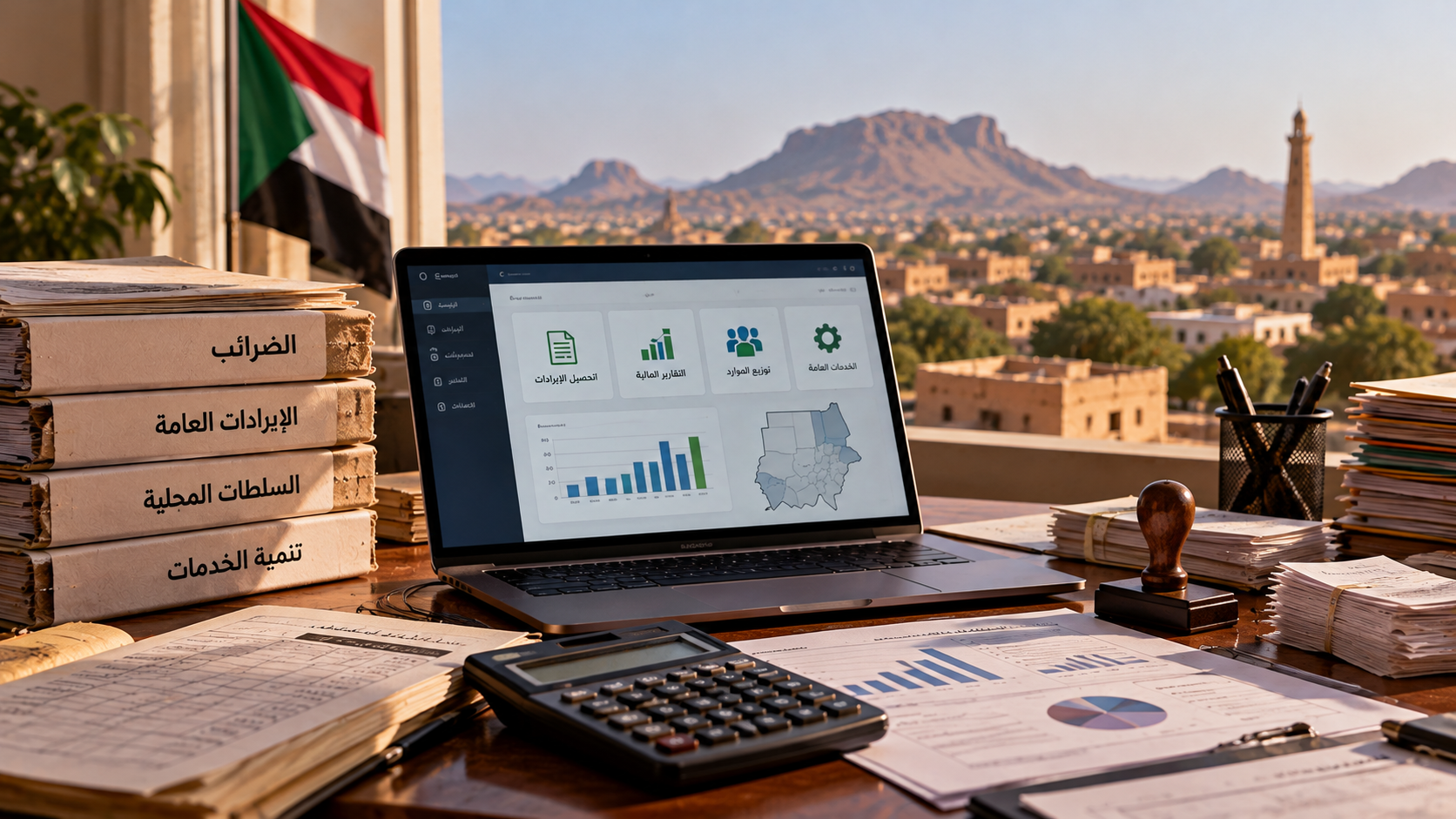
Sudan’s TASIS administration has announced plans to reform tax collection and public revenue management in areas under its control.
The proposed changes include electronic payments, stronger financial oversight and new arrangements for sharing revenue between central and local authorities.
TASIS Prime Minister Mohamed Hassan al-Taayishi outlined the plans during a public gathering in Buram, south of Nyala, in South Darfur.
According to Radio Tamazuj, al-Taayishi said the administration wants to improve transparency and reduce corruption in public revenue collection.
TASIS plans electronic tax collection
The TASIS administration plans to introduce an electronic system for collecting taxes and government fees.
Under the proposal, digital payment records would replace traditional paper receipts.
Al-Taayishi said the system would help authorities track financial transactions and ensure that public revenues reach official accounts.
Moreover, the administration aims to introduce clearer rules for managing government funds.
The proposed changes are intended to reduce opportunities for financial misconduct.
However, officials have not announced a detailed timetable for implementing the new system.
New revenue-sharing arrangements proposed
The administration also plans to establish agreements on sharing public revenue between central and local authorities.
Under the proposed framework, both levels of government would negotiate how to divide tax income and other public resources.
The agreements would also define their responsibilities for delivering essential services.
For example, local administrations could receive funding for public services and development projects.
Al-Taayishi said communities should benefit from the taxes they pay.
However, the administration has not yet disclosed the proposed revenue-sharing percentages.
Al-Taayishi warns officials against corruption
The prime minister also warned government officials against misusing public funds.
He said revenue departments and local administrators must follow financial regulations.
According to Radio Tamazuj, al-Taayishi warned that officials who withhold collected revenue from the public treasury could face imprisonment.
The warning forms part of the administration’s stated efforts to strengthen financial accountability.
However, the effectiveness of the proposed measures will depend on their implementation and oversight.
TASIS seeks stronger financial coordination
The proposals come as the TASIS Finance Ministry works to improve coordination with civilian administrations in territories under the alliance’s control.
The administration plans to consolidate financial accounts and establish more consistent revenue collection procedures.
It also aims to strengthen supervision of public spending.
Meanwhile, the proposed reforms could affect how local authorities manage funding for public services.
TASIS operates a parallel governing structure based in Nyala amid Sudan’s ongoing conflict.
Its financial proposals therefore apply to areas under its administration rather than Sudan as a whole.
Implementation remains a key challenge
The new measures represent a proposed change in how TASIS collects and manages public revenue.
However, authorities have not yet provided detailed information about implementation costs, independent oversight or how the system will operate across different areas.
The administration has also not announced when the revenue-sharing agreements will take effect.
For residents, the main question will be whether the proposed changes improve public services and financial transparency.
The impact of the reforms will become clearer as the administration provides further details and begins implementation.