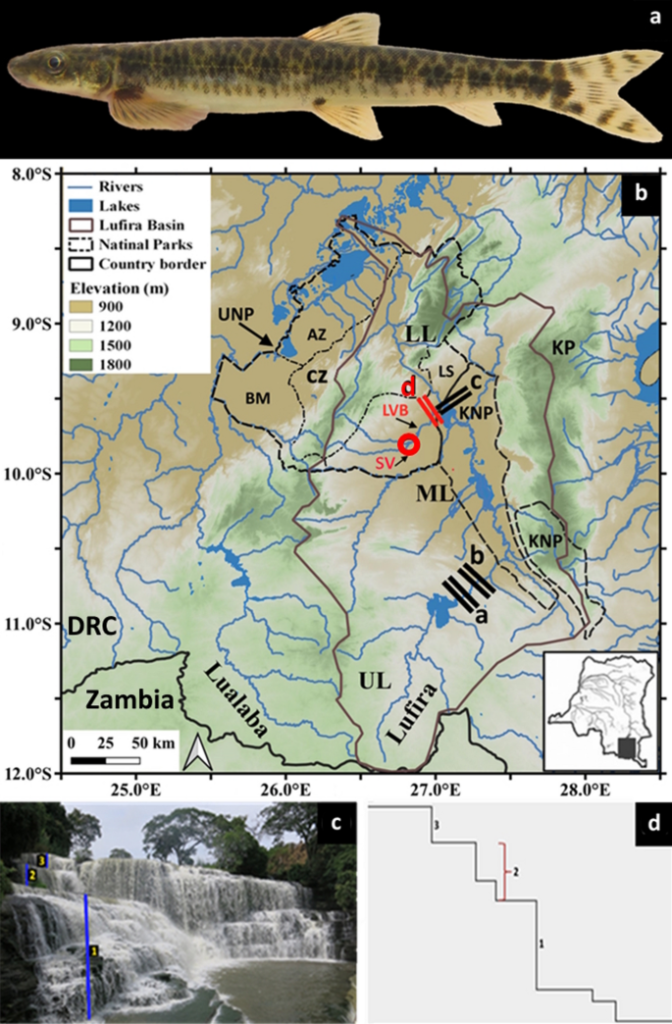
A newly documented species of small freshwater fish has stunned researchers by climbing a near-vertical waterfall in the Democratic Republic of Congo, showcasing one of the most unusual survival strategies recorded in African waterways.
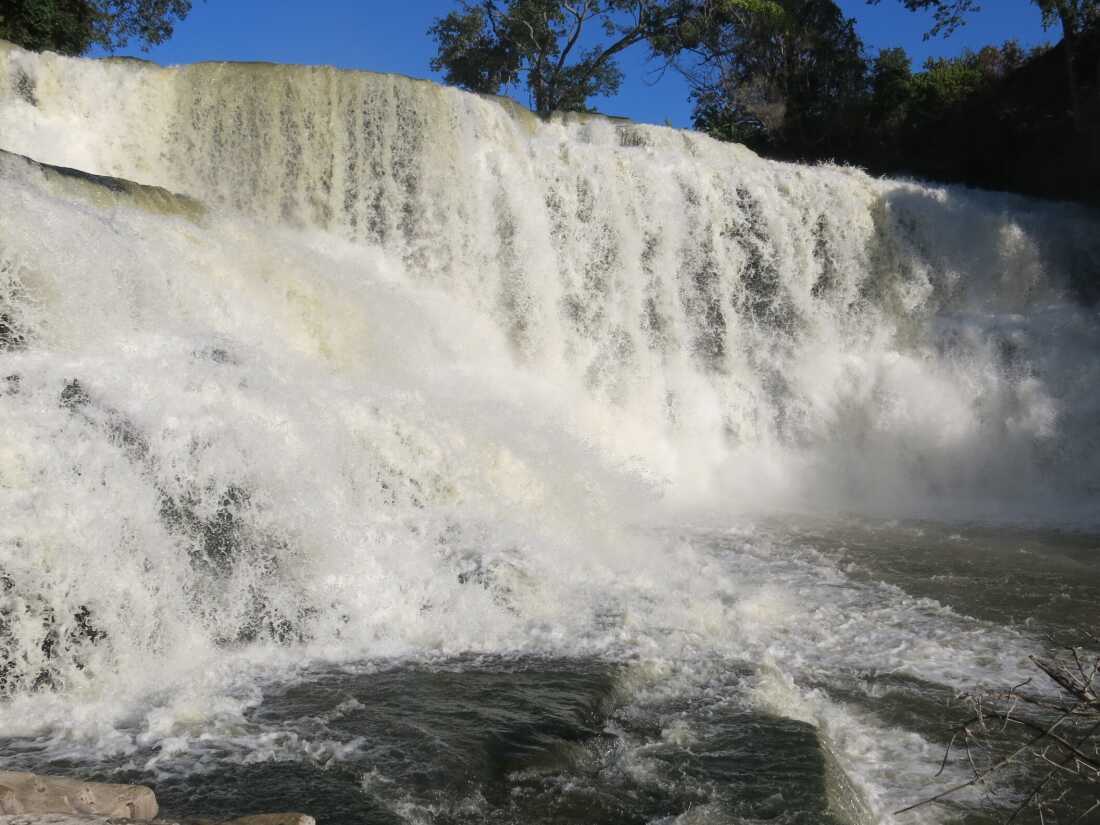
Scientists observed thousands of Parakneria thysi scaling the 15-metre Luvilombo Falls in the upper Congo Basin — a vast river network that cuts through Central Africa’s dense rainforest. The behavior was recorded during seasonal floods, typically between April and May.
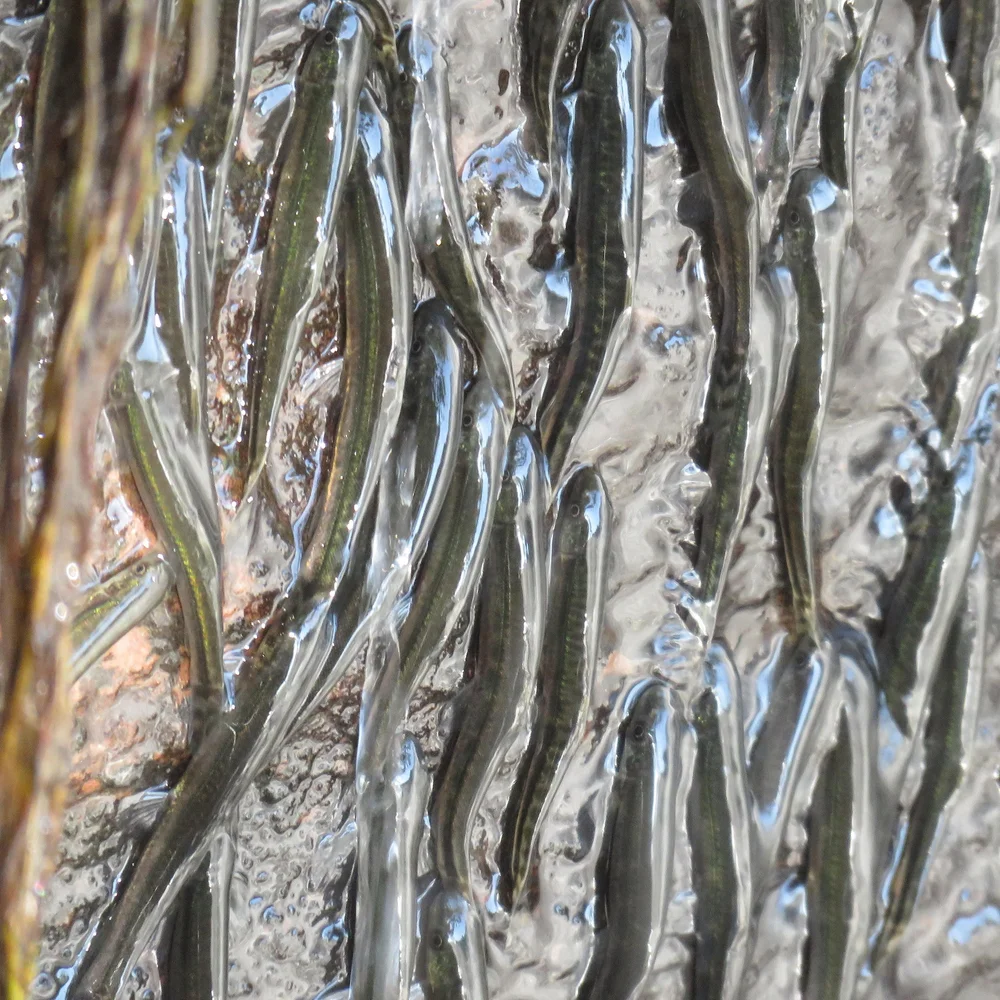
The fish, measuring just 3.7 to 4.8 cm in the observed groups, undertake a slow and physically demanding ascent that can take up to 10 hours. Moving in short bursts, they pause frequently along the wet rock face, navigating through the “splash zone” — areas kept damp by spray rather than direct water flow.
Researchers say the fish rely on a combination of specialized anatomy and persistence. They grip the rock using pectoral and pelvic fins, supported by tiny hook-like structures known as unculi, before propelling themselves upward with side-to-side body movements.
Lead researcher Pacifique Kiwele of the Université de Lubumbashi said the discovery highlights how little is known about aquatic life in the Congo Basin.
He noted that such behavior had never before been documented in Africa, despite similar climbing adaptations being observed in some fish species elsewhere in the world.
The climb is not without danger. Sudden surges of water can knock fish off the rock face, particularly when they attempt to navigate overhangs. While many likely survive falls back into the water below, those striking exposed rocks may not.
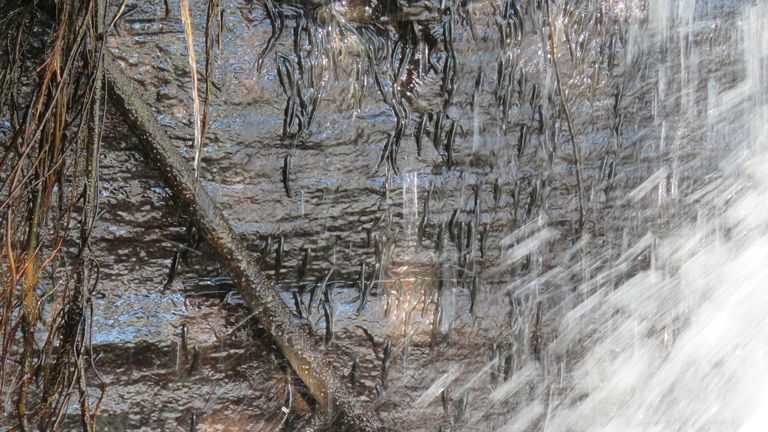
Scientists believe the fish make the ascent in search of better habitats upstream — areas with fewer predators and less competition for resources.
However, the species faces growing threats from human activity. Researchers identified illegal fishing using fine-mesh mosquito nets and water extraction for irrigation as major risks, both of which can significantly reduce local populations and disrupt river flow.
The findings, published in Scientific Reports, underline the need for further research into the Congo Basin’s ecosystems — and suggest that more undiscovered behaviors may be hidden in its largely unstudied waters.