
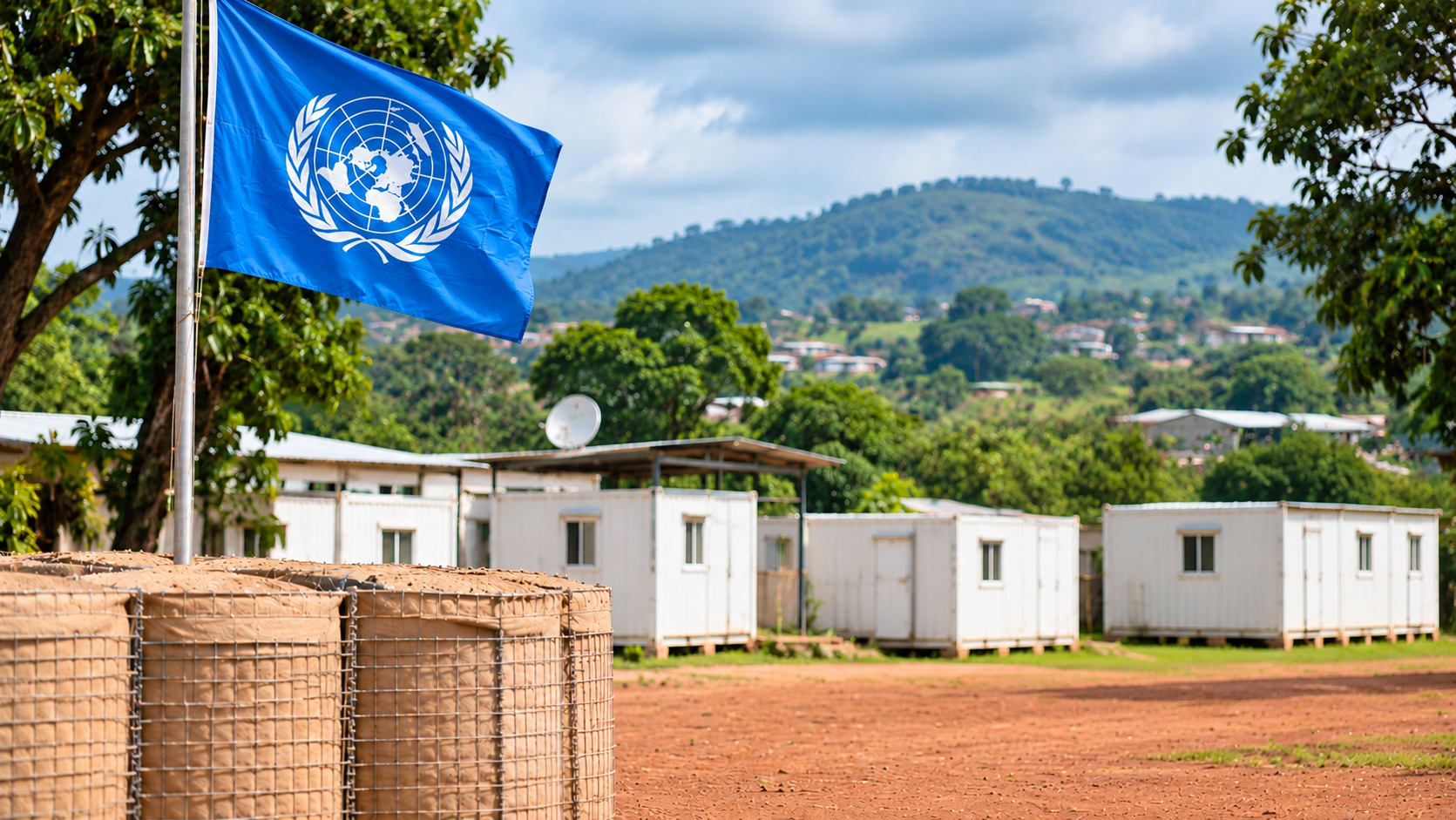
The United Nations Security Council has extended its peacekeeping mission in the Central African Republic until November 15, 2027. The decision aims to strengthen security while helping national authorities take greater responsibility for maintaining peace.
The council unanimously approved the extension of MINUSCA, the UN peacekeeping mission operating in the country since 2014.
According to Africanews and agency reports, the new mandate will focus on civilian protection, security reforms and stronger national institutions.
UN extends MINUSCA mandate
France drafted the resolution, which received unanimous support from Security Council members.
France’s UN Ambassador, Jérôme Bonnafont, said the renewed mandate would help MINUSCA build on its achievements.
Furthermore, the mission will adjust troop levels and focus more attention on vulnerable border regions.
The UN will also support the deployment of national security forces across the country.
These efforts include a pilot project for a garrison army, which aims to strengthen the country’s security structures.
Meanwhile, MINUSCA will continue supporting disarmament programmes and efforts to reintegrate former fighters into civilian life.
The mission will also promote human rights and accountability for serious crimes.
African nations call for stronger institutions
Following the vote, Liberia’s UN Ambassador, Lewis Garseedah Brown II, welcomed the resolution.
Speaking for Liberia, the Democratic Republic of the Congo and Somalia, he stressed the importance of supporting national institutions.
He argued that transferring responsibilities from peacekeepers to local authorities requires adequate funding and resources.
Moreover, Brown warned that the UN’s financial difficulties could threaten peacekeeping operations.
He urged member states to pay their contributions on time to help the mission fulfil its responsibilities.
Central African Republic welcomes decision
The Central African Republic’s UN Ambassador, Marius Aristide Hoja Nzessioue, welcomed the extension.
He praised MINUSCA’s contribution to improving security and supporting national institutions.
However, he also stressed that the mission must prepare the country to manage security challenges independently.
The government hopes the transition will leave behind stronger institutions capable of maintaining stability.
Peacekeeping transition remains a priority
MINUSCA began operations in 2014 amid widespread violence and political instability.
Since then, the mission has worked to protect civilians, support peace efforts and strengthen government authority.
Nevertheless, security challenges remain in several parts of the country, particularly near its borders.
The latest extension gives MINUSCA another year to support national security reforms.
At the same time, the UN faces the challenge of gradually transferring responsibilities without creating new security gaps.
The success of that transition will depend on continued funding, cooperation and the ability of national institutions to protect civilians.