
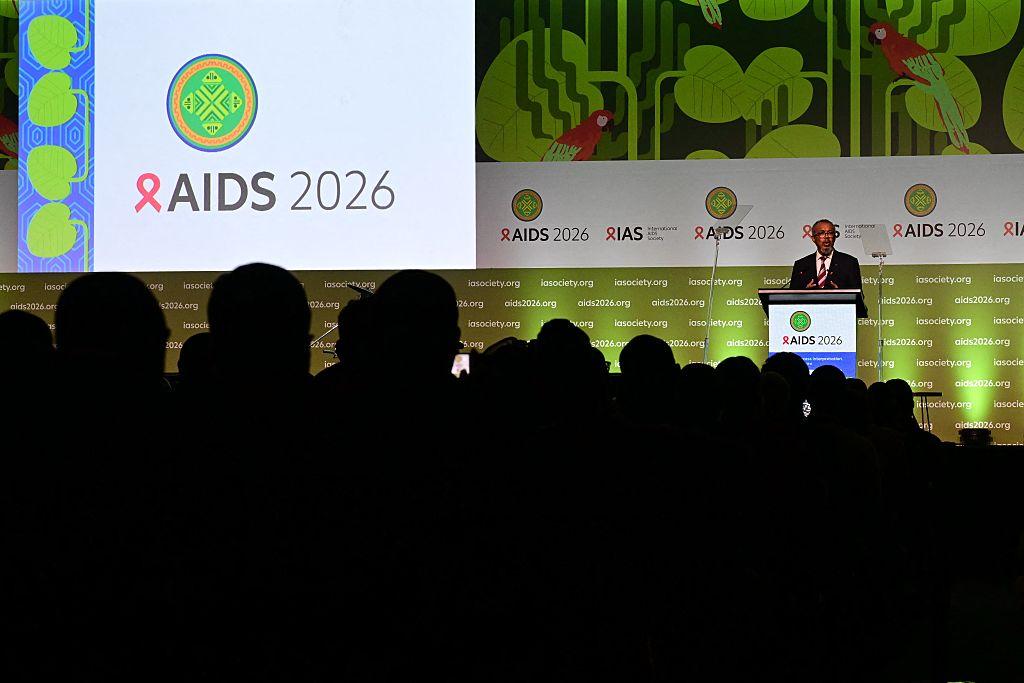
A U.S. government presentation at a major international conference in Brazil displayed a map that incorrectly labelled every country in Africa, prompting criticism from attendees and raising concerns over the use of artificial intelligence in official materials.
The map appeared during a State Department presentation at the AIDS 2026 conference in Rio de Janeiro, where officials were discussing new U.S. global health agreements.
Video footage reviewed by Reuters showed the inaccurate map displayed midway through the presentation. Reuters also found that the image carried a watermark indicating it had been generated using OpenAI technology.
The State Department accepted responsibility for the mistake, saying a staff member had hastily altered the presentation shortly before the event.
“We take full responsibility for the confusion and misrepresentation it caused for attendees, including our African partners,” the department said in a statement.
The map contained major geographical errors. Nigeria was shown as a landlocked country in the Sahara Desert, despite being located on the Gulf of Guinea. Mozambique was moved from southeastern Africa to the Horn of Africa, while Ivory Coast was placed on the opposite side of the continent.
Screenshots of the presentation were first published by AIDS specialist Emily Bass on Substack before spreading widely across social media. A LinkedIn post featuring the map received around 40,000 views.
“Whoever created and approved this slide did not know where countries in Africa are and did not care to check their work,” Matt Petit, an expert focusing on artificial intelligence and geopolitics at the Atlantic Council, wrote in a post.
The presentation was delivered by Jeff Graham, the State Department’s senior global health official responsible for overseeing the President’s Emergency Plan for AIDS Relief, known as PEPFAR. Graham did not respond to requests for comment.
US defends commitment to HIV programmes
The State Department said the conference discussions remained “substantive and constructive” despite the controversy and insisted that Washington remained committed to producing measurable results in the global fight against HIV and AIDS.
PEPFAR, launched in 2003, has been one of the United States’ most prominent international health programmes, providing treatment and support to millions of people living with HIV.
The Trump administration temporarily paused foreign assistance funding last year while conducting a review of international aid programmes, disrupting health operations in several countries.
Although PEPFAR’s central activities, including the distribution of life-saving medication, have largely resumed, the United States is reducing spending on prevention, monitoring and disease surveillance.
Washington also plans to gradually end the programme’s operations in South Africa.