
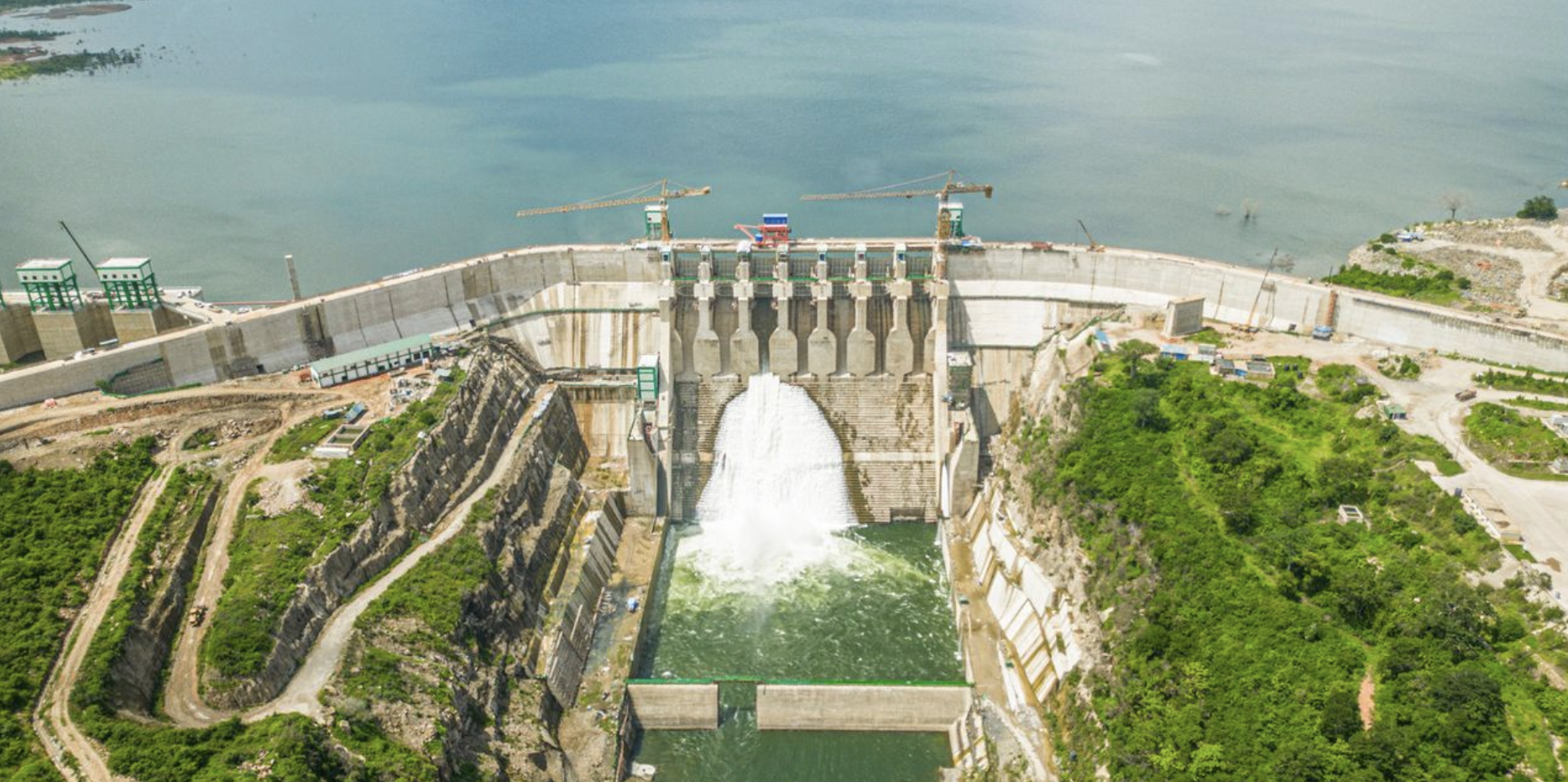
Tanzania’s 2,115 MW Julius Nyerere Hydropower Project is reshaping the country’s energy supply, strengthening industry and opening new opportunities for regional electricity exports.
The project has helped end power shortages and frequent blackouts, giving businesses and industries a more reliable electricity supply for expansion and production.
President Samia Suluhu Hassan formally inaugurated the plant on August 22, saying it would create jobs, attract investment and boost economic growth.
Built on the Rufiji River at a cost of about TZS7.45 trillion ($2.82 billion), the facility is Tanzania’s largest power station.
Its nine generating units, each producing 235 MW, were progressively connected to the national grid, with all units commissioned by March 2025.
The project raised Tanzania’s installed generation capacity to 4,646 MW, compared with peak demand of about 2,271 MW, creating significant spare capacity.
Energy Minister Deogratius Ndejembi said the challenge had shifted from generating electricity to transmitting and using the additional power.
That surplus could support industrial expansion while allowing Tanzania to earn revenue by exporting electricity to neighbouring countries with growing energy needs.
Tanzania already has agreements to sell power to Zambia and trade electricity with Kenya, while talks continue with other regional markets.
The 400 kV Kenya-Tanzania interconnector, energised in December 2024, also connects Tanzania to the wider Eastern Africa Power Pool.
A future Tanzania-Zambia interconnector could further connect eastern and southern African electricity markets, expanding access to potential buyers.
The project is already influencing economic activity, with electricity generation rising alongside stronger industrial output and overall economic growth.
Tanzania’s economy grew 5.5% in 2024 and 6% during January-September 2025, with increased electricity generation identified among key growth drivers.
However, conservation groups have opposed the project over concerns about its effects on wildlife and downstream habitats along the Rufiji River.
For Tanzania, the plant therefore represents more than new generation capacity, offering a foundation for industrial growth, energy security and regional power trade.