
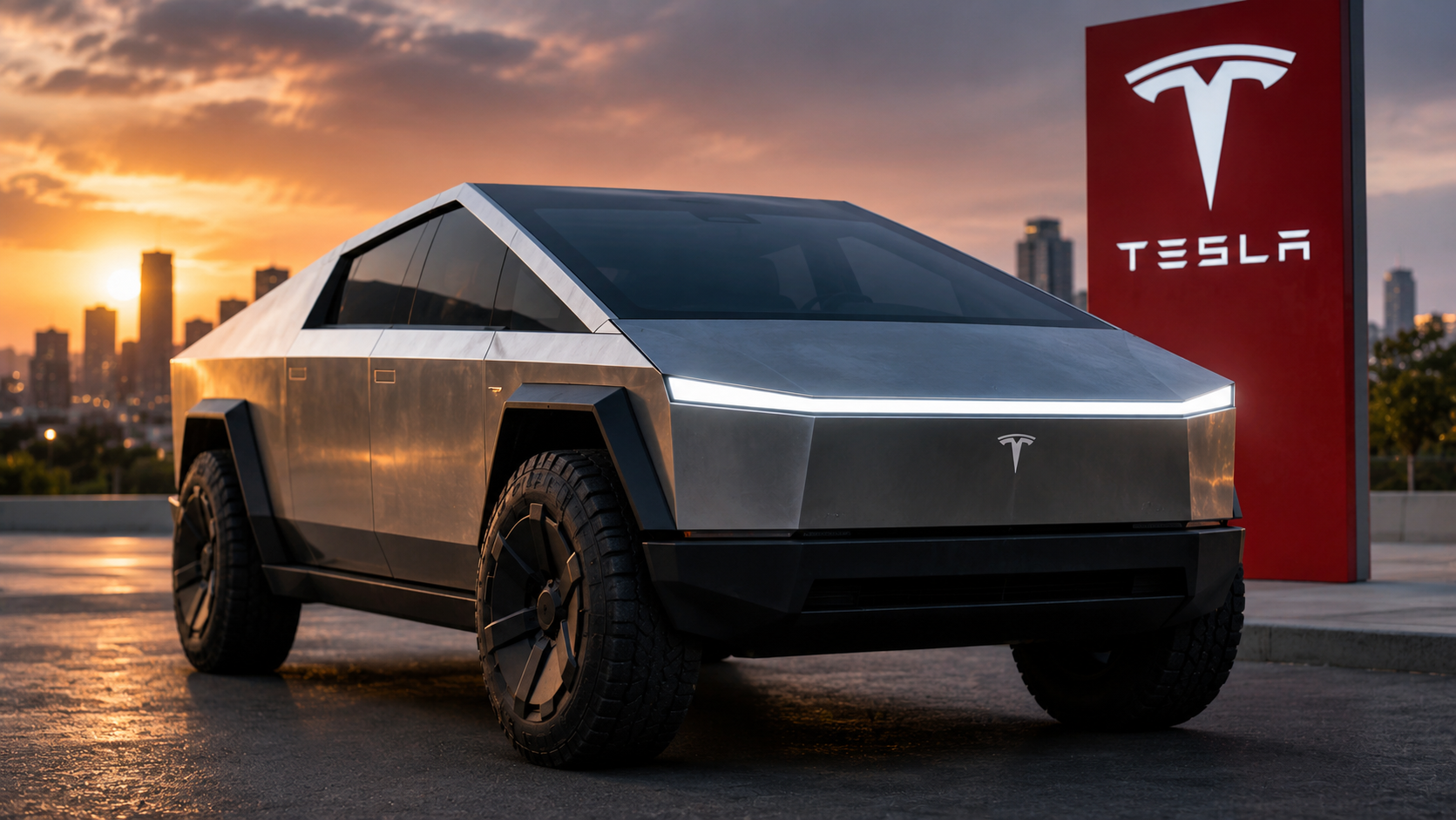
Tesla plans to reduce Cybertruck production in 2027 after a sharp decline in sales. The decision comes as Africa’s electric vehicle market continues to expand.
Elon Musk announced the move on November 6. He said Tesla would begin winding down Cybertruck production at its Texas factory around mid-2027.
The company plans to use more factory space to produce its Cybercab, a vehicle designed for autonomous taxi services.
However, Musk did not confirm whether Cybertruck production would stop permanently or move to another factory.
Tesla Cybertruck sales fall by 48%
The Cybertruck attracted global attention when Tesla unveiled it in 2019.
Its unusual design and stainless-steel body made it one of the company’s most recognisable vehicles.
However, production delays and weaker demand have affected its performance.
According to Kelley Blue Book figures reported by Business Insider Africa, US Cybertruck sales fell by 48.1% in 2025.
Sales dropped from 38,965 vehicles in 2024 to 20,237 in 2025.
The decline came despite Tesla’s earlier ambitions to produce around 250,000 Cybertrucks annually.
Meanwhile, the vehicle has faced recalls, quality concerns and criticism over its design.
Tesla shifts focus to driverless taxis
Tesla is now placing greater emphasis on autonomous transport.
Its planned Cybercab is central to that strategy.
The company hopes to expand production of driverless vehicles as it develops its self-driving technology.
However, regulatory challenges remain an obstacle to wider autonomous taxi operations.
Musk described the Cybertruck production decision as the end of an era.
Nevertheless, he said existing Cybertrucks would remain on the roads for years.
Africa’s electric vehicle market continues to grow
While Tesla changes its production strategy, electric vehicle sales are rising across Africa.
According to International Energy Agency figures cited by Business Insider Africa, electric car sales increased from about 4,000 in 2023 to 25,000 in 2025.
Egypt, Morocco and South Africa accounted for nearly 70% of those sales.
Meanwhile, Chinese manufacturer BYD has expanded its presence across the continent.
Its share of Africa’s electric car market reportedly increased from 4% to 35% during the same period.
BYD has also introduced electric vehicles in countries including Nigeria and Kenya.
Tesla faces competition in Africa
Tesla entered Morocco’s passenger vehicle market in February 2026 with the Model 3 and Model Y.
Although the Cybertruck appeared at the Moroccan launch, the company did not offer it for sale.
Privately imported Cybertrucks have also appeared in several African countries.
However, Tesla has not established official vehicle sales operations in Nigeria or Kenya.
The company has also not announced plans to introduce its Cybercab across Africa.
High vehicle prices and limited charging infrastructure remain major barriers to electric car adoption.
Despite these challenges, Africa’s electric vehicle market continues to attract international manufacturers.
Tesla’s decision highlights a changing global industry. While the company focuses on autonomous taxis, competitors are expanding their electric vehicle businesses across African markets.