



Hippos’ secret weapon: Natural sunscreen and infection fighter
Hippos’ have the ability to secrete a red fluid that acts as both sunscreen and a shield against infections
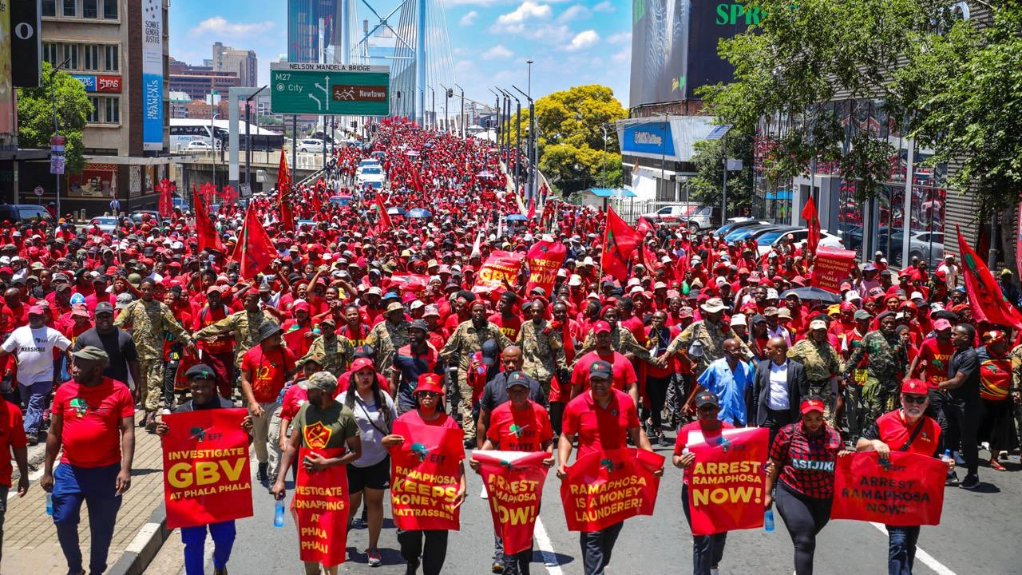
EFF seeks Ramaphosa’s impeachment over ‘Phala Phala’ scandal
Supporters of South Africa’s Economic Freedom Fighters (EFF) party gathered outside the Constitutional Court in Johannesburg on Tuesday, November 26, to watch ongoing court proceedings on a big screen. At the center of the legal debate is a challenge by two opposition parties, calling for the revival of impeachment proceedings against President Cyril Ramaphosa over the Phala Phala scandal. The controversy stems from an alleged cover-up involving large sums of money—more than half a million dollars—in cash that was discovered at Ramaphosa’s private farm in 2022. The money had reportedly been stolen years earlier and kept hidden. The opposition parties, including the EFF, argue that Ramaphosa must be held accountable for the source of the money and that the African National Congress (ANC), using its parliamentary majority, shielded him from facing consequences. “All we want is for the president not to abuse his power, as former President Zuma did at his private residence,” said Thebe, a part-time supporter of the EFF. “We want Ramaphosa to explain where the money that was found at Phala Phala came from. The ANC always uses its majority in Parliament to protect its own.” The scandal emerged in 2022 when it was revealed that a large sum of cash, hidden on Ramaphosa’s farm, had been stolen in a burglary. Despite this, a vote in Parliament, where Ramaphosa’s party holds a dominant majority, blocked impeachment proceedings and effectively protected him from facing charges. EFF leader Julius Malema has called for a full parliamentary investigation into the matter. “We are here to hold the executive accountable,” Malema told the crowd outside the court. “The ANC came into court to defend corruption, to defend a man who has not disputed the fact that there was money at his farm.” Malema also expressed confidence in the EFF’s legal challenge, saying, “Comrades, we are going to win this case against Ramaphosa. And we’ll call him back to Parliament to start an impeachment process because the ANC used its majority in an unconstitutional manner.” The EFF and the African Transformation Movement (ATM) argue that Parliament failed to carry out its constitutional responsibility to hold the president accountable. However, Ramaphosa has been cleared of any wrongdoing by financial authorities, a public watchdog, and the police, after separate investigations. Reviving the impeachment process could be a high-risk move for Ramaphosa, who was re-elected in June for a second term with the support of coalition partners. While the EFF and ATM have been vocal in their calls for action, their smaller size means they would need support from other members of the ANC-led coalition to successfully push for impeachment, which many observers believe is unlikely. The Constitutional Court’s ruling on the matter is expected to take several weeks, or even months, as the legal process unfolds.

Mali cuts Joliba TV signal after criticism of Burkina Faso military
Mali’s ruling junta has shut down the signal of Joliba TV News after a debate in which a prominent politician criticized the military leaders of neighboring Burkina Faso, a journalist for the channel reported Tuesday. Attaher Halidou, the journalist who chaired the debate, told The Associated Press that the authorities cut off their signal but expressed hope it would be restored soon. The incident follows the recent arrest of politician Issa Kaou N’Djim, who claimed during the debate that Burkina Faso’s military government fabricated evidence of a failed coup in September. The director of Joliba TV was also questioned by authorities. The move to block Joliba TV’s signal is the latest step in a crackdown on press freedom and political dissent in Mali, which has been under military rule since 2020. Earlier this year, the junta arrested opposition politicians and activists, and banned media coverage of political parties. Mali’s Press House, a media rights group, threatened to re-broadcast the debate if authorities revoke Joliba’s license. The group’s president, Bandiougou Danté, said they are negotiating with authorities for a solution to restore the channel’s signal and protect press freedoms. N’Djim, a former vice president of Mali’s National Transitional Council, distanced himself from the junta, advocating for a return to democracy. He was previously imprisoned in 2021 for criticizing the military regime on social media. Mali, along with Niger and Burkina Faso, is part of the Alliance of Sahel States, a mutual defense pact formed in 2023. The security situation in the region has worsened, with rising extremist attacks and allegations of government forces killing civilians suspected of aiding militants.
Namibians vote in presidential, parliamentary elections
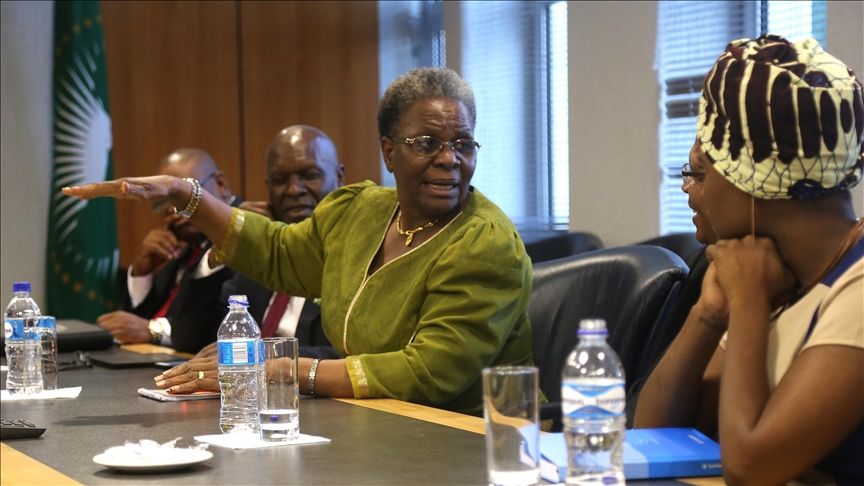
With over 1.4 million people—about half the population—registered to vote, 15 political parties are competing for the presidency and seats in Namibia’s National Assembly
Zanzibar: The world’s “spice island”
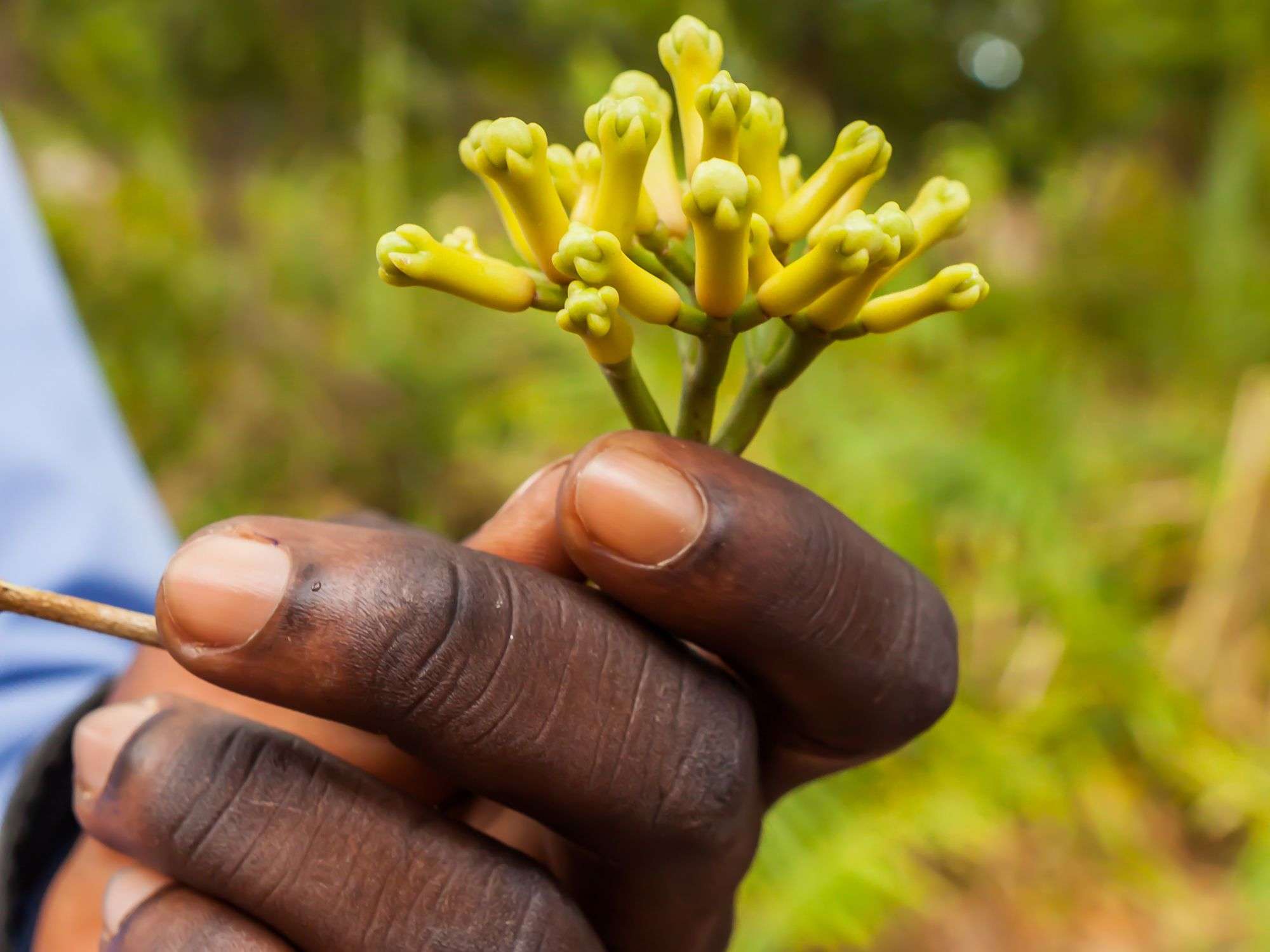
The island’s fertile soils and warm, humid climate create ideal conditions for clove cultivation
DR Congo’s mpox vaccine rollout delayed by legal hurdles
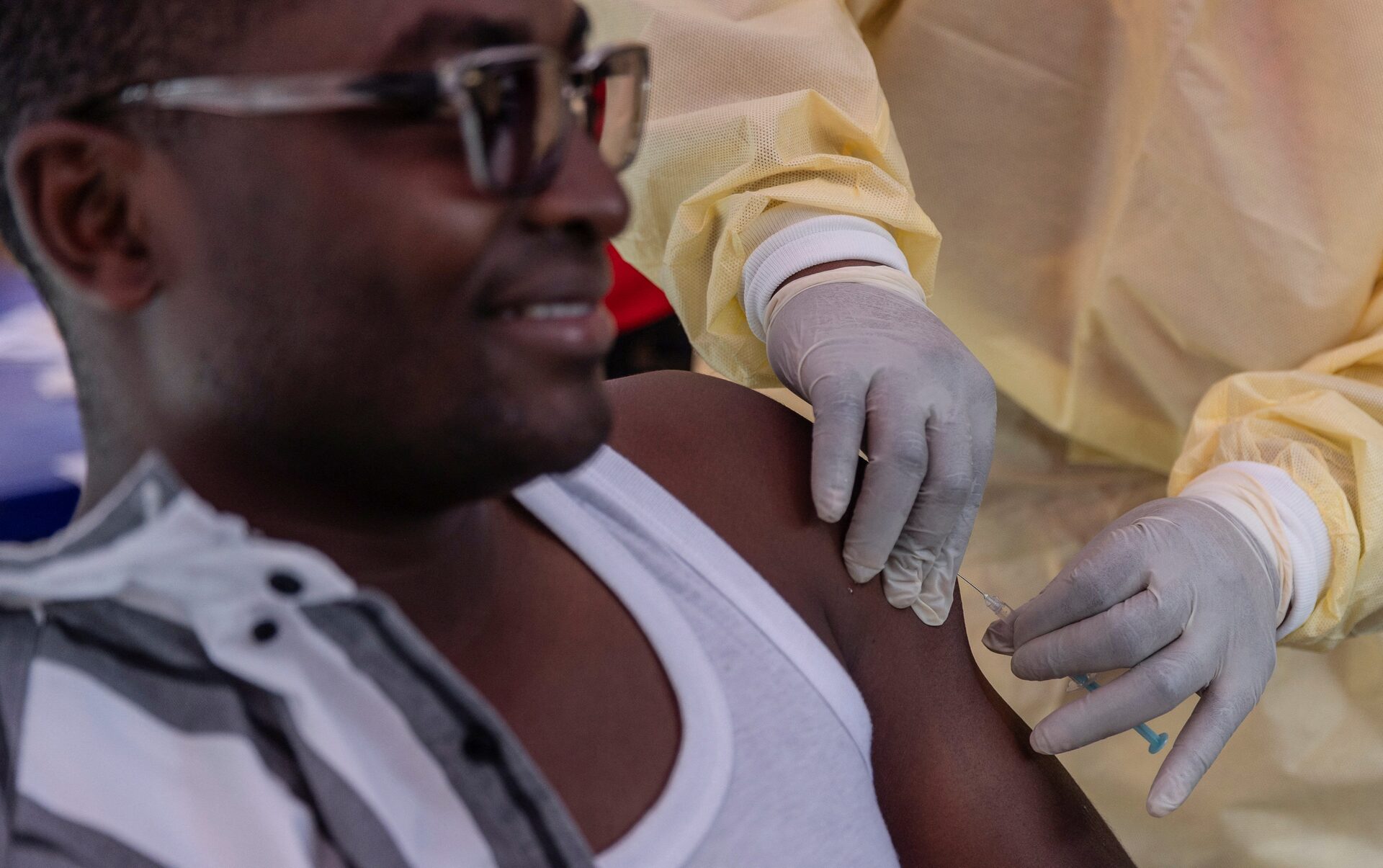
A crucial donation of mpox vaccines from Japan to the Democratic Republic of Congo has been held up by legal issues surrounding liability for potential side effects.

African displacement triples to 35M in 15 years: report
80% of those displaced concentrated in Congo, Ethiopia, Nigeria, Somalia, Sudan

UN probes sexual exploitation of Sudanese refugees in Chad
The allegations involve aid workers and local security forces.

Five dead, 20 missing in Nigeria boat collision
In Nigeria’s Delta State, five people were killed and 20 others went missing after two boats collided and sank. Delta State Police spokesperson Bright Edafe confirmed that the incident occurred in the Warri South area on a river, where two boats carrying passengers returning from a funeral crashed. Search and rescue operations have recovered five bodies, Edafe said, adding that six others were injured in the collision. Efforts to find the missing passengers are ongoing, and authorities expressed concern that the death toll could rise. Boat accidents are common during Nigeria’s rainy season, particularly on rivers and lakes. Just over a month ago, on October 30, 18 people died when a passenger boat capsized in Taraba State.

Interpol catches 1,000 cybercriminals in Africa
The global police organization, Interpol, has successfully conducted a two-month operation in Africa, targeting cybercrime and resulting in the arrest of over 1,000 suspects

SAR operations in Tanzania end after 10 days, 29 dead in collapse
Rescue operations have ended in Tanzania after a building collapse in Dar Es Salaam, leaving 29 dead, with investigations ongoing into the cause.

Four bodies recovered from capsized tourist boat off Egypt’s coast
A total of 28 people were rescued, all with minor injuries, and are now staying in a hotel in Marsa Alam
Malaria costs Nigeria’s economy $1 billion annually
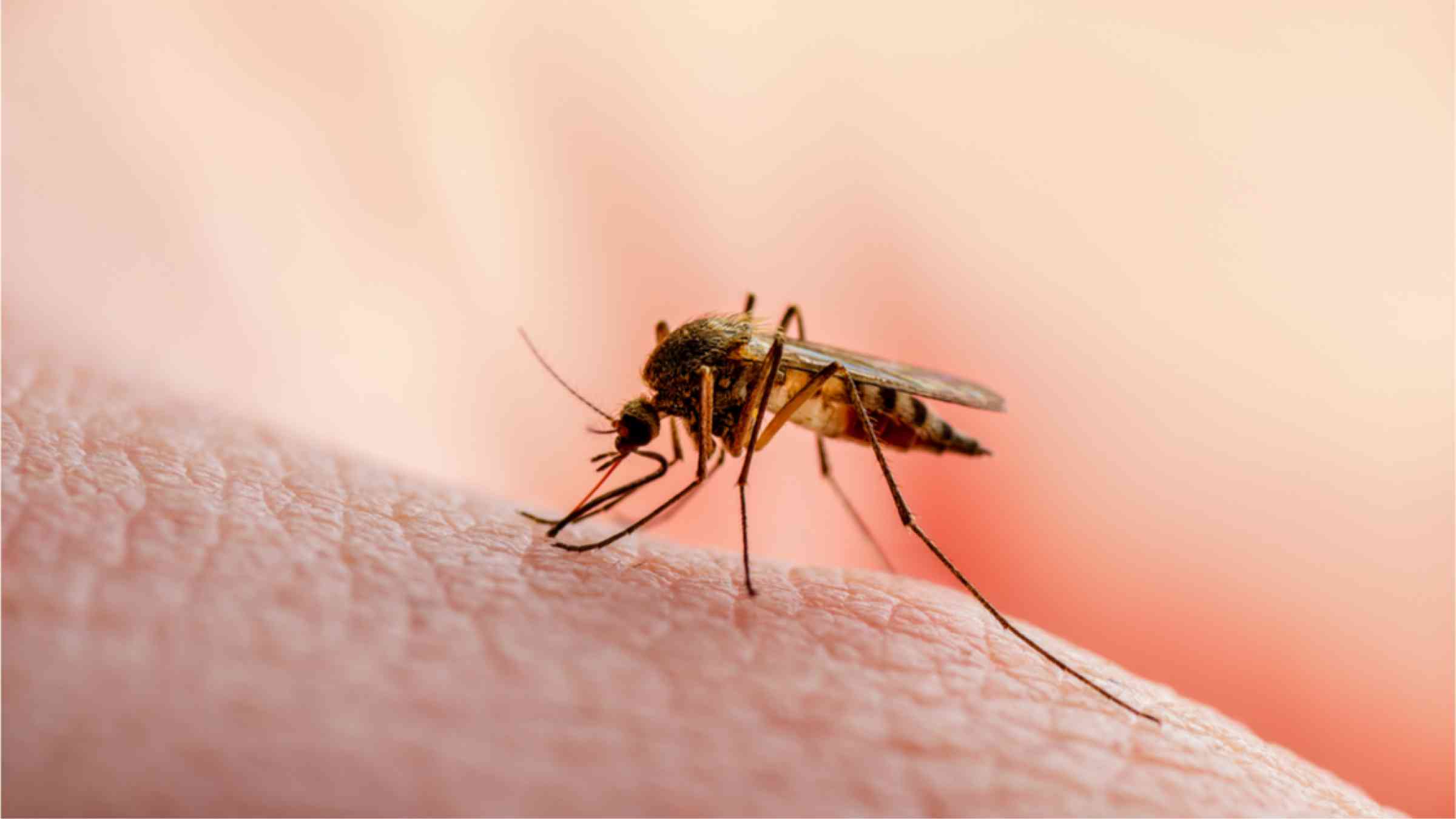
In Nigeria, Africa’s most populous country, the malaria outbreak is reported to cause an annual economic loss of $1 billion. Muhammad Ali Pate, Nigeria’s Minister of Health and Social Welfare Coordination, spoke at a meeting titled “Malaria Elimination Consultancy in Nigeria” in the capital, Abuja. Minister Pate emphasized that malaria is not only a health crisis but also an urgent issue that requires immediate solutions for the country’s economy and development. He stated that malaria causes an annual economic loss of $1 billion in Nigeria and reiterated the government’s commitment to eliminating the disease. Highlighting the severe impact of malaria in Nigeria, Pate noted, “27% of global malaria cases and 31% of global malaria deaths occur in Nigeria. Our country bears the heaviest burden of this disease.” Pate also pointed out that in 2022, more than 180,000 children under the age of five died from malaria in Nigeria, stressing that this tragedy is preventable.

Major food aid push underway in famine-hit Sudan
The World Food Programme (WFP) is scaling up its food aid efforts to reach famine-stricken areas in Sudan, with over 700 trucks carrying essential supplies.

Zambia links power outage to Zimbabwe network fault
No fatalities recorded, with people trapped at two underground mines safely rescued through alternative power supply, says official

EU offers aid to Morocco amid diplomatic tensions
The European Union has offered Morocco €200 million in additional aid for earthquake reconstruction, bringing the total to €1 billion.

Death toll hits 25 after boats capsize near Madagascar
At least 25 Somali migrants have perished after two boats carrying them capsized in the Indian Ocean near the island of Nosy Be, off northern Madagascar.

Fuel crisis sparks protests in Malawi
Malawi police used tear gas to disperse a protest against the ongoing fuel shortage, which has led to widespread disruptions and public anger.

Ugandan opposition leader abducted, faces military trial
His wife, Winnie Byanyima, has expressed concerns about the fairness of the trial and has called on international pressure to secure his release.

Children die in Mozambique protests amid political unrest
Mozambique has been rocked by post-election violence, with security forces accused of killing at least 10 children and injuring dozens more, HRW report shows.

Armed gangs kill 30 in 3 days in Nigeria’s Benue State
Hundreds of armed men stormed communities in Katrina Ala Local Government on Monday, opening fire on farmers and residents, official tells media

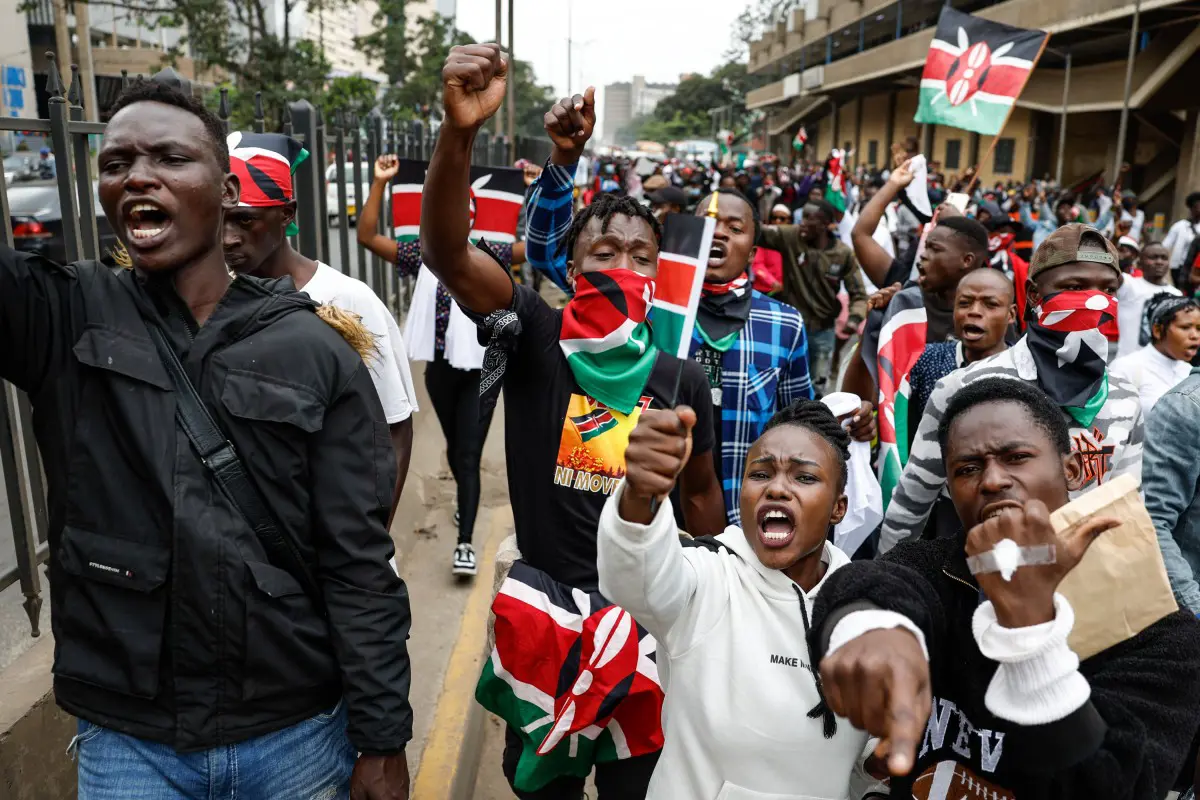
Kenyan police teargas anti-femicide protesters
Globally, 85,000 women were intentionally killed in 2023, with Africa reporting the highest rates, according to the UN

Libyan forces detain over 300 migrants in desert crossing attempt
Aerial photos showed men, women, and children surrounded by soldiers after being intercepted by a desert patrol

WHO declares Mpox outbreak ongoing public health emergency
WHO Declares Mpox Outbreak Ongoing Public Health Emergency The World Health Organization (WHO) has reiterated that the mpox outbreak remains a public health emergency of international concern, citing the rising number of cases, continued geographic spread, and operational challenges in managing the crisis. The WHO’s emergency committee issued this assessment on November 22, extending the emergency declaration first made in August. Africa has been the hardest-hit region, with 19 countries reporting mpox cases since the start of the year. The Democratic Republic of the Congo (DRC) continues to be the epicenter of the outbreak. Canada has also confirmed its first case of Clade I mpox, linked to travel associated with the ongoing outbreak in Central and Eastern Africa. To combat the spread, over 50,000 people have been vaccinated in high-risk areas, with plans to expand the vaccination program to the capital, Kinshasa, next week. Last week, the WHO approved a second mpox vaccine for emergency use, following a review of its safety, quality, and efficacy. As of now, Africa has reported over 46,000 suspected mpox cases and 1,081 deaths in the current outbreak.
Niger demands EU ambassador’s replacement over aid dispute
Niger Requests EU Ambassador’s Replacement Amid Aid Dispute Niger’s government has formally requested the European Union to replace its ambassador, Salvador Pinto da Franca, amid tensions over the distribution of emergency aid. The EU recalled da Franca on Saturday after Niger’s military rulers accused him of allocating €1.3 million in flood relief to NGOs without prior approval. The EU rejected these allegations, expressing “profound disagreement.” On Sunday, Niger’s foreign ministry accused da Franca of continuing “unauthorized operations” despite previous warnings issued in October. The ministry declared that cooperation with the ambassador had become untenable and called for his replacement “as soon as possible.” Since June, flooding in Niger has killed more than 300 people and displaced over 1.1 million. The government stated that it had not requested EU aid and would address the damage with its own resources. Tensions between Niger and the EU have escalated since the July 2023 military coup, with the country distancing itself from both France and the European bloc.

Nigeria: The world’s yam powerhouse
Nigeria has firmly established itself as the global leader in yam production, cultivating over 60% of the world’s supply

Namibia’s Nandi-Ndaitwah poised to become first female president
Namibia’s Vice President Could Make History as First Female President Namibia’s Vice President, Netumbo Nandi-Ndaitwah, could become the country’s first female president if she wins the upcoming presidential election on Wednesday. Around 1.4 million people—approximately half the population—have registered to vote, with 15 political parties vying for the presidency and National Assembly seats. Early results from special polls for Namibia’s foreign missions, seamen, and security services, released this month by the Electoral Commission of Namibia, show that Nandi-Ndaitwah and her party, the South West Africa People’s Organization (SWAPO), are leading the race. SWAPO has governed Namibia since the country gained independence from South Africa’s apartheid regime in 1990. However, the party lost its two-thirds majority in the National Assembly for the first time in 2019, a blow largely attributed to corruption and money laundering scandals in Namibia’s fishing industry, which led to arrests and convictions of key ministers and businessmen. Political analyst Henning Melber, a professor at the University of Pretoria and University of the Free State, cautioned that SWAPO and Nandi-Ndaitwah must heed the 2019 election results, despite their apparent lead in the current race. He noted that SWAPO faces the challenge of attracting younger voters, who may not feel the same emotional connection to the party’s liberation history as older generations. Melber pointed out that “born-frees”—those born after the country’s liberation—are more likely to vote based on policy delivery and governance rather than historical sentiments. “The process of erosion of legitimacy as a former liberation movement has advanced too much,” he said. Nandi-Ndaitwah, 72, has promised to tackle high youth unemployment, which stands at 20%, by creating more than 500,000 jobs over the next five years, backed by a $4.7 billion investment. However, critics argue that her goals may be unrealistic. Issues affecting women, such as reproductive rights, equal pay, and healthcare, are also expected to be key topics for voters. Should she win, Nandi-Ndaitwah would join the ranks of other pioneering female African leaders, such as Liberia’s Ellen Johnson Sirleaf, Malawi’s Joyce Banda, and Samba Pranza of the Central African Republic. Erika Thomas, a political science lecturer at the University of Namibia, emphasized that Nandi-Ndaitwah would need to demonstrate independence, transparency, and accountability if elected. “She must also push for policies that increase women’s participation in political structures,” Thomas added. Nandi-Ndaitwah’s main competition will come from the Independent Patriots for Change, led by former dentist Panduleni Itula, and university professor Job Amupanda’s Affirmative Repositioning party. As the election campaigns wrapped up this weekend, political analysts pointed to significant changes across southern Africa this year. The ANC in South Africa lost its 30-year parliamentary majority, Botswana’s ruling party was unseated after 58 years in power, and the opposition in Mauritius claimed a landslide victory. Meanwhile, protests continue in Mozambique over disputed election results, leading to at least 30 deaths.