




Mozambique’s dollar bond falls amid election tensions
Election-related tensions and rising debt levels have contributed to the decline in Mozambique’s eurobond, as investors seek safer investments.

Quality issues shadow Ivory Coast’s cocoa boom
Despite record rainfall, Ivory Coast’s cocoa farmers face difficulties with financing and quality control, affecting the overall production.

BRICS expansion as a win for African countries
Experts from the Global South view the recent expansion of the BRICS bloc as a positive development. “Any expansion means more voices for those who were unheard and left out of the integration process,” stated Aravind Yelery, a professor at India’s Jawaharlal Nehru University. This perspective emerged during a meeting of 40 think tanks organized by the International Department of the Communist Party of China Central Committee and the China Media Group. The gathering addressed the future of global development amid significant change and turmoil, ahead of the upcoming BRICS summit in Russia from October 22-24. Originally comprising Brazil, Russia, India, China, and South Africa, BRICS expanded earlier this year to include Saudi Arabia, Egypt, the United Arab Emirates, Iran, and Ethiopia. Many believe this expansion will amplify the voices of more countries on the international stage. With the Global South representing about 40% of global GDP and 85% of the world’s population, its influence in global affairs is growing. The expansion of BRICS is seen as a way to create more balance against the Western-dominated international order.

Mali to pay off $332 million internal debt
Mali’s economy has been struggling due to various factors, including coups and regional sanctions.

Ivory Coast’s Lafigue mine to boost Endeavour’s gold production
New Lafigue Mine in Ivory Coast aims for 200,000 ounces of annual gold production under Endeavour Mining.

Economic hardship linked to tragic fuel tanker explosion in Nigeria
Residents of Lagos on Wednesday linked economic hardship and hunger to the tragic deaths of individuals who were collecting fuel from an overturned tanker before it exploded. The explosion in Nigeria claimed over 140 lives, including children, and left many injured. The incident occurred in Majiya, Jigawa State, around midnight when the driver lost control of the gasoline tanker on a highway, leading to a massive fire as people rushed to scoop up the spilling fuel, according to emergency services. “I blame both the people and the government,” said civil servant Emenike Okpaga. “If the government prioritized citizens’ welfare, incidents like this wouldn’t happen.” Software engineer Emmanuel Isaac added, “No one in their right mind would scoop fuel unless driven by hunger. When people see a chance to make money from it, they take it.” In Majiya, residents mourned as they held a mass burial for the victims, most of whom were unrecognizable, according to emergency responders. Fatal tanker accidents are frequent in Nigeria, where traffic regulations are often ignored and efficient cargo transport systems are lacking. The rising fuel prices, which have tripled since the end of government subsidies last year, have led many to salvage fuel from such accidents.

South Africa central bank eyes lower inflation target
South Africa’s central bank governor argues for a lower inflation target, citing studies that show minimal negative impact on economic growth.

Ethiopia’s telecom giant offers shares to public
Ethiopia’s government has taken a significant step towards economic modernization by launching the sale of shares in Ethio Telecom.

Kenya discusses $1.5B UAE loan to diversify finances
Finance Minister Mbadi announces UAE loan talks as Kenya seeks better financing options amid IMF delays.

Congo government halts state-financed travel
Facing a financial crisis, Brazzaville has suspended state-funded travel for government officials, encouraging them to participate in video conferences instead.

Nigeria’s oil regulator rejects Shell’s $1.3b sale
Nigeria’s oil regulator has rejected Shell’s proposed sale of its onshore oilfields to Renaissance Group due to the buyer’s lack of qualification to manage the assets.

French company lowers targets for Gabon mines amid tight market
Eramet has significantly reduced its production targets for its manganese and nickel mines in Gabon and Indonesia due to market conditions and regulatory changes.

Senegal unveils 25-year economic sovereignty plan
The plan aims to increase energy independence, reduce the budget deficit, and improve governance.

World Bank warns of slow Sub-Saharan Africa recovery
The World Bank has revised its growth forecast for sub-Saharan Africa downward due to the ongoing conflict in Sudan.

IMF reforms cut borrowing costs for struggling nations
The IMF has lifted debt surcharges for eight countries, easing their financial burdens and lowering their overall borrowing costs.
Nigeria signs gas deal for $3.5 billion fertilizer plant
The Brass fertilizer and petrochemical project in Nigeria represents a critical step in harnessing the nation’s gas resources to support domestic agriculture.

Global aluminium market tightens as Guinea bauxite exports halt
The suspension has pushed aluminium prices to new heights, raising concerns about future availability.

New IMO chief urges action to reduce shipping emissions
For years, the international shipping industry has faced criticism for its slow progress in reducing the significant carbon emissions produced by vessels transporting everyday goods like food, cars, and clothing. Now, the new head of the International Maritime Organization (IMO), Arsenio Dominguez, is subtly urging companies to take action. “There is more that can be done,” he stated during an interview at Germany’s Hamburg Sustainability Conference. “The low-hanging fruit is there.” Dominguez, who became secretary general at the start of the year, highlighted strategies like using satellites for optimal routing based on weather, cleaning ship hulls to reduce water friction, and “slow steaming”—operating vessels below their maximum speed to cut fuel use and emissions. While acknowledging that many companies are making efforts to reduce greenhouse gas emissions, he stressed that achieving the IMO’s target of a 30% emissions reduction by 2030 requires immediate implementation of all available measures. A significant overhaul of shipping fuel is essential for decarbonization, as the industry predominantly uses heavy fuel oil, which emits carbon dioxide and other pollutants. Cleaner alternatives like hydrogen, ammonia, and biofuels are in development but face challenges of cost, scalability, and sustainable production. The shipping sector currently accounts for about 3% of global greenhouse gas emissions, and these figures are projected to rise sharply without significant changes. Unlike other sectors like power and ground transportation, which have made strides in decarbonization through electrification, shipping has lagged behind. Last year, the IMO set a goal to achieve net-zero emissions by around 2050, highlighting the considerable work ahead. The organization is also being urged to implement a carbon tax, similar to initiatives in the European Union, where large ships are already taxed on their carbon dioxide emissions. Dominguez clarified that he doesn’t prefer to call it a tax, given the sensitivity surrounding the issue. He mentioned that several scenarios are being considered, including carbon efficiency ratings for ships and setting fuel standards. The IMO committee will meet in April to discuss these measures, with formal adoption expected in the fall, and any decisions would take effect in 2027, allowing time for adjustments. In the meantime, Dominguez emphasized that shipping companies should maximize emission reductions, including the use of liquid natural gas (LNG) as a fuel. While LNG can improve engine efficiency and lower emissions, concerns remain about methane leaks, which can undermine any benefits gained. Environmentalists argue that relying on LNG allows fossil fuel producers to maintain the status quo, delaying a necessary transition to renewable energy sources.

Global business travel set to reach record $1.5T in 2024
After a prolonged period of decline, global business travel is set to surpass pre-pandemic levels by 6.2%, hitting a historic $1.5 trillion in 2024, a report from the World Travel & Tourism Council (WTTC) showed Thursday. The resurgence, which outpaces previous predictions, reflected the renewed importance of face-to-face interactions in global commerce after years of remote working and virtual meetings, according to the WTTC’s 2024 Economic Impact Trends Report. Last year, leisure travel was 2.9% below the 2019 peak, while business travel continued to struggle, remaining 5.4% behind, it said. The world’s two largest business travel markets, the US and China, led the hike. Business travel spending in the US, which made up nearly 30% of the global total in 2019, is projected to reach $472 billion this year, marking a 13.4% rise above 2019 levels. China, the second-largest market, is set to follow closely, with business travel spending forecast to grow by 13.1% to $211 billion. European markets also saw significant growth, with Germany, the third-largest market, projected to see business travel expenditures hit $87.5 billion. The UK and France are expected to see record-breaking levels of $84.1 billion and $42.1 billion, respectively. “After a challenging few years, business travel is not only back on track, but it is recovering much faster than expected, highlighting the importance of international travel for businesses around the world,” Julia Simpson, WTTC president and CEO, said at the global tourism body’s 24th Global Summit in Perth, Western Australia. “Many business powerhouses such as the US, China and Germany are expected to reach record numbers this year. While virtual meetings played a crucial role during the pandemic, keeping people and businesses connected, today’s report shows that business is better face to face,” she added. Speaking at the summit, Paul Abbott, CEO of American Express Global Business Travel, said the travel restrictions due to the pandemic highlighted the unique value of travel and in-person connections. “We always said travel was a force for good, driving economic and societal progress. When travel stopped, GDP plummeted, unemployment soared, and mental health issues escalated. The benefits of travel are now no longer in doubt,” he said. Abbott underlined the growing trend of companies investing in managed business travel as part of their strategies to foster growth and culture in the post-pandemic era. Other factors have also fueled the resurgence of business travel, such as the rise of “blended travel,” where professionals mix business trips with leisure vacations. Moreover, the Meetings, Incentives, Conferences and Exhibitions (MICE) industry has seen a strong recovery, resuming in-person events after long periods of cancellations.

Egypt: New customs duty for corn imports to secure food supply
The customs duty applicable to corn imports, which is one of the main production inputs in the feed and starch sectors, has been redefined to be in effect until the end of the year. A presidential decree on the matter was published in the Official Gazette. In a statement from the Ministry of Trade, information regarding the implementation was provided. The ministry emphasized that it is taking necessary measures in coordination with relevant institutions and organizations by using all trade policy tools to prevent speculative pricing and ensure supply security for essential food products, while considering the welfare of both producers and consumers. It noted that corn is a significant production input in the food industry, particularly due to its use in poultry feed and the starch sector. The statement included the following remarks: “In the 2024 harvest, a significant decline is expected in both our country and globally due to adverse climate conditions, as well as regional and global developments. This matter is being closely monitored by our Ministry of Trade in consultation with the Ministry of Agriculture and Forestry. Therefore, in order to prevent the potential impact of supply issues for this product on food prices, a new regulation has been established by our Ministry of Trade, in agreement with the Ministry of Agriculture and Forestry, for the part of our country’s needs that cannot be met by domestic production until the end of the year. With this regulation, a 5% customs duty tariff quota has been opened for only 1 million tons of corn, ensuring that our corn-producing farmers are not harmed, balancing supply and demand, and protecting consumers from potential speculative price movements in the food sector. For imports exceeding 1 million tons during this period, a customs duty of 130% will continue to be applied.” The statement also emphasized that the Ministry of Trade will continue to closely monitor the supply, demand, and price levels in the market, in consultation with other institutions and organizations, and will implement necessary regulations in a timely manner. A communiqué on the matter has also been published in the Official Gazette.

Western nations woo South African coal workers on green transition
The initiative aims to ensure a just transition for communities heavily reliant on the coal industry.

Algeria excludes french wheat from import tender
Algeria has banned French wheat imports in a recent tender, citing diplomatic tensions with France over the Western Sahara dispute.

Italian prosecutors sentenced for negligence in Nigeria Eni case
Italian prosecutors were found guilty of negligence in the Eni corruption case, facing eight months in prison for omitting crucial evidence.

Norway’s Equinor reaffirms commitment to Tanzania LNG project
Equinor maintains focus on $42 billion LNG project in Tanzania amid stalled negotiations over revised government agreements.

Kenya reduces benchmark rate as inflation falls
Kenya’s central bank has lowered its benchmark lending rate to 12.00% from 12.75% to stimulate credit and address a slowdown in economic growth.
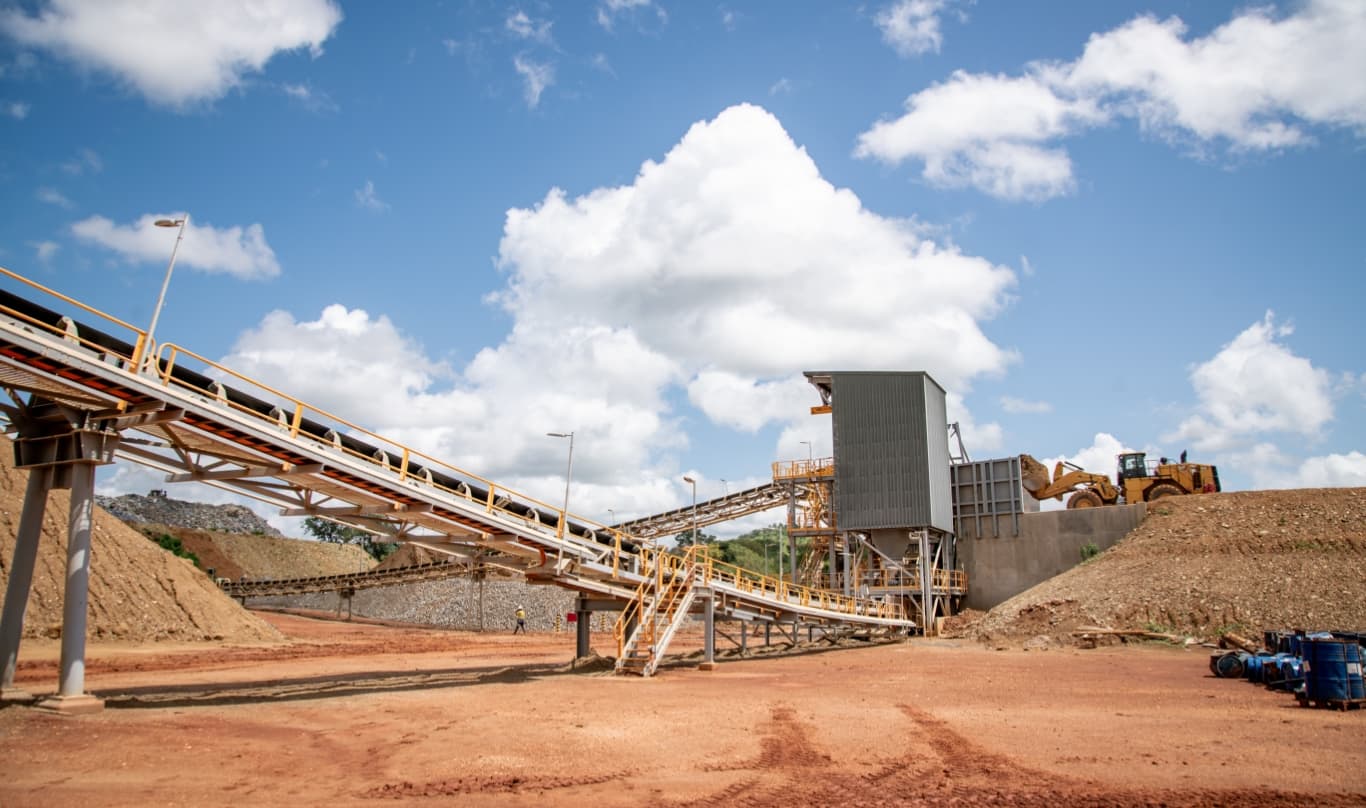
Burkina Faso reassures Fortuna Mining on permit status
Canadian mining company Fortuna Mining has received positive news from Burkina Faso, as the government has decided to maintain their existing mining permits in the country.

Illegal gold mines in Ghana grow as prices fuel dangerous practices
The rise of unlicensed gold mining in Ghana is boosting the economy while endangering health, polluting the environment, and fueling crime.