
Ethiopian birr falls to 107.9 at auction

Ethiopia’s central bank set the exchange rate at 107.9 birr per U.S. dollar in a special auction to align with a market-determined system and secure IMF support.

World Bank: 100+ Countries Trapped in “Middle-Income Trap”

The World Bank announced on Thursday that over 100 countries risk falling into a “middle-income trap” unless they implement bold economic growth strategies. Countries such as South Africa, India, Brazil, and China face significant challenges that could impede their progress toward becoming high-income nations in the coming decades. The World Development Report 2024: The Middle Income Trap reveals that as countries become wealthier, they often encounter a “trap” when their GDP per capita reaches approximately 10 percent of the annual US GDP per person. Somik Lall, Senior Advisor to the World Bank Group Chief Economist and Director of the report, noted that the outlook for these countries is bleak. “Over the past 30 years, only 34 middle-income economies have successfully transitioned to high-income status, while others remain trapped,” he said. The study highlights that middle-income countries face tougher challenges compared to their predecessors, including rapidly aging populations, increasing protectionism in advanced economies, and the urgent need for faster energy transitions. It presents a “comprehensive roadmap” to help developing countries escape the “middle-income trap” and achieve high-income status. Lall suggests that countries should abandon outdated methods and adopt a “3i strategy” involving a phased approach with progressively sophisticated policies tailored to their development stage. Low-income countries should focus initially on investment policies (the 1i phase). As the benefits of investment diminish, they should then shift to “infusion,” incorporating global ideas and integrating them into local economies. For upper-middle-income countries, the final phase involves “innovation,” where they strive to become global leaders and producers. Lall emphasized that success will depend on how well societies manage the balance between creation, preservation, and destruction. “Countries that avoid the discomfort of reforms and openness will miss out on the benefits of sustained growth,” he concluded.

Kenyan carmaker Mobius cease operations

Financial struggles and competition from second-hand imports contributed to the closure.

Nigeria’s crude output rises as navy curbs oil theft effectively

Nigeria’s oil output has increased to between 1.6 and 1.7 million barrels per day due to improved security measures by the Nigerian navy to combat crude theft.

Global markets recovered after historically high selling pressure

After concerns that economic activity in the US may slow down more sharply than expected led to deepening selling pressure in global markets on Monday, risk appetite increased in the markets on Tuesday. The effects of concerns that the Fed’s decision to cut interest rates in the near future could raise concerns about the course of the economy, causing panic in the markets, were also felt intensely. The emergency rate cut decision could be interpreted as the Fed losing control over the markets, analysts pointed out, adding that the bank should clarify the steps it will take in the short term. On the other hand, the Purchasing Managers’ Index (PMI) for the service sector in the US provided some relief in July, while the Institute for Supply Management (ISM) service sector (PMI) increased by 2.6 points on a monthly basis to 51.4 in July, in parallel with market expectations. “It doesn’t make sense to maintain a restrictive policy stance if the economy is weakening,” said Chicago Fed President Austan Goolsbee, a closely followed Fed officials, in an interview on Tuesday. “The employment numbers came in weaker than expected, but it doesn’t look like a recession yet,” he added Goolsbee refrained from commenting on whether the Fed would go to an emergency meeting and cut interest rates, saying that this is a very big table, so everything is always on the table, such as rate hikes and rate cuts.  With these developments, forecasts for the Fed to cut interest rates by 50 basis points in September have also strengthened. In the Eurozone, the composite Purchasing Managers’ Index (PMI), which was 50.9 in June, fell to 50.2 in July, the lowest level in the last five months. The service sector PMI in the Eurozone, which was 52.8 in June, fell to 51.9 in July, the lowest level in the last four months. In Germany, service sector PMI, which was 53.1 in June, fell to 52.5 in July, the lowest level in the last four months. In the region, the Producer Price Index (PPI) increased by 0.5% on a monthly basis in June, while it decreased by 3.2% annually. While cryptocurrency markets also recovered, Bitcoin increased by 2.1% to $55,506. Reflecting the decline in technology stocks yesterday.  Nvidia’s shares, one of the companies that attracted attention in the artificial intelligence rally, fell 6.36%. Apple’s shares also dropped 4.82%, while Berkshire Hathaway, where US investor Warren Buffett is the Chief Executive, halved its shares in the company. Microsoft’s shares declined 3.27%, Meta’s shares fell 2.54%, Alphabet’s shares fell 4.61% and Amazon’s shares fell 4.1%, while Tesla’s shares fell 4.23%. While banking stocks also decreased with recession fears, Citigroup’s shares fell 3.42%, Wells Fargo’s shares fell 2.14%, JPMorgan Chase’s shares fell 2.13% and Morgan Stanley’s shares fell 3.94%. US markets saw a slight downbeat on Monday, with the Nasdaq index fell 3.38%, the S&P 500 dropped 3%, and the Dow Jones decreased by 2.60%. The US 2-year bond yield closed at 3.97% while Brent crude oil prices have stood at $76,9 per barrel. The US 10-year bond yield closed at 3.84%, and gold prices down by 0.3% to $2,403 an ounce. As for the VIX volatility Index, also known as the fear index, fell to 38.57. European stock markets continued to follow a mixed trend. The FTSE 100 index in the UK dropped 2.04%, France’s CAC 40 index 1.42%, Germany’s DAX 40 index decreased 1.82% and, Italy’s MIB 30 index 2.27% on Monday.  In Türkiye, the BIST 100 index in Borsa Istanbul closed at 9,893.41 points, down 5.54% from the previous close. The USD/TRY exchange rate traded at 33.3502 at the opening of the interbank market on Monday. On the other hand, the Consumer Price Index (CPI) increased by 3.23% and the Domestic Producer Price Index (D-PPI) by 1.94% on a monthly basis in July. Annual inflation realized as 61.78% in consumer prices and 41.37% in domestic producer prices. In Asian markets, which experienced a historic decline on Monday due to rising recession concerns, some of the losses experienced with the upward trend were compensated on Tuesday. The investments made in high-yielding assets with Japanese yen borrowing on Monday triggered the selling pressure in the regional markets with the BoJ’s interest rate hike and the rapid appreciation of the Japanese yen, analysts said. Thus, both the yen, which strengthened with the hawkishness of the BoJ, and the concern that the increasing recession concern in the world could negatively affect the performance of exporting Japanese companies played an important role in deepening the selling pressure in Japanese stock markets. On the other hand, Japan’s Finance Ministry, Financial Services Agency and BoJ officials are expected to meet today to discuss the state of the markets. In addition, the Reserve Bank of Australia left the policy rate unchanged at 4.35 percent. Near the close, Japan’s Nikkei 225 index rose 8.9%, South Korea’s Kospi index 4%, while the Hong Kong’s Hang Seng composite index fell 0.1% and China’s Shanghai index decreased 0.3%.

Glencore fined $150 million for Congo bribery

Swiss prosecutors have concluded a long-running investigation into Glencore’s activities in Congo, finding the company responsible for bribery.

Egypt’s NFA continues upward trend after two-year slump

The country has taken steps to stabilize its currency and attract foreign investment.

Nigerian president stands firm against fuel subsidies despite unrest

President Bola Tinubu’s firm stance against fuel subsidies sparks nationwide protests across Nigeria.

Cameroon state oil firm to face UK court over Glencore bribery scandal

The head of Cameroon’s National Hydrocarbons Corporation (SNH) announced that some of its managers and employees will appear before a UK court due to their suspected involvement in bribery linked to Swiss commodity trader Glencore GLEN.L. Adolphe Moudiki, SNH’s administrator and director general, initially denied staff involvement but issued a statement late on Friday acknowledging that some employees have been identified as suspects and will appear before a British court on Sept. 10. In June 2022, Glencore’s UK subsidiary pleaded guilty to seven counts of bribery in a London court, involving oil operations in Cameroon, Equatorial Guinea, Ivory Coast, Nigeria, and South Sudan. On Thursday, Britain’s Serious Fraud Office (SFO) charged Glencore’s former head of oil, Alex Beard, with two conspiracies to make corrupt payments to government officials and employees of state-owned oil companies in Nigeria and Cameroon. “SNH welcomes the progress of proceedings against the perpetrators and accomplices of the acts of corruption that have tarnished its image,” Moudiki stated, without specifying the number of SNH staff involved. Glencore’s UK subsidiary admitted to paying bribes amounting to 7 billion CFA francs ($11 million) to SNH officials and others to secure preferential access to oil between 2011 and 2016. Cameroonian lawyer and anti-corruption specialist Akere Muna urged SNH to disclose the identities of those involved and to suspend dealings with Glencore. “The culprits are within Cameroon, the transactions that gave rise to the corruption took place in Cameroon, yet they expect us to believe the solution will come from London,” Muna said. In July 2022, Cameroon’s state anti-corruption commission announced an investigation into the bribery offences but has not provided further details since then. SNH is responsible for selling the share of national crude oil production accruing to the state on the international market.

Zambian police seize $1.6 million in fake cash

The Zambian Drug Enforcement Commission has successfully disrupted a counterfeit currency operation, arresting five suspects and recovering a substantial amount of fake US dollars.

Africa gets stronger voice at IMF with new board seat

The IMF has increased the number of Executive Directors on its board to include a new position specifically for Sub-Saharan Africa.

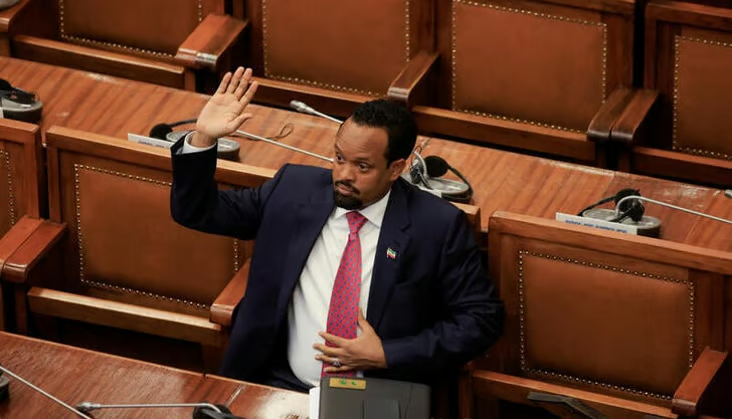
Ethiopia to save $4.9B in debt relief with new restructuring plan

Ethiopia is set to reduce its debt repayments by $4.9 billion as it finalizes its debt restructuring, State Finance Minister Eyob Tekalign announced Friday. The move follows the country’s recent agreement with the International Monetary Fund (IMF) for a new financing program. The debt overhaul will involve negotiations with individual creditors over the coming months, with expected savings including $200 million from restructuring a $1 billion Eurobond. This process aims to adjust the bond’s nominal value. Prime Minister Abiy Ahmed also addressed recent economic reforms, including the switch to a market-determined foreign exchange rate. The Ethiopian birr, which floated freely starting Monday, has depreciated by 31.5% against the dollar, causing concern over potential inflation. Abiy emphasized that the adjustment aimed to unify disparate exchange rates rather than devalue the currency. Meanwhile, the federal trade ministry has closed over 700 shops for unjustified price hikes, as part of efforts to control inflation. The reforms, which also include lifting foreign exchange restrictions, are expected to encourage private sector growth and enhance long-term economic stability, despite concerns from some local governments about the impact on low-income households.

Kenya’s inflation falls in July as food and fuel prices decrease

Inflation in Kenya dropped to 4.3% year-on-year in July, down from 4.6% in June, according to the Kenya National Bureau of Statistics. This four-year low was driven by a stronger shilling and slight reductions in household costs like electricity and fuel. Transport costs increased by only 4% in July, a significant decrease from 7.7% the previous month. Food prices also fell by 0.5% between June and July, although some categories saw sharp price hikes. Despite overall inflation easing, rising costs for items like cooking oil and gas mean that consumers still face financial pressure. The Central Bank may consider a rate cut when the Monetary Policy Committee meets on August 6. In recent months, Kenyans protested against tax hikes and the high cost of living, leading President William Ruto to withdraw a proposed finance bill. Ruto, who assumed office in September 2022, faces challenges including high inflation, debt, unemployment, and post-COVID stagnation, while balancing lender demands and public discontent.

Ethiopian authorities crackdown on price gouging businesses

Following the Ethiopian birr’s devaluation, authorities have taken action against businesses found to be excessively raising prices on goods.

OPEC+ ministers to meet Thursday, no production cut changes expected

Key ministers from OPEC+ are set to meet on Thursday to discuss output policy, with sources indicating they are unlikely to alter the current production cuts. Despite recent sharp declines in oil prices, OPEC+ plans to begin unwinding some of these cuts from October. The Organization of the Petroleum Exporting Countries and its allies, led by Russia, will hold an online Joint Ministerial Monitoring Committee (JMMC) meeting at 1100 GMT. Four OPEC+ sources told Reuters that no changes to the current plan are expected. Oil prices have dropped from a 2024 high of over $92 per barrel in April to below $82, amid concerns about demand, though recent tensions in the Middle East have provided some support. OPEC+ is currently cutting output by 5.86 million barrels per day (bpd), about 5.7% of global demand, in a series of steps agreed since late 2022. In June, the group extended cuts of 3.66 million bpd until the end of 2025 and prolonged a 2.2 million bpd cut by eight members until the end of September 2024. The plan calls for these 2.2 million bpd cuts to be phased out gradually from October 2024 to September 2025. The JMMC, which includes oil ministers from Saudi Arabia, Russia, and other leading producers, meets every two months and can make recommendations to the wider OPEC+ group.

Oil up amid growing geopolitical conflicts in Middle East

 Oil prices increased on Thursday amid growing tension in the Middle East following the assassination of Ismail Haniyeh, the head of the Palestinian Hamas group’s political bureau, and positive demand outlook in the US, supported by inventory data from the Energy Information Administration (EIA). International benchmark Brent crude traded at $81.44 per barrel at 10.13 a.m. local time (0713 GMT), a rise of 0.74% from the closing price of $80.84 per barrel in the previous trading session. The American benchmark West Texas Intermediate (WTI) traded at $78.33 per barrel at the same time, a 0.53% increase from the previous session that closed at $77.91 per barrel. Haniyeh was killed in an Israeli airstrike on his Tehran apartment the day after attending Iranian President Masoud Pezeshkian’s inauguration, according to announcements made by Iran and Hamas on Wednesday morning. Though Israel has remained silent about Haniyeh’s death, Prime Minister Benjamin Netanyahu has hinted at Tel Aviv’s involvement in his assassination. Escalating geopolitical tensions in the regoin, home to a vast majority of global oil reserves, despite cease-fire negotiations, supported upward price movements by increasing supply risk in the markets. Meanwhile, data indicating a drop in crude stocks in the US, the world’s largest oil-consuming country, lent support to crude oil prices by suggesting that oil demand was increasing. According to data released by the EIA late Wednesday, US commercial crude oil inventories decreased by 3.4 million barrels to 433 million barrels during the week ending July 26. The drop in inventory was well above the market prediction of a 1.6 million barrels fall. However, the rise of the US dollar against other currencies limited further price rises. Strong dollar ramped up prices for non-US currency holders and discouraged investors. The US dollar index rose by 0.09% to 104.18 at 9.58 a.m. local time (0658 GMT), compared to the previous trading session.

Cameroon secures $550 million to clear debt

Cameroon successfully concludes a $550 million bond sale to reduce domestic debt and boost economic activity.

MNT-Halan expands in Egypt with Turkish buy

Egyptian fintech leader MNT-Halan has acquired Turkey’s top micro-leasing company, Tam Finans.

Mozambique central bank cuts rate again

Mozambique’s central bank has reduced its main interest rate for the fourth consecutive meeting, citing a favorable inflation outlook and signaling more cuts to come.

French energy giant buys stake in Ugandan hydropower

TotalEnergies aims to contribute to Africa’s energy transition and bring electricity to millions.

Ethiopia clinches deal with IMF for $3.4B in financing

Ethiopia has secured an agreement with the International Monetary Fund (IMF) for a new financing program valued around $3.4 billion, the IMF announced Monday. The new four-year loan program will help support the country’s economic reform agenda. The approval of the loan agreement allows for the immediate disbursement of around $1 billion, the IMF said in a statement. The agreement follows extensive talks between Ethiopia and the IMF to secure more funding and restructure the country’s debt. As part of the discussions, Ethiopia has taken significant steps, such as the central bank allowing the country’s currency to float, which has led to a 30% devaluation of the Ethiopian birr against the US dollar. “The recent measures to decisively tackle macroeconomic imbalances, including moving to a market-determined exchange rate, removing current account restrictions, and modernizing the monetary policy framework to control inflation are critical steps forward,” the IMF said in a statement. In return for these measures, Ethiopia is expected to receive a $10.7 billion loan package from the IMF, the World Bank, and other creditors.

Mozambique set to receive $1.9B after ‘Tuna Bond’ ruling

Mozambique expects to recoup around $1.9 billion as a result of a substantial court victory in the “tuna bond” scandal case tried in a London court, the southern African country’s attorney general said Monday. The revelation was made after London’s High Court “substantially” ruled in favor of Mozambique against Emirati-Lebanese shipbuilder Privinvest on Monday in connection with the alleged payment of bribes in one of Africa’s biggest graft scandals. A statement issued by the Attorney General’s Office said the $1.9 billion figure reflects the amounts that the state has already paid under the guarantees, including principal, interest and fees of the Eurobonds. It added that the attorney general would also take steps to pursue the reimbursement of all legal costs resulting from the case. “The Attorney General’s Office will continue within the scope of its constitutional and legal powers to work with other actors in society, both inside and outside the country, to eradicate corruption and all organized and transnational crime, holding those involved accountable,” the statement said. Mozambique sued Privinvest and its late owner Iskandar Safa on allegations of paying bribes to its government officials and Credit Suisse bankers. The suit alleged that more than $136 million was paid to secure favorable terms on three projects in 2013 and 2014, including one designed to exploit the country’s tuna-rich coastal waters. In his ruling, Judge Robin Knowles said Mozambique is “entitled as against Mr. Safa and the Privinvest companies” to payment of more than $825 million in damages. In addition, Mozambique is entitled to an indemnity in respect of payments of around $1.5 billion that it is meant to pay, including about $1.4 billion it is liable to pay to bondholders until 2031, according to the ruling. The court found that Privinvest had bribed Manuel Chang, a former finance minister, to approve loans. Privinvest and Safa, however, denied the charges during the beginning of the trial last year, arguing that any payments were lawful. The respondents through their lawyers claimed the case was politically motivated to shift blame from Mozambican President Filipe Nyusi and other senior officials. The scandal occurred after three newly state-owned companies in 2013 and 2014 reportedly acquired more than $2 billion in loans from international banks with the Mozambican government as guarantor – most of it taken without the approval of the country’s parliament. An independent audit in 2017 revealed that $500 million of the money went missing under unclear circumstances. Following the scandal, donors including the International Monetary Fund (IMF) cut funding to the country, triggering an economic crisis amid a surge in inflation and currency collapse after the government admitted to the borrowing. The money was reportedly used to purchase a large tuna factory and a maritime security fleet but also used to fund other deals involving public-private companies. In 2022, a court in Mozambique handed a 12-year jail term to the son of former President Armando Guebuza after finding him guilty in the scandal. Armando Ndambi Guebuza was convicted of embezzlement, money laundering and criminal association in the case, which defrauded the government of more than $2.7 billion.

Nigeria seeks FX relief with naira oil transactions

Nigeria’s government approved the sale of crude oil to the Dangote refinery in naira to alleviate foreign exchange pressures.

Ethiopia seeks IMF bailout with market-based exchange rate

Ethiopia has relaxed foreign exchange controls in hopes of securing a multi-billion dollar bailout as it grapples with economic challenges.

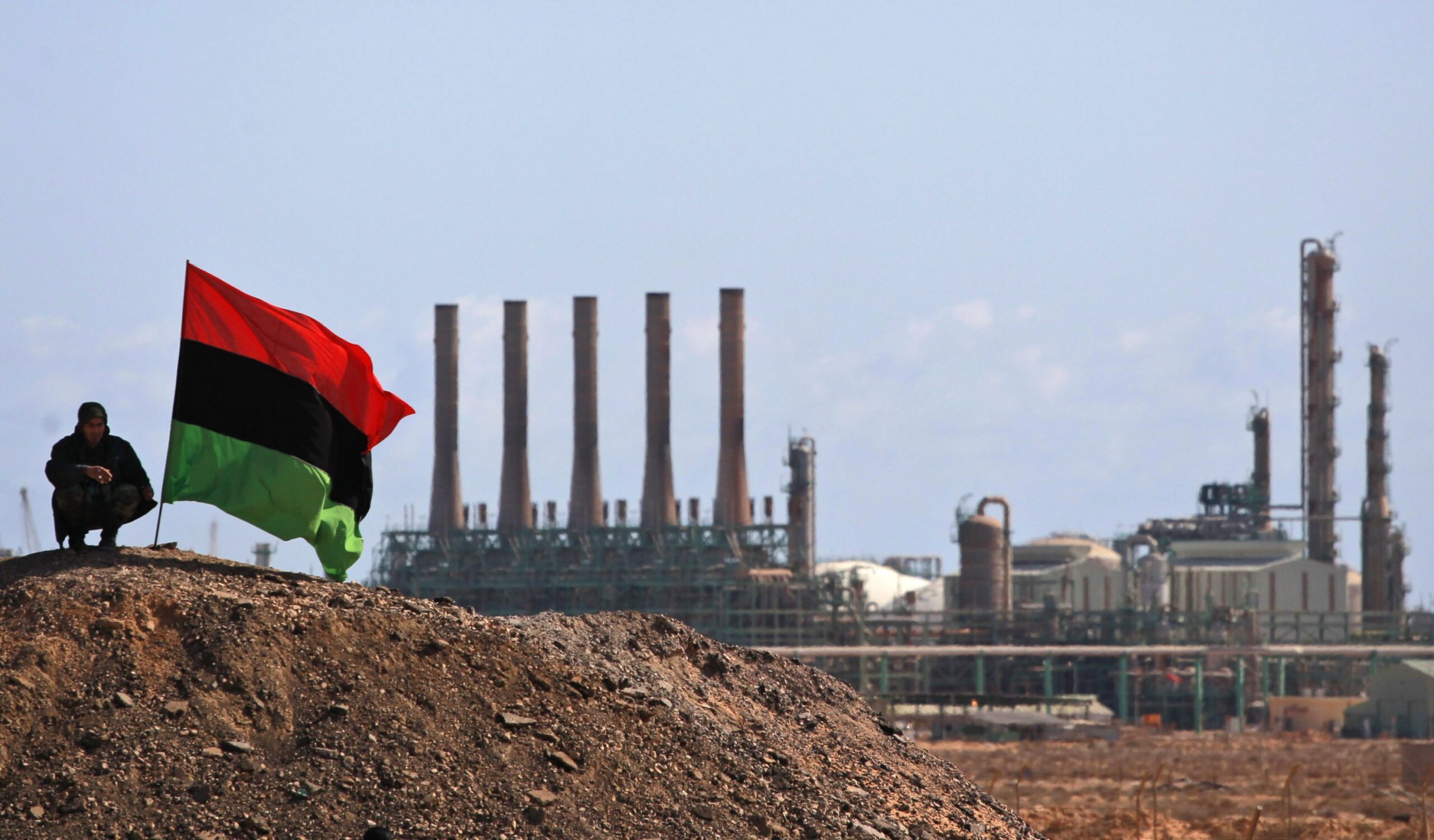
No crude oil supply talks between Libya and Nigeria: NOC

Libya’s National Oil Corporation has categorically denied reports of negotiations to supply crude oil to Nigeria’s Dangote refinery.

French company reports major losses due to challenges in Niger

The French nuclear fuel specialist reported a loss of 133 million euros for the first half of the year, a sharp decline from the 117 million euros net profit in Q1 2023. The company’s difficulties this year include Niger’s decision in June to revoke its rights to the Imouraren mine, the world’s largest with estimated reserves of 200,000 tons. Additionally, its subsidiary Somair, which is 63% owned by Orano, is facing issues exporting uranium from its Arlit operations in northern Niger due to an export ban imposed by the military government in Niamey. As a result, the company had to sell its uranium production, which was initially intended to finance the site’s closure.

Petroleo bids for stake in Namibia’s massive oil field

Amid growing opposition to oil exploration in Brazil, Petrobras is pursuing opportunities abroad, including a bid for a share in Namibia’s Mopane oil field.

Scroll to Top