






Why does this Nigerian town have so many twins?
Igbo-Ora in Nigeria is famous for its unusually high rate of twin births. From genetics to local foods, scientists are still investigating why
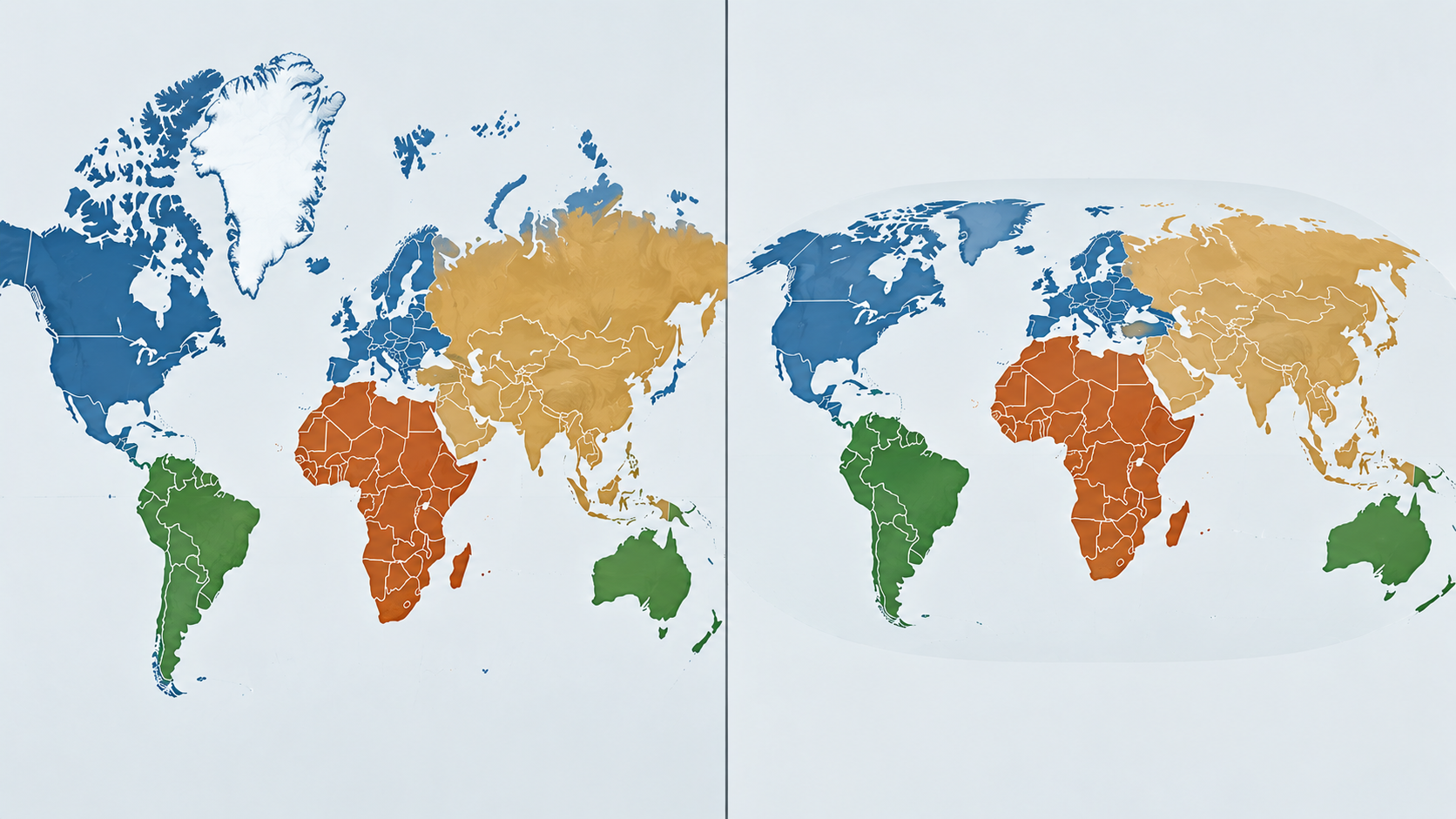
UN votes to change world map to show Africa’s true size
The UN has voted to adopt a world map that better reflects Africa’s true size, challenging the centuries-old Mercator projection
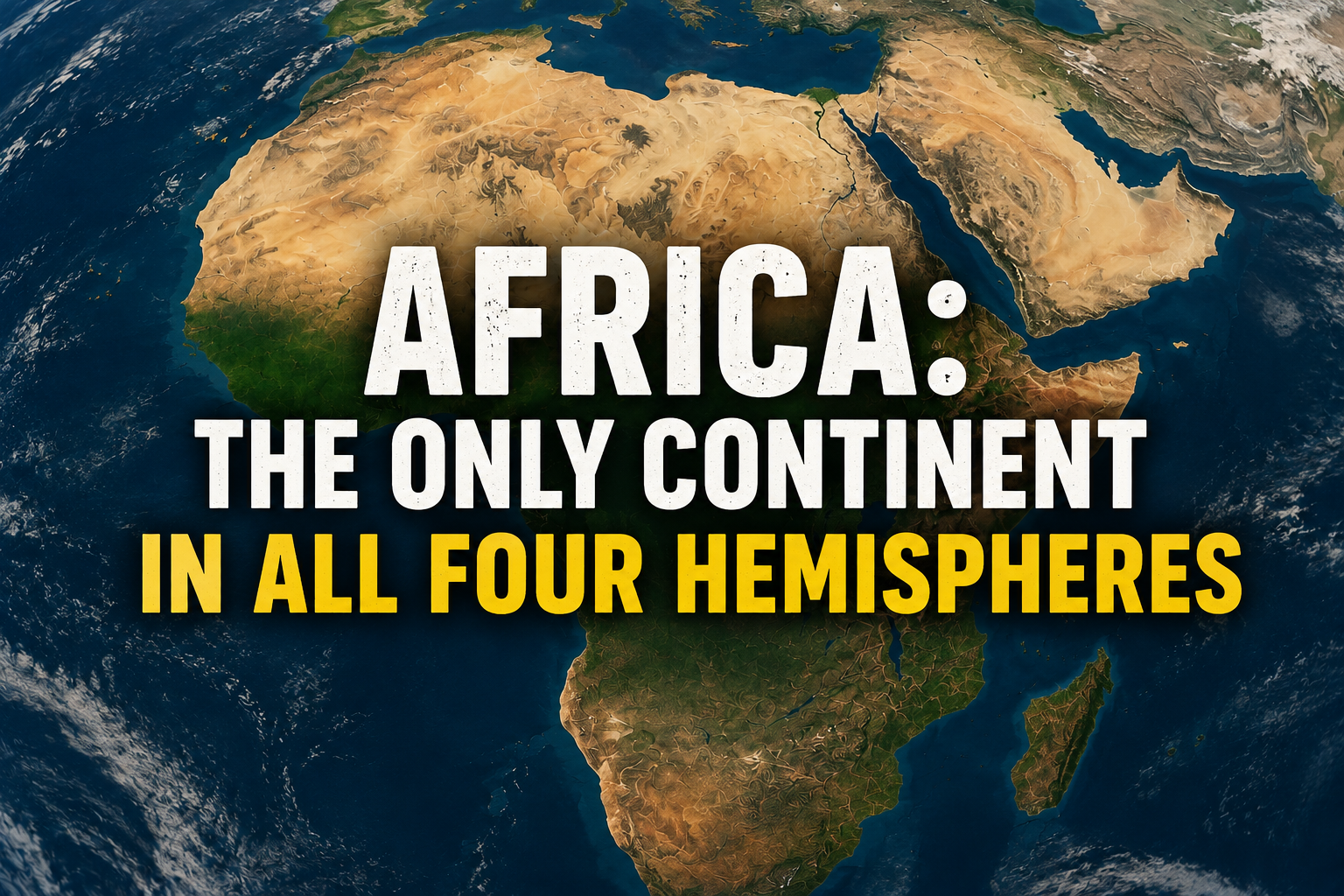
Africa in 4 hemispheres
Africa spans all four hemispheres of the Earth. Discover how the Equator and Prime Meridian give the continent this unique distinction

Africa is bigger than you think: Surprising facts you probably didn’t know
Discover 10 surprising facts about Africa, from its enormous size and ancient history to its languages, wildlife and natural wonders

Scientists baffled as fat influencers keep dying
Scientists baffled as fat influencers keep dying after body positivity boom

Moroccan fossils shed new light on human origins
Fossils found in a Moroccan cave and dated to 773,000 years ago are offering new insight into archaic humans who may be close ancestors of Homo sapiens.

How Israel will ultimately betray America to its archrivals
For decades, Israel has fed off America’s economic, military, and diplomatic resources, while entangling Washington in endless regional conflicts, espionage scandals, and reputational damage

Evangelicals and Netanyahu plan to usher in apocalypse
Divine right, deadly might: How Christian Zionists fuel endless war

Haven’t you realized it yet? America was designed to implode
The signs of a nation inching toward internal conflict are everywhere. From fiery street clashes and racial riots to heavily armed citizens preparing for doomsday, it’s as if the American experiment has been rigged with a powder keg from the start. We Americans cherish our freedoms and our Union – “one nation under God, indivisible” – yet deep fault lines of race and ideology run through our society like lit fuses. Haven’t you realized yet? America was designed to implode. This isn’t a conclusion reached lightly, but a warning born of recent evidence: a country primed for internal conflict by virtue of its own legal and social DNA. Two combustible ingredients stand out – deeply rooted racial divisions and widespread firearm ownership – both embedded in our history and laws, both now threatening to ignite an era of chaos. Locked, loaded and ready On April 29, 1992, Los Angeles erupted in flames and fury. The acquittal of four white police officers caught on video brutally beating black motorist Rodney King sparked one of the deadliest urban uprisings in American history. Over several days of rioting, more than 50 people were killed and 2,300 injured, with about $1 billion in property damage to some 1,100 destroyed buildings. The 1992 LA riots shocked the world – a violent outpouring of racial anger that seemed to catch America’s vaunted “melting pot” at its boiling point. But it wouldn’t be the last such explosion. Fast forward nearly three decades: in 2020, protests over the murder of George Floyd once again devolved into arson and looting across 140 U.S. cities. The unrest from May 26 to June 8, 2020 resulted in an estimated $1–2 billion in insured property damage nationwide, eclipsing even the toll of 1992. In other words, America’s costliest riots on record are not relics of the 1960s – they happened just a few summers ago. The pattern is painfully clear: racial grievances, long simmering, can and will erupt into violence that scars our cities for a generation. June 2025: Los Angeles lights the fuse again And now – this very month – Los Angeles is burning once more. Whatever label one prefers, the optics are unmistakable: American flags in ashes, Mexican banners in the air, federal agents in gas masks, and armed soldiers patrolling the same streets that burned in 1992. The cycle is repeating – but this time the grievance narrative is explicitly trans-national, even secessionist, and it is colliding head-on with an uncompromising federal crackdown. These episodes of unrest are not random; they are evidence of racial fault lines that run deep through American society. Despite real progress since the civil rights era, de facto segregation and mistrust persist. Nowhere is this more stark than inside America’s prisons – our society’s involuntary microcosms. Behind bars, racial separation is a grim daily reality. In many prisons, inmates self-segregate (or are informally segregated by officers) by race, an unofficial practice aimed at reducing interracial violence. Wardens have long justified separating prisoners by race as “necessary for safety” because major prison gangs like the Aryan Brotherhood, Mexican Mafia, and Black Guerrilla Family are organized strictly along racial lines. Until 2005, California even had an explicit policy of segregating new inmates by race for 60 days to prevent gang clashes – a policy struck down by the Supreme Court as unconstitutional. Yet even after formal “desegregation,” the reality remains that prison yards and cellblocks often operate on unwritten racial codes, with guards warily keeping rival racial gangs apart. Think about that: over 150 years since the Civil War, Americans in prison still band together by skin color for sheer survival. It’s a chilling indicator of how far racial polarization has burrowed into our social fabric. Outside the prison walls, everyday American life remains startlingly segregated and polarized by race – from our neighborhoods and schools to our politics. The racial polarization of political identity is especially pronounced. Black Americans vote overwhelmingly for Democrats (about 83% identify or lean Democratic, versus just 12% Republican), while a majority of White Americans lean Republican (56% GOP vs 41% Democratic) by recent counts. Hispanic and Asian Americans tilt Democratic on balance, though with more mixed allegiances. Our political parties have essentially sorted themselves on racial lines – one party drawing most of its support from white voters, the other heavily reliant on voters of color. Even our basic perceptions differ: polls show most Republicans believe racism is not a major systemic problem, while most Democrats (especially Black Democrats) see racial discrimination as a defining issue of our time (as numerous surveys have documented). We increasingly lack a shared reality on matters of race and justice, which makes sensible policy or reconciliation ever more elusive. Perhaps the most frightening harbinger of conflict is the rise of outright racial-nationalist and separatist ideologies at the fringes. For years, white supremacist groups have peddled fantasies of race war – a threat the FBI says remains the deadliest domestic terrorism danger. But today we also see inflammatory rhetoric on the extreme left and among some minority activists that plays directly into the “divide and conquer” narrative. Consider the astonishing scenes from Los Angeles just this week (June 2025): what began as protests against federal immigration enforcement turned into unrest with a decidedly ethnic-nationalist flavor. In the streets of LA, crowds of far-left demonstrators waved Mexican flags and claimed that Los Angeles “is actually Mexican” land. One prominent organizer of the protests, a local teacher and open Marxist, delivered a tirade on live TV calling for “a revolution to take land back from white racist people”. This wasn’t a fringe internet rant – this was on the ground, downtown. The movement they espoused invokes “La Reconquista” – the notion that California and the Southwest U.S. rightfully belong to Mexico or a future Chicano homeland of “Aztlán” and must be reclaimed by indigenous Mexican people. What’s more, organizers like Ron Gochez (affiliated with the radical Union del Barrio) proudly told reporters that the U.S. has no legitimate authority in these lands, calling it “ancestral territory” and characterizing modern immigration enforcement as an illegitimate occupation. Such rhetoric is stunningly incendiary: it essentially urges the undoing of American sovereignty over a huge region, justified by racial and historical grievance. While this view is held only by a small extreme slice of activists, its emergence in public protests – complete with Brown Berets of Aztlán waving “reconquista” banners – shows how identity-based tribalism can spiral into open calls for fracturing the country along ethnic lines. To be clear, patriotic Americans of all races reject these extremist visions. The vast majority of Latino Americans are proud U.S. citizens who don’t want to turn California into a breakaway Marxist ethnostate, just as the vast majority of white Americans abhor white nationalist extremism. Yet the fact that any sizable group of people on U.S. soil now publicly cheers the idea of splitting the nation by race or ideology is a blinking red warning. It means the unthinkable is becoming thinkable to more and more people. And history teaches that once political violence and separatist fever catch on, they can be very hard to contain. Armed to the teeth and ready for strife If racial animosity is one lit fuse in America’s powder keg, the other is the sheer explosive firepower available to fuel any conflict. The United States is, by any measure, the most heavily armed society in the world, and that is by design. Our Bill of Rights enshrines the right to bear arms in the Second Amendment, reflecting the Founders’ view that an armed citizenry is a bulwark of liberty. But in a fractured America, that vast arsenal of privately owned guns could turn a political clash into a bloodbath. No other nation has the kind of gun saturation that we do. Americans make up only about 4% of the world’s population, yet U.S. civilians own roughly 40% of all civilian firearms on Earth. Let that sink in: an estimated 393 million guns in civilian hands – about 121 firearms for every 100 U.S. residents. By comparison, in war-torn Yemen (the next most armed populace), there are ~53 guns per 100 people. Here, we have more guns than people, and more are sold every day. In recent years, Americans have been buying around 14 million new guns annually, adding to the stockpile at a staggering pace. Gun store shelves empty out whenever social unrest flares or political tensions spike, as citizens rush to arm themselves for protection – or for battle. From one perspective, this gun culture is a testament to American freedom and self-reliance. Millions of law-abiding patriots keep firearms for sport, hunting, and home defense. But the flip side of such widespread armament is that if – God forbid – an internal conflict erupts, it would be far more deadly than any street protest or riot we’ve seen before. We’ve already gotten painful previews. Armed militias and vigilantes increasingly appear at protests, ostensibly to “keep the peace” or defend property, but sometimes ending up in violent confrontations. Remember Kyle Rittenhouse, the armed teenager who killed two people amid chaotic protests in Kenosha in 2020? Or the militia plots in 2020 to kidnap the governors of Michigan and Virginia over COVID policies? Even routine political events now see men in tactical gear openly carrying AR-15s – a sight unheard of in other advanced democracies. America’s political temperature is high and our society is awash with firearms, a combination that security experts warn is a recipe for insurgency. As one research report dryly noted, “the U.S. contributes disproportionately to the increase of the global firearms stockpile”, and these weapons have a long lifespan. In plain terms, what’s bought today could be used in anger tomorrow, or 20 years from now. Guns last decades, and there is no expiration date on their potential use. This abundance of weaponry intersects lethally with the rise in ideological radicalization. In recent surveys, roughly one in four Americans (around 25–30%) agree that political violence might be justified under certain circumstances – a shocking number that includes people on both the far-left and far-right. In one 2022 poll, 43% of respondents (and a full 52% of self-described “strong Republicans”) said they believe a civil war is at least somewhat likely in the next decade. Other polls find about half of Americans expect increased political violence in coming years. These aren’t just fringe crackpots; this is mainstream public opinion registering a fear that we’re tearing ourselves apart. Perhaps they are simply observing what’s unfolding: the attempted insurrection at the Capitol on Jan. 6, 2021, by a mob inflamed with partisan rage, or the spate of politically motivated attacks (from the congressional baseball shooting by a far-left gunman in 2017, to a rash of assaults on protestors and officials). Each incident erodes another boundary of “acceptable” behavior. When a large minority of Americans openly say “we may have to use force to save the country”, it suggests many have already mentally crossed a dangerous Rubicon – entertaining violence as a legitimate solution. Experts who study civil conflicts worldwide hear alarm bells in these trends. Barbara F. Walter, a political scientist who serves on a CIA advisory task force, has bluntly warned that by objective measures “the United States…has entered very dangerous territory” in terms of instability. If we were looking at another country with America’s current profile – fractionalized into hostile camps, democracy in decline, and a populace awash in guns – we’d say, “they are closer to civil war than they realize.” In fact, Walter cautions “the US is closer to civil war than any of us would like to believe”. Her analysis, backed by data on what sparks civil wars elsewhere, is that once a nation becomes an “anocracy” (a weakened democracy with high factionalism) and factions start forming militias or armed wings, the slide to open conflict accelerates. She and others point to Jan. 6 as a possible “incipient insurgency” stage. One retired U.S. Army officer darkly noted that both sides of our political spectrum now see the other as an existential enemy – a mindset that, in other nations, precedes bloody strife. Fracturing into ideological enclaves How did we get here? Part of the answer lies in self-segregation – Americans retreating into their own ideological and cultural corners. Over the past generation, we’ve witnessed what analysts call “the Big Sort”: people increasingly move to communities that match their politics, and even choose friend groups, news sources, and churches based on partisan alignment. The result is a patchwork of echo-chamber enclaves that barely interact with each other. By one measure, the number of “super landslide” counties – where one presidential candidate wins over 80% of the vote – jumped from just 6% of counties in 2004 to 22% of counties in 2020. In practical terms, Americans are clustering into all-blue or all-red territories, with few swing areas left. We are sorting ourselves, literally, into separate worlds. Urban centers and diverse coastal areas have become even more staunchly liberal, while rural and exurban counties (often predominantly white) have become even more monolithically conservative. “Red ZIP codes are getting redder and blue ZIP codes are becoming bluer,” as NPR observed, noting that this geographic polarization is quickening in recent years. People want to be “with our own people,” said one individual who relocated to a community dominated by like-minded voters. The social consequence is that many Americans rarely encounter those who think differently in their day-to-day life, except as caricatures on the news. Within these ideological strongholds, views tend to grow more extreme over time. Psychologists note that when like-minded individuals deliberate together, they often end up at positions more extreme than where they started. Or as journalist Bill Bishop – who documented The Big Sort – put it, “Groups of like-minded people tend to become more extreme over time in the way that they’re like-minded.”. This dynamic is clearly at work in America. In deep-red circles, it’s not uncommon now to hear talk of looming tyranny, secession, or racial replacement conspiracies. In deep-blue circles, it’s become acceptable to openly label all Trump supporters as fascists or racists and to consider undemocratic tactics (like court-packing or executive fiats) to stop the other side. Each side sees the other not as a loyal opposition but as a mortal threat to the country. A recent poll found 66% of Republicans and Democrats alike view the opposing party as “a serious threat to the United States and its people.” That is an astonishing consensus of fear. We’re no longer arguing over tax rates or farm policy – we’re saying, “Those people will destroy America if we don’t stop them.” It’s a short leap from that mindset to envisioning a breakup of the country. In fact, another survey in 2021 found that 52% of Trump voters and 41% of Biden voters (nearly half of both camps!) somewhat agreed that red and blue states should secede from the Union to form separate nations. Imagine – tens of millions of Americans are so exasperated with each other that they’re ready to divorce. These are not fringe militias in the woods; these are everyday voters essentially giving up on the idea of one United States. The more our society segregates into insular camps, the easier it becomes for extremists to thrive and for dehumanization to take hold. Already, surveys indicate about 20% of Americans think members of the other political tribe “lack the traits to be considered fully human.” (Yes, you read that right – dehumanization.) And about 15–20% even say the country would be “better off” if large numbers of the opposing partisans just died. These horrifying statistics show how political hatred has crossed into moral and even genocidal territory in some minds. This is toxic polarization at its worst, and it’s intensifying. Social media pours fuel on the fire, bombarding us with the most outrageous portrayals of “the other side” and algorithmically segregating us into filter bubbles. Meanwhile, mainstream media often amplify division because outrage drives ratings. Foreign adversaries like Russia and China have noticed this weakness and actively stoke our internal divisions online, spreading disinformation that pits Americans against each other on racial and ideological lines (a modern twist on “divide and conquer”). All these forces – demographic separation, media echo chambers, and malicious interference – accelerate the trend of Americans mentally and physically inhabiting different realities and opposing camps. E Pluribus Unum Where does this leave us? Standing uncomfortably close to the edge of a precipice. The United States of America – a nation built on the promise of “E pluribus unum” (Out of many, one) – is in danger of cracking into many, none. Our Founding Fathers, in their genius, designed a system that could harness differences through democracy, but they also knew the republic’s survival ultimately required a sense of common identity and mutual goodwill. James Madison warned about the “mischiefs of faction.” Lincoln, on the eve of the Civil War, invoked Scripture: “A house divided against itself cannot stand.” Those warnings feel pointedly relevant today. It might be said that America’s very design contains the seeds of its instability: a union of wildly diverse states and peoples; a Constitution that both protects individual liberty and enables groups to fiercely assert their rights (sometimes at the expense of unity); a Bill of Rights that ensures even hateful or seditious speech can circulate; and of course, that right to bear arms which empowers citizens to form militias or rebel. These features made America the freest society on earth – and also, in the absence of civic virtue and shared values, a potentially volatile one. What was “designed to explode” was not the idea of America, but the built-in spirit of revolution against tyranny. However, if we turn that spirit against each other, the explosion will be internal, not the birthing of liberty but the death of our union. As a patriotic conservative, I believe deeply in American exceptionalism – the idea that our nation, forged in revolution and dedicated to liberty, can transcend the old-world curse of tribal conflict. We have proven it before: after the Civil War’s carnage, we reunited and eventually became stronger than ever. Through waves of immigration, we integrated countless cultures into one American tapestry. During world wars and depression, we generally pulled together, not apart. That spirit – patriotism properly understood – is what we must revive to avert disaster. We must reject those who profit from setting us at each other’s throats, whether they sit in extremist chat rooms, cable news studios, university lounges, or halls of power. The racial arsonists and ideological extremists offer nothing but national suicide. As Americans, we can have passionate debates – left vs. right, red vs. blue – without losing sight of our shared nationality and humanity. Today, unfortunately, too many leaders and influencers are playing a cynical game of divide and rule. They balkanize us into identity groups, tell us to fear and hate our neighbors, and even rewrite history to paint fellow Americans as irredeemable villains. This engineered division is the true existential threat to America. Not Russia or China, not terrorism or economic decline – those external challenges pale next to the danger that we ourselves could unravel the American project from within. If we fall, it will be because we ceased to see each other as brothers and sisters, and instead as enemies on a war footing. The hour is late, but not beyond saving. The very fact that people across the spectrum are now worried about civil war – with some 61% of Americans voicing concern that we may be on the verge of one – means at least we are aware of the peril. Awareness is the first step. The next step is action: choosing unity over division. That doesn’t mean silencing our disagreements or abandoning our principles. It means relearning how to be a nation of rivals, not a nation of armed enemies. It means civic engagement, good-faith dialogue, and recommitting to the idea that however much we disagree, we are all Americans and we sink or swim together. It means refocusing on our common values – freedom, justice, equality of opportunity, the rule of law – and calling out those who would undermine these in pursuit of narrow sectarian wins. Most of all, it means rekindling patriotism in its best sense: love of country and of each other as countrymen and -women. Not a blind or jingoistic patriotism, but one that honors the full breadth of the American family. Only by reminding ourselves of that shared identity can we douse the fuse that’s been lit. We should take heart that despite everything, tens of millions of Americans don’t want violence, don’t want separation – they want solutions. They want the United States to work as a nation for all its people. The coming years will test whether our national motto is merely an artifact on coinage or a living reality. Will we choose “Out of many, one” – or watch America’s unity disintegrate into many pieces? In this great republic, We the People still have the power to decide. But we must decide soon, and wisely. Because if we continue down this path of heated racial animus and ideological warfare, armed with hatred and literal arms, then the question answers itself. America will explode not with the glory of fireworks celebrating freedom, but with the destructive force of a fragmentation grenade, turning on itself. And that would be the most tragic irony of all – a nation conceived in liberty, undone by its own internal divisions. United we stand – divided, we fall. It has never been more true. America was not destined to fail; but it was designed to depend on us – on our ability to see past our differences and uphold a shared civic faith. We patriots must lead the way in rejecting the voices of division, healing the wounds of racism rather than picking at them, and ensuring that the only explosions our children witness are the fireworks on Independence Day – not a second civil war.

How attack on Iran’s nuclear program could start
he strike would begin with coordinated air attacks and cyber/special-forces actions designed to blind Iran’s defenses and demolish its nuclear program before Tehran can mobilize

Re-examining Oct 7: Coordination, intelligence, and conspiracy theories
Hamas originally intended to launch a major attack as early as Fall 2022 but delayed the operation to enlist support from Iran and Hezbollah. In July 2023

Trump’s extortion tour continues, and I like it
The post-1945 world of American generosity, where Washington guaranteed others’ security with little direct compensation, is finally getting a much-needed update

Is Islam’s geopolitical footprint being remade?
The theory emerging is that October 7th was used to justify a broad offensive – military and intellectual – aimed at “taming” the more radical manifestations of political Islam and solidifying a new regional order

X as a soft power weapon: How authoritarians harness Twitter’s reach
In the past decade, Twitter — rebranded as “X” — earned a reputation as a platform for protest and dissent. But today, from Ankara to Islamabad, that same platform has increasingly become a tool of soft power in the hands of authoritarian leaders. Governments are leveraging X to suppress dissent, promote official narratives, and manipulate public opinion on a massive scale

UK lawmakers alarmed as hundreds of ISIS returnees escape justice
Government ministers acknowledge the challenge but say they have been constrained by the law and evidence

Nigeria uses AI to tackle fake news and support local languages
Nigerian tech firms are harnessing AI to address some of Nigeria’s most pressing challenges, from the spread of disinformation to inclusion of marginalized languages and streamlining of data journalism

Aliou Cisse becomes Libya’s new national team head coach
Libya’s football federation hired Aliou Cisse, the 2022 AFCON-winning coach, to lead their national team until 2027.

Athol Fugard, South African playwright, dies at 92
Athol Fugard, South Africa’s most influential playwright, known for his powerful anti-apartheid dramas, has died at 92.

Voodoo festival draws tourists to Benin’s spiritual heart
Benin’s annual Voodoo festival in Ouidah attracts thousands of visitors, both local and international, offering a unique blend of cultural experience, religious observance, and tourism.

Chinese drone maker allows flights over ‘restricted zones’ in US
China is looking at a potential option that involves selling TikTok’s operations in the US to tech-billionaire Elon Musk to keep the app from being effectively banned, Bloomberg News reported Monday. Chinese officials prefer that TikTok remains under the ownership of parent ByteDance Ltd., Bloomberg said, citing sources familiar with the matter. Last week, the US Supreme Court signaled that it will uphold a ban on TikTok by Jan. 19 — a day before President-elect Donald Trump takes the oath of office — over national security concerns about China. According to Bloomberg, senior Chinese officials had already begun to debate contingency plans for TikTok as part of an expansive discussion on how to work with Trump’s administration. Under one scenario, Musk’s social media platform X — formerly Twitter — would take control of TikTok US and run the businesses together, according to the report. Officials have yet to reach a firm consensus on how to proceed, it said. “It’s not clear how much ByteDance knows about the Chinese government discussions or whether TikTok and Musk have been involved. It’s also unclear whether Musk, TikTok and ByteDance have held any talks about the terms of any possible deal,” the report added.

Fiber optic drones revolutionize combat in Russia-Ukraine war
Fiber optic drones capable of penetrating 20 kilometers (12.4 miles) into enemy lines and striking targets with high-resolution imagery have emerged as key tools in the Russia-Ukraine war. With a cable range of up to 20 kilometers, these drones operate at low altitudes, avoiding detection and interception. Anadolu obtained information on fiber optic first-person view (FPV) drones in the Russia-Ukraine conflict from open sources. Ukraine’s Commander-in-Chief of the Armed Forces, Oleksandr Syrskyi, announced on Jan. 5 that Ukraine had struck over 54,000 Russian targets in December 2024, with 49% of these attacks carried out using kamikaze drones. Syrskyi noted that Russia’s increased use of fiber optic drones poses significant risks to troop safety and added that Ukraine has also begun deploying similar technology. – Immune to electronic warfare detection and interception FPV drones are typically low-cost quadcopters or similar models, controlled in real time through goggles worn by the operator. In the Russia-Ukraine war, studies show that electronic warfare devices have downed 75% to 90% of drones, jamming the radio link between the pilot and the drone. Fiber optic drones, however, are undetectable and immune to electronic warfare, transmitting high-resolution video without relying on radio signals. These drones fly at low altitudes, avoiding obstacles and reducing exposure to air defense fire, unlike radio-controlled drones. The system uses a durable fiber optic spool that unravels during flight, maintaining a secure connection. The pilot’s commands and video data are transmitted as light signals via the fiber optic cable at high speeds. Reconnaissance drones equipped with high-resolution cameras offer a critical advantage in detecting enemy positions. However, the use of fiber optic cables increases the drone’s weight and reduces its range. Fiber optic drones face limitations, including slower speeds compared to radio-controlled drones, vulnerability to cable tangling and reduced maneuverability for turns exceeding 45-degree angles. While radio-controlled drones can operate over ranges of 5 to 200 kilometers (3 to 124 miles), fiber optic-guided drones are restricted to a range of 20 kilometers (12.4 miles). In addition to reconnaissance, these drones can carry bombs, explosives or anti-tank warheads for attack missions. – Fiber optic drones in Ukraine’s inventory Ukraine has tested various fiber optic drones, including the 20-kilometer range HCX (Argus 30), which weighs 1.2 kilograms (2.6 pounds) and features optical and thermal cameras alongside a 4-kilogram (8.8-pound) payload. The Khyzak REBOFF kamikaze drone has a 5-kilometer (3-mile) cable range, with an upgraded 10-kilometer (6.2-mile) version capable of carrying up to 2 kilograms (4.4 pounds) of explosives. The E-Banshee drone, a six-propeller fiber optic model, has been successfully tested for bomb delivery, though a 10-kilometer cable tangled during one trial. The Black Widow Web 10 kamikaze drone has a 5-kilometer range and can carry a payload of 2 kilograms of explosives. On Jan. 2, the Ukrainian Defense Ministry announced testing over 12 locally produced drones, each capable of carrying up to 3 kilograms (6.6 pounds). – Fiber optic drones in Russia’s arsenal Since 2024, Russia has deployed the Knyaz Vandal of Novgorod (KVN) drone, developed by NPC Ushkuy in Novgorod. Russian sources claim the drone has a 20-kilometer range, can carry 3.5 kilograms (7.7 pounds) of explosives and is equipped with the PG-7V anti-tank round used in RPG-7 launchers. A captured KVN drone in Ukraine was found to have a 10.8-kilometer (6.7-mile) long fiber optic cable. Ukrainian experts suggest the KVN drone resembles the Chinese-made Skywalker model and was likely imported, as indicated by Chinese-written labels on the captured drone. Russia also uses the Piranha-5 drone, which carries 1 kilogram (2.2 pounds) of explosives and supports infantry within a 1 to 3-kilometer (0.6 to 1.8-mile) radius. The Piranha-13, a multipurpose drone with a heavier payload and fiber optic control, remains less documented. Additionally, Russia deploys the Product 55, a fiber optic-controlled kamikaze drone developed by ZALA. – Impact on battlefield Fiber optic-controlled drones establish a 20-kilometer “no-go” zone for armored vehicles, as they remain undetectable and immune to electronic warfare. This capability disrupts armored assaults and limits defensive measures.

People living near airports face increased heart attack risk
Living near airports with high aircraft noise could increase the risk of heart issues, including heart attacks and strokes, according to a new study led by University College London researchers. The study analyzed detailed heart imaging data from 3,635 individuals living near four major airports in England and compared it with data from people in areas with lower aircraft noise levels. The risk, researchers found, was particularly true for those exposed to higher aircraft noise at night, likely due to factors such as disrupted sleep and increased time spent at home, leading to greater noise exposure. The researchers found that heart abnormalities in people not exposed to aircraft noise could raise the risk of major cardiac events, such as heart attack, arrhythmias, or stroke, by two to four times compared to those without these abnormalities. “Our study is observational so we cannot say with certainty that high levels of aircraft noise caused these differences in heart structure and function,” said cardiologist Gaby Captur. “However, our findings add to a growing body of evidence that aircraft noise can adversely affect heart health and our health more generally,” she added.

Climate change adds 41 days of extreme heat in 2024
Newly published research indicates that climate change added an average of 41 days of dangerous heat in 2024, harming human health and ecosystems. The joint report by World Weather Attribution (WWA) and Climate Central warns that every country needs to prepare for rising climate risks to minimize deaths and damage in 2025 and beyond. The world experienced an average of 41 extra days of dangerous heat in 2024 due to human-caused warming, the study said, suggesting that a much faster transition away from fossil fuels is needed to avoid a future of relentless heat waves, drought, wildfires, storms and floods. The report noted that climate change intensified 26 of the 29 weather events studied by World Weather Attribution which killed at least 3,700 people and displaced millions. “Climate change had a stronger influence than El Nino on many extreme weather events,” it added. Friederike Otto, lead of WWA and senior lecturer in Climate Science at Imperial College London, said the impacts of fossil fuel warming “have never been clearer or more devastating” than in 2024, adding: “We are living in a dangerous new era.” He said extreme weather killed thousands of people, forced millions from their homes this year and caused unrelenting suffering, recalling that floods in Spain, hurricanes in the US, drought in the Amazon and floods across Africa are “just a few examples.” “We know exactly what we need to do to stop things from getting worse: stop burning fossil fuels,” said Otto. “The top resolution for 2025 must be transitioning away from fossil fuels, which will make the world a safer and more stable place.” – ‘Failed scorecard’ Citing projections that this year is set to be the hottest on record, the report also noted that the first six months saw record-breaking temperatures, extending a streak that started in 2023 to 13 months, with the world’s hottest day in history recorded on July 22. “If the world does not rapidly transition away from oil, gas and coal, the number of dangerous heat days will continue to increase each year and threaten public health,” warned the scientists. According to the study, a faster shift away from fossil fuels, improvements in early warning, real-time reporting of heat deaths and international finance to help developing countries become more resilient are the key resolutions for 2025 to both tackle climate change and protect people from extreme weather. “Another devastating year of extreme weather has shown that we are not well prepared for life at 1.3-1.5°C of warming,” said Julie Arrighi, director of programs at the Red Cross Red Crescent Climate Centre. “In 2025, it’s crucial that every country accelerate efforts to adapt to climate change,” she added. Ben Clarke, researcher at the Centre for Environmental Policy, Imperial College London, said this annual report reads like a “failed scorecard.” “The world is not cutting emissions and preparing for climate change quickly enough. The consequences are record-breaking extreme weather events that cause deaths, displacement, and loss of livelihoods.”

Jimmy Carter, the longest lived U.S. President, dies at 100
Former President Jimmy Carter, the longest-living president in U.S. history, passed away Sunday at the age of 100. He died peacefully in his hometown of Plains, Georgia, surrounded by family, after receiving hospice care since February 18, 2023. Carter had faced numerous health challenges in recent years, including brain cancer and skin cancer. In a statement, his son, Chip Carter, described him as a hero who stood for peace, human rights, and unselfish love, adding that his father’s legacy was one of bringing people together through shared beliefs. Carter’s political rise was improbable—starting as a peanut farmer in Georgia, he became governor of the state before ascending to the presidency in 1976. His presidency, marked by challenges like the Iran hostage crisis, oil shortages, and inflation, was often seen as a tumultuous period. Despite these struggles, he achieved significant international successes, such as brokering the historic Camp David Accords between Egypt and Israel in 1978, negotiating the Panama Canal Treaty, and securing nuclear arms control with the Soviet Union through SALT II. After leaving office, Carter became known for his humanitarian work, founding the Carter Center and dedicating his life to advocating for peace, democracy, and human rights. He also worked with Habitat for Humanity, helping to build homes for those in need around the world. In 2002, Carter was awarded the Nobel Peace Prize for his tireless efforts in conflict resolution and promoting global human rights. Even into his 90s, he remained active in humanitarian causes and community service.
Climate change adds 41 days of extreme heat in 2024
Newly published research indicates that climate change added an average of 41 days of dangerous heat in 2024, harming human health and ecosystems. The joint report by World Weather Attribution (WWA) and Climate Central warns that every country needs to prepare for rising climate risks to minimize deaths and damage in 2025 and beyond. The world experienced an average of 41 extra days of dangerous heat in 2024 due to human-caused warming, the study said, suggesting that a much faster transition away from fossil fuels is needed to avoid a future of relentless heat waves, drought, wildfires, storms and floods. The report noted that climate change intensified 26 of the 29 weather events studied by World Weather Attribution which killed at least 3,700 people and displaced millions. “Climate change had a stronger influence than El Nino on many extreme weather events,” it added. Friederike Otto, lead of WWA and senior lecturer in Climate Science at Imperial College London, said the impacts of fossil fuel warming “have never been clearer or more devastating” than in 2024, adding: “We are living in a dangerous new era.” He said extreme weather killed thousands of people, forced millions from their homes this year and caused unrelenting suffering, recalling that floods in Spain, hurricanes in the US, drought in the Amazon and floods across Africa are “just a few examples.” “We know exactly what we need to do to stop things from getting worse: stop burning fossil fuels,” said Otto. “The top resolution for 2025 must be transitioning away from fossil fuels, which will make the world a safer and more stable place.” – ‘Failed scorecard’ Citing projections that this year is set to be the hottest on record, the report also noted that the first six months saw record-breaking temperatures, extending a streak that started in 2023 to 13 months, with the world’s hottest day in history recorded on July 22. “If the world does not rapidly transition away from oil, gas and coal, the number of dangerous heat days will continue to increase each year and threaten public health,” warned the scientists. According to the study, a faster shift away from fossil fuels, improvements in early warning, real-time reporting of heat deaths and international finance to help developing countries become more resilient are the key resolutions for 2025 to both tackle climate change and protect people from extreme weather. “Another devastating year of extreme weather has shown that we are not well prepared for life at 1.3-1.5°C of warming,” said Julie Arrighi, director of programs at the Red Cross Red Crescent Climate Centre. “In 2025, it’s crucial that every country accelerate efforts to adapt to climate change,” she added. Ben Clarke, researcher at the Centre for Environmental Policy, Imperial College London, said this annual report reads like a “failed scorecard.” “The world is not cutting emissions and preparing for climate change quickly enough. The consequences are record-breaking extreme weather events that cause deaths, displacement, and loss of livelihoods.”

Study: Coffee may lower risk of head and neck cancers
Regular coffee drinkers may face a significantly lower risk of developing head and neck cancers, according to new research published on Monday. Researchers from the Huntsman Cancer Institute in the US analyzed data from 9,548 cancer patients and 15,783 healthy controls. An analysis combining data from multiple studies found that consuming four or more cups of caffeinated coffee daily was associated with a 17% reduction in overall head and neck cancer risk, researchers reported in CANCER, a peer-reviewed journal of the American Cancer Society. Coffee drinkers showed 30% lower odds of oral cavity cancer and 22% lower odds of throat cancer compared to non-coffee drinkers. Even decaffeinated coffee consumption was linked to a 25% reduction in oral cavity cancer risk. Tea consumption showed mixed results. While drinking one cup or less daily was associated with a 9% lower overall head and neck cancer risk, consuming more than one cup is associated with a 38% higher chance of laryngeal cancer, the study found. “Coffee and tea habits are fairly complex,” said senior author Yuan-Chin Amy Lee from the research center in a press release by the publisher. “These findings support the need for more data and further studies around the impact that coffee and tea can have on reducing cancer risk,” she added. The research gains significance as head and neck cancer, which rank as the seventh most common cancer globally, continue to rise in low- and middle-income countries.

Red Sea film festival kicks off in Jeddah with 120 films
The fourth edition of the Red Sea International Film Festival is underway in Jeddah, Saudi Arabia, showcasing over 120 films from 81 countries. This year’s program includes 16 films in the Features Competition. One of the highlights is My Driver and I, a Sudanese drama about the bond between a taxi driver and a young Saudi woman. The film’s lead actor, Mustafa Shehata, describes it as a deeply emotional story of an immigrant driver who treats his young passenger like a daughter, while also longing for his own daughter back in Sudan. Saudi Arabia is aiming to expand its cultural influence, and since the festival’s launch in 2021, it has drawn global talent. This year, Academy Award winners Viola Davis and Spike Lee, as well as Bollywood stars Aamir Khan and Ranbir Kapoor, are attending, enhancing the festival’s growing international profile. However, some critics argue that such events are intended to distract from ongoing concerns over the country’s human rights record. The festival runs through December 14.