
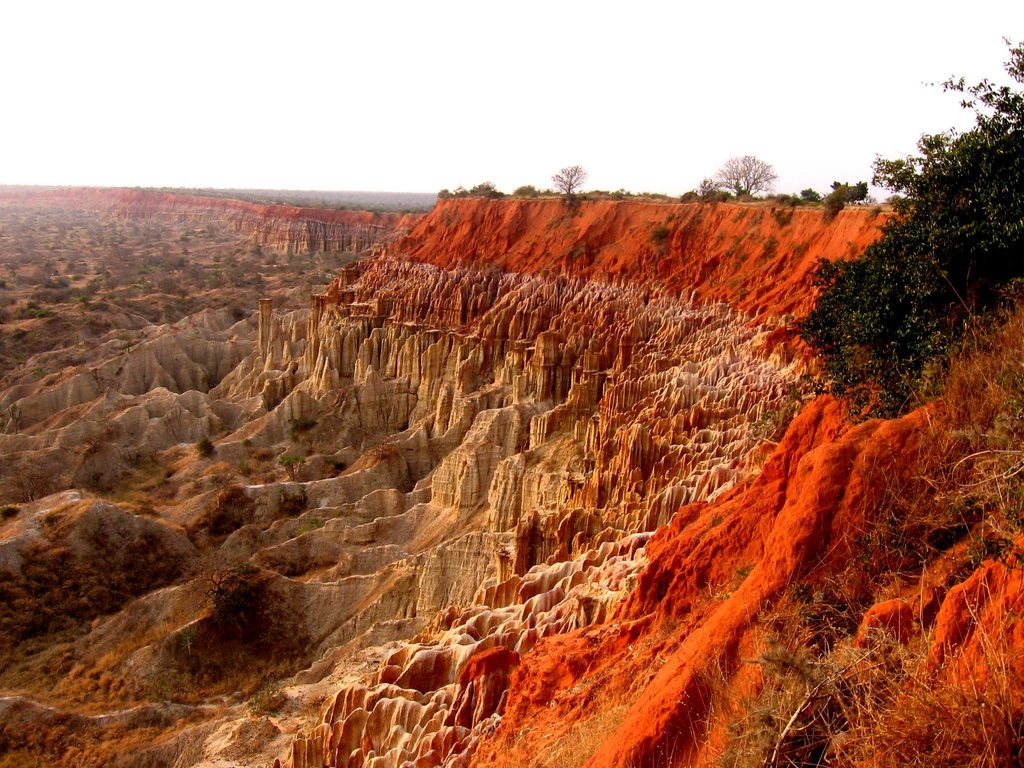
Along Angola’s Atlantic coast lies an extraordinary landscape that resembles the surface of the Moon.
Known as Miradouro da Lua, meaning “Moon Viewpoint” in Portuguese, this natural wonder features colourful cliffs, deep ravines and striking rock formations.
Located south of Angola’s capital, Luanda, the site offers visitors a remarkable glimpse into the beauty and diversity of Africa’s natural landscapes.
A landscape shaped by nature
The unusual formations at Miradouro da Lua are the result of natural erosion.
Over time, wind and rain have gradually worn away layers of sediment, creating steep ridges, pointed formations and deep valleys.
The cliffs feature shades of red, orange, brown and white. Together, these colours give the landscape its distinctive appearance.
Moreover, changing sunlight transforms the scenery throughout the day. At sunset, warm golden tones make the formations particularly striking.
According to the provincial government of Luanda, Miradouro da Lua is among Angola’s most popular and photographed natural attractions.
Discovering Angola’s natural beauty
Miradouro da Lua sits approximately 40 kilometres south of Luanda, in the municipality of Belas.
Beyond its colourful cliffs, the viewpoint offers panoramic views of the Atlantic Ocean. The contrast between the rugged terrain and the blue waters makes the scenery particularly memorable.
The site also highlights Angola’s geographical diversity. From vast savannahs and waterfalls to dramatic mountains and coastal landscapes, the country is home to numerous natural treasures.
Preserving a natural wonder
Although erosion helped shape Miradouro da Lua, it also presents challenges for its preservation.
In April 2026, Angola’s Ministry of Tourism announced a temporary closure to carry out stabilisation and safety improvements.
According to Radio Nacional de Angola, the measures aim to protect the landscape and reduce the impact of ongoing erosion.
Miradouro da Lua offers a remarkable opportunity to appreciate the beauty of the natural world and reflect on the importance of protecting it for future generations.