
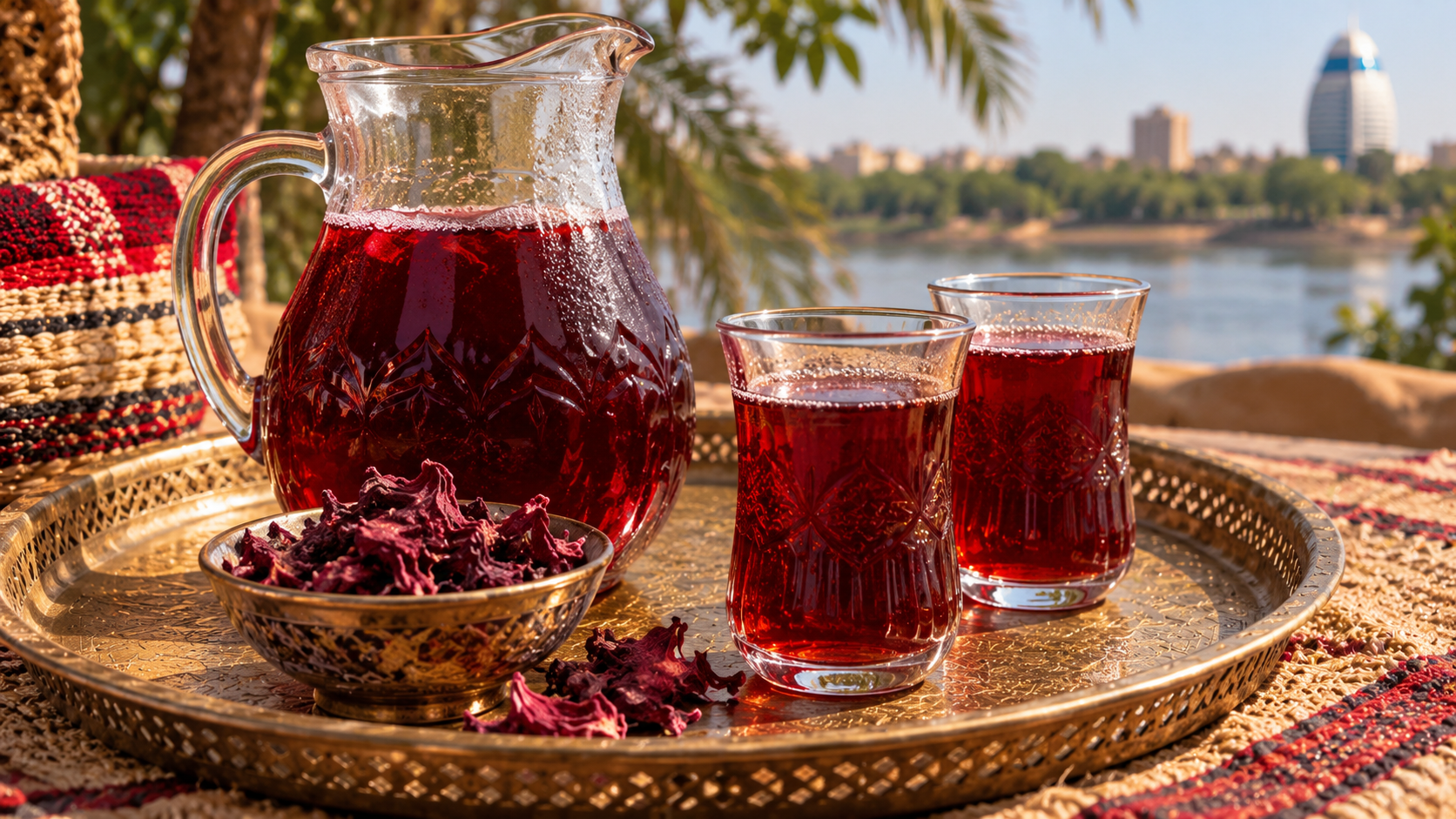
In Sudan, welcoming guests with a refreshing glass of hibiscus tea is a longstanding tradition. Known locally as karkade, the drink represents hospitality, generosity and friendship.
Its distinctive deep-red colour and refreshing taste make it a popular drink in many Sudanese households.
Sudanese hibiscus tea is a symbol of hospitality
Many Sudanese families offer karkade to visitors as a gesture of warmth and respect.
The drink comes from the dried calyces of the hibiscus plant. Families prepare it with water and often add sugar to balance its naturally tart flavour.
People enjoy it either hot or cold. However, chilled karkade is particularly refreshing during Sudan’s hot weather.
A popular drink during Ramadan
Sudanese hibiscus tea is also popular during the holy month of Ramadan.
Many families serve it alongside other traditional drinks and dishes when breaking their fast.
Sharing refreshments during Ramadan reflects the values of generosity, hospitality and caring for others.
Karkade is naturally caffeine-free and contains no alcohol when prepared traditionally without fermentation.
A tradition that continues today
Despite changing lifestyles, karkade remains a familiar part of Sudanese food culture.
Sudanese families also continue the tradition abroad, helping younger generations maintain a connection with their cultural heritage.
For many Sudanese people, offering a glass of hibiscus tea is more than serving a drink. It is a simple way to make guests feel welcome and valued.