
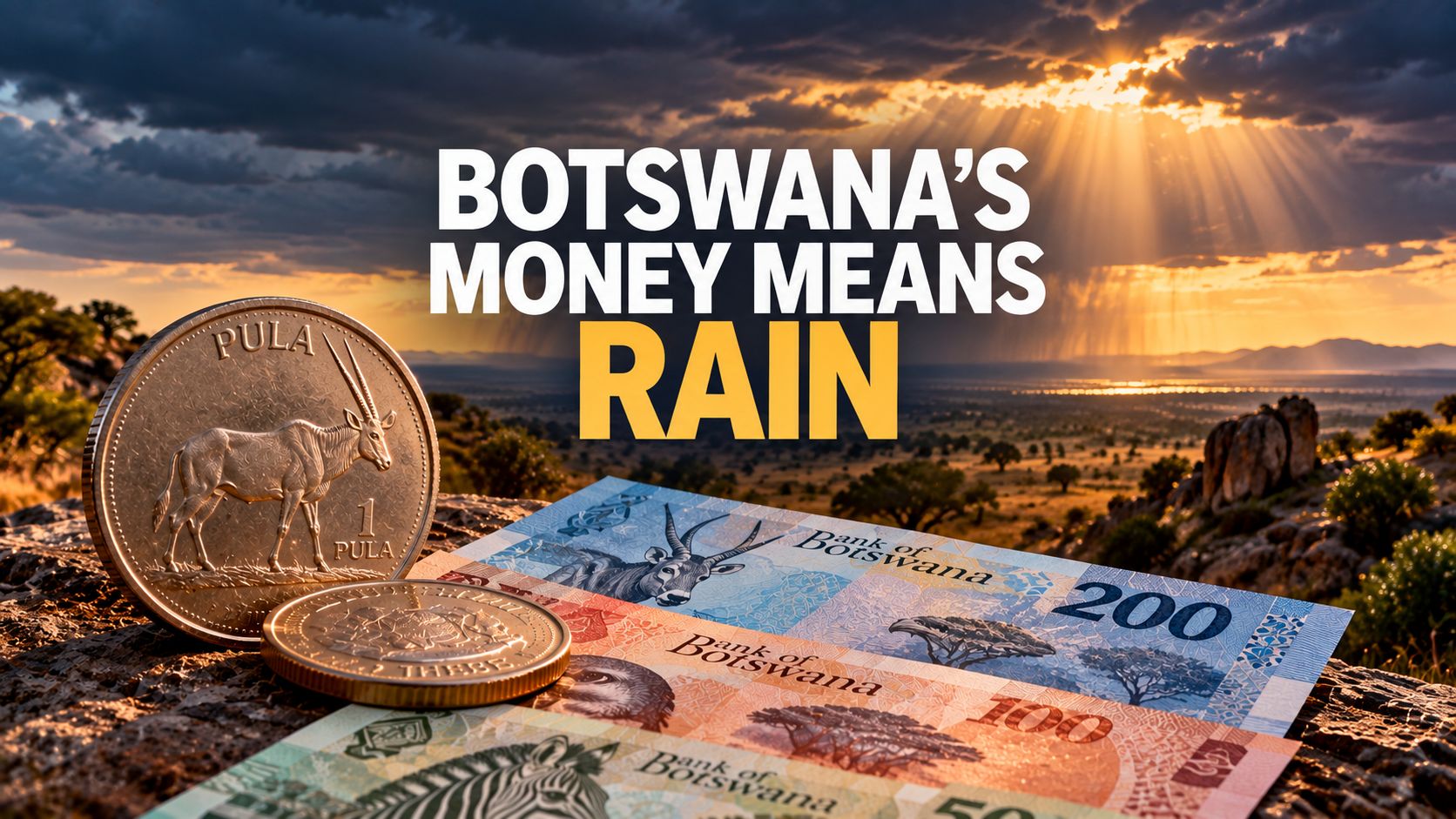
Money is usually named after pounds, dollars or historical currencies. In Botswana, however, the national currency takes its name from something much more essential: rain.
Botswana’s currency is called the pula. In Setswana, “pula” means “rain” and can also carry the sense of “blessings”, according to the Bank of Botswana.
The name reflects the importance attached to rainfall in Botswana, a largely dry country.
Why is Botswana’s currency called pula?
Botswana began planning its own currency after deciding to leave the Rand Monetary Area.
At the time of independence in 1966, the South African rand was used as Botswana’s national currency.
The government announced its decision to leave the monetary arrangement in 1974. It then began preparations for a new national currency.
One major decision was what to call the new money.
According to the Bank of Botswana, a public opinion poll showed overwhelming support for the name pula.
The country also chose thebe for the smaller unit of the currency. One pula contains 100 thebe.
Interestingly, “thebe” means “shield”.
Rain carries special meaning in Botswana
The choice of “pula” gave Botswana’s new currency a distinctly local identity.
Rain has traditionally carried great importance in the country because of its dry environment. As a result, the word became associated not only with rainfall but also with blessing and prosperity.
This cultural meaning helps explain why “pula” was considered an appropriate name for the country’s money.
The word also appears on Botswana’s national coat of arms.
Botswana introduced the pula in 1976
Botswana officially introduced the pula on August 23, 1976.
The new currency replaced the South African rand. The date later became known as Pula Day.
The first currency included four banknotes and several coins.
Initially, the pula had parity with the South African rand. Botswana later developed a more independent exchange-rate system.
More than just the name of Botswana’s money
Today, pula is one of Africa’s most distinctive currency names.
Its meaning connects Botswana’s money with the country’s language, environment and national identity.
So when someone in Botswana says “pula”, they may be talking about money.
But the word behind the currency means something much simpler: rain.