
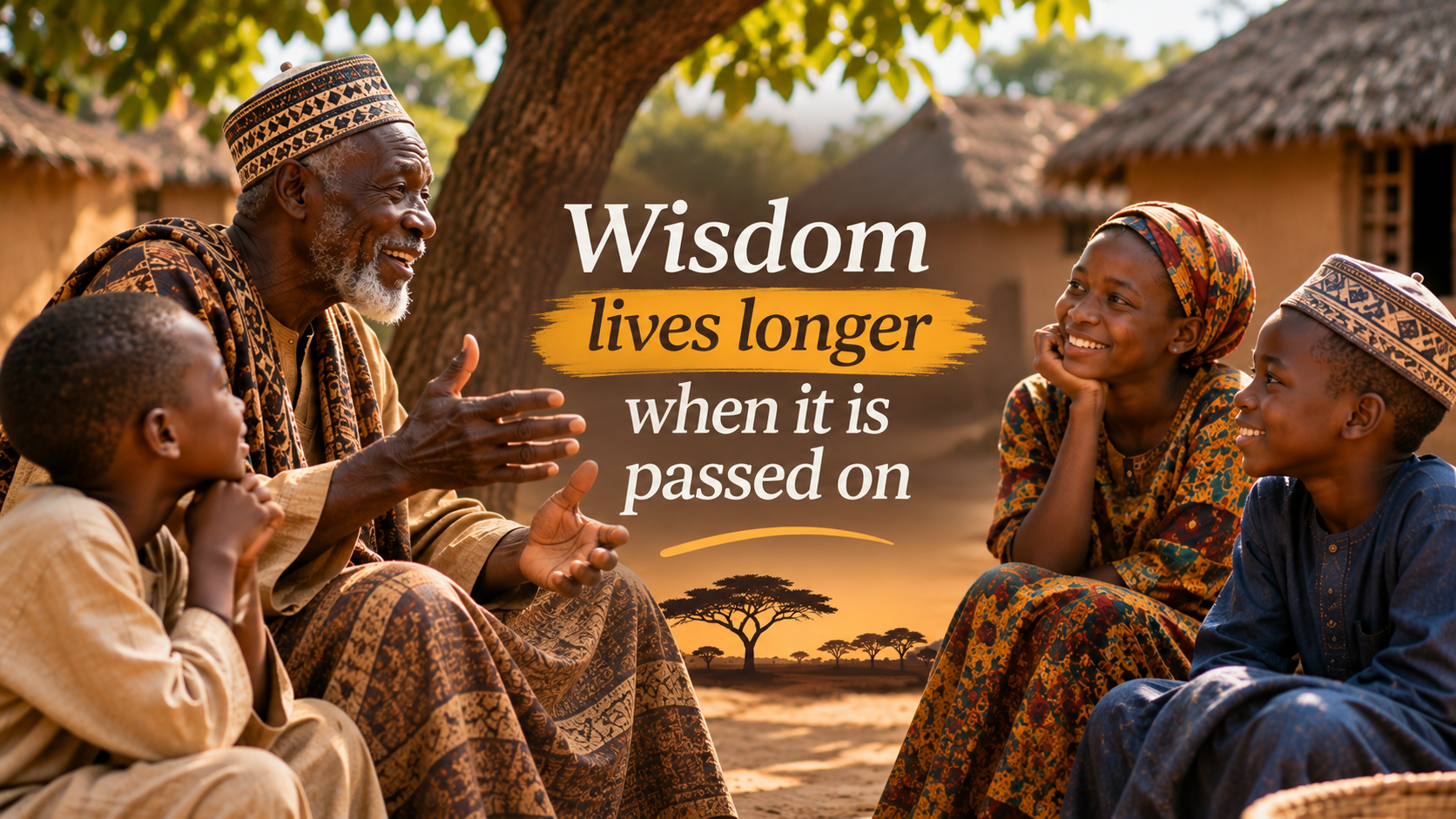
Did you know that in many African cultures, respecting elders is more than good manners? It is a way of preserving wisdom, history and community values.
Across the continent, older generations have traditionally played an important role in family life. They pass down knowledge, share experiences and help younger generations understand their cultural heritage.
Although customs differ across Africa’s many communities, respect for elders remains an important value in numerous societies.
Respect for elders in African culture
In many African communities, elders are respected for their experience and contributions to society.
Age alone does not always determine authority. Knowledge, character and service to the community can also shape an elder’s standing.
In some societies, younger people show respect through special greetings, careful language or gestures of courtesy.
For example, among the Yoruba people of Nigeria, traditional greetings may involve younger men prostrating and younger women kneeling before elders.
These gestures express courtesy and recognition of the older person’s position.
However, practices vary between families, regions and generations.
Elders as keepers of African history
Before written records became widespread in many communities, oral traditions helped preserve knowledge.
Elders often shared stories about family histories, important events and cultural customs.
Through storytelling, younger generations learned about their ancestors and communities.
In parts of West Africa, specialist oral historians known as griots have preserved genealogies, historical accounts and cultural traditions for generations.
Although griots are not necessarily elders, their work reflects the importance of passing knowledge from one generation to another.
These traditions continue to influence African cultural life today.
The African philosophy of Ubuntu
One well-known example of African communal values is Ubuntu, a philosophy associated with parts of Southern Africa.
Ubuntu is often expressed through the idea that a person’s humanity is connected to the humanity of others.
It emphasises relationships, compassion, dignity and shared responsibility.
Within this understanding, caring for older family members can be seen as part of a wider responsibility towards the community.
However, Ubuntu is not a single belief system shared identically across Africa.
Different societies have their own traditions and ways of expressing similar values.
Respect does not mean unquestioning obedience
Respect for elders is often associated with listening carefully and acknowledging experience.
However, respecting someone does not mean that every opinion or decision must go unquestioned.
Healthy relationships between generations can include discussion, disagreement and mutual understanding.
Younger people bring new perspectives, while older generations contribute experience and historical knowledge.
Both can learn from one another.
This balance helps communities preserve valuable traditions while adapting to changing circumstances.
Why this tradition still matters today
Urbanisation, migration and changing family structures have transformed daily life across Africa.
Many families now live far from older relatives, while younger generations increasingly rely on digital technology for information.
Nevertheless, elders continue to play important roles in many households and communities.
They may offer guidance, help care for children and share knowledge that cannot always be found in books or online.
Respecting elders also encourages younger generations to recognise the contributions of those who came before them.
At the same time, older people deserve dignity, care and opportunities to participate in society.
A lesson that goes beyond Africa
The tradition of respecting elders offers a broader lesson about human relationships.
Experience can provide valuable insight, while kindness and consideration help strengthen connections between generations.
African societies are extraordinarily diverse, and no single custom represents the entire continent.
Yet many communities share an appreciation for the wisdom and contributions of older generations.
The fun fact is that, in many African traditions, respecting elders is not simply about age. It is also about recognising the knowledge, relationships and history that connect generations.