
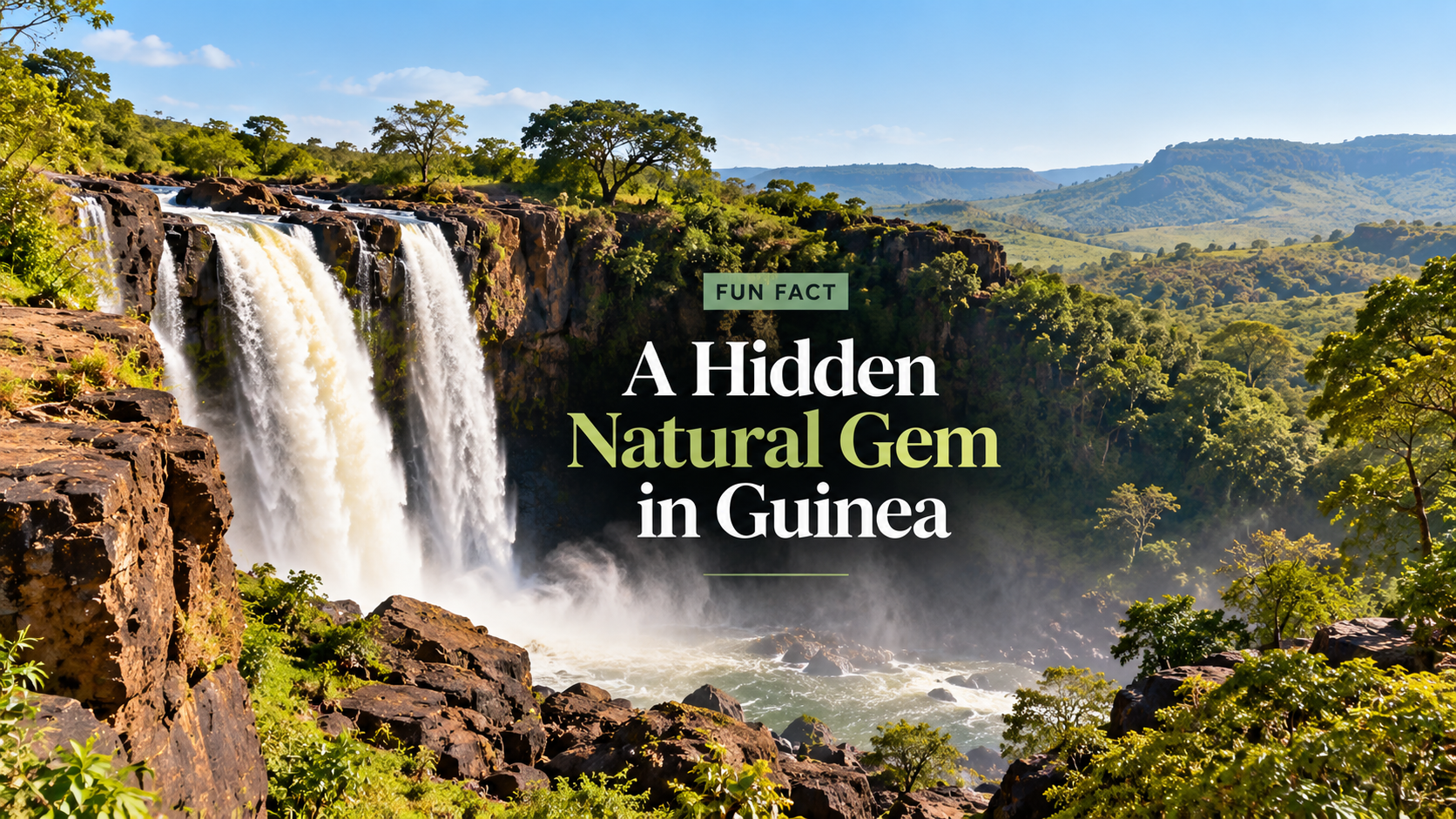
Guinea is home to spectacular waterfalls, including Kinkon Falls, a natural attraction hidden among the highlands of West Africa.
Located near the town of Pita in Guinea’s Fouta Djallon region, Kinkon Falls is known for its dramatic scenery and surrounding green landscapes.
The waterfall is one of the natural attractions that make Guinea an interesting destination for travellers exploring West Africa.
However, Guinea’s waterfalls are more than beautiful landscapes. They are also part of a region that plays an important role in West Africa’s water systems.
Where is Kinkon Falls?
Kinkon Falls is located near Pita, a town in central Guinea’s Fouta Djallon highlands.
The region is known for its hills, valleys, rivers and waterfalls.
Water flows through the rocky landscape, creating scenic views that attract visitors interested in nature and outdoor exploration.
The appearance of the waterfall can change throughout the year.
During the rainy season, increased water flow can make the falls particularly impressive. In drier periods, the volume of water may decrease.
This seasonal variation is common among waterfalls across West Africa.
Why is Guinea known for its waterfalls?
Guinea’s geography makes it an important country for West Africa’s freshwater resources.
The Fouta Djallon highlands receive substantial seasonal rainfall.
Water from the region feeds numerous rivers and streams, including major waterways that extend into neighbouring countries.
The Niger, Senegal and Gambia rivers all have their sources in Guinea.
For this reason, the country is sometimes called the Water Tower of West Africa.
Its rivers support communities, agriculture and ecosystems across the region.
Guinea’s natural beauty goes beyond waterfalls
Although Kinkon Falls is a notable attraction, Guinea has many other natural landscapes.
The Fouta Djallon region contains rolling highlands, rocky valleys and scenic river systems.
Elsewhere, Guinea is home to forests, mountains and diverse wildlife.
Mount Nimba, located along Guinea’s border with Côte d’Ivoire and Liberia, is internationally recognised for its biodiversity.
These landscapes highlight the country’s environmental importance.
They also offer opportunities for nature-based tourism.
A destination with tourism potential
Guinea’s waterfalls and highlands could play a greater role in attracting visitors interested in natural landscapes.
However, developing tourism requires reliable infrastructure and responsible environmental management.
Protecting rivers, forests and surrounding ecosystems is essential for preserving these attractions.
Local communities also have an important role in maintaining natural sites and benefiting from tourism.
With careful development, destinations such as Kinkon Falls could help introduce more visitors to Guinea’s landscapes.
A natural wonder worth discovering
Guinea is often discussed in connection with its mineral resources, particularly bauxite.
Yet the country also possesses remarkable natural scenery.
Kinkon Falls offers a glimpse of the landscapes found in the Fouta Djallon highlands.
Its setting reflects the importance of water to Guinea’s geography and the wider West African region.
Fun Fact: Guinea is known as the Water Tower of West Africa because several major rivers begin within its borders.
And among its many natural attractions, Kinkon Falls is one worth discovering.