
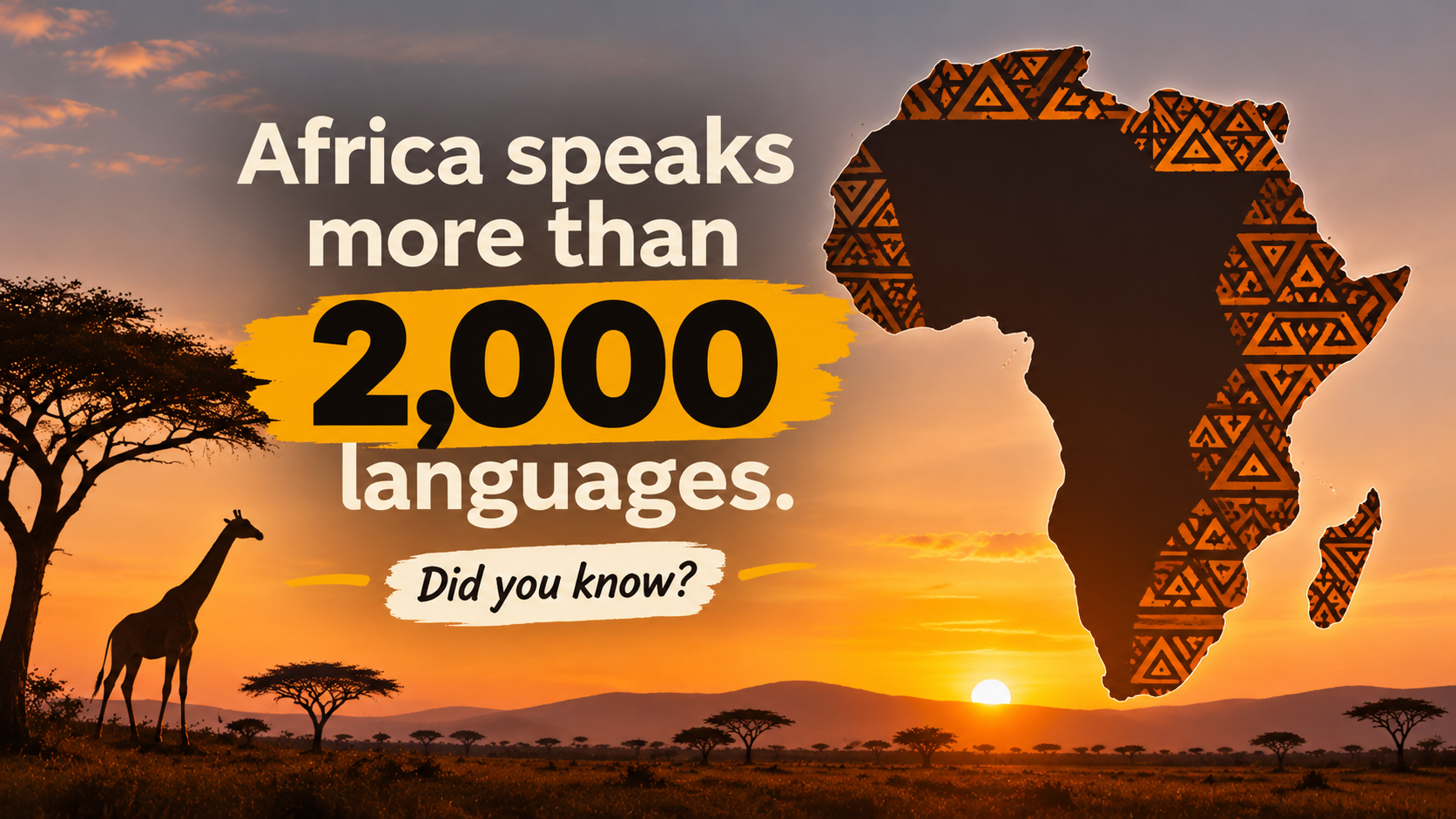
Africa is one of the most linguistically diverse continents on Earth, with an estimated 2,000 or more languages spoken across its 54 countries.
From Swahili in East Africa to Hausa in West Africa, the continent is home to an extraordinary range of languages, cultures and traditions.
But here is something even more surprising: Nigeria alone has more than 500 living languages, making it one of the most linguistically diverse countries in the world.
One continent, thousands of voices
Africa’s languages belong to several major language families, including Niger-Congo, Afroasiatic, Nilo-Saharan and Khoisan groupings, although some classifications remain debated.
Many Africans also speak several languages in everyday life.
For example, someone might speak a local language at home, a regional language at the market and an official language at school or work.
A language that connects countries
Swahili, also known as Kiswahili, is one of Africa’s most widely used languages.
It connects communities across East and Central Africa, including Tanzania, Kenya, Uganda and the Democratic Republic of the Congo.
Meanwhile, languages such as Arabic, Amharic, Yoruba, Zulu and Wolof reflect the continent’s rich cultural heritage.
More than just words
African languages carry centuries of history through storytelling, poetry, music and oral traditions.
Some even use distinctive click consonants, particularly languages spoken in southern Africa.
Despite this diversity, many African languages face challenges as younger generations increasingly use dominant national and international languages.
Preserving them helps protect the knowledge and traditions of communities across the continent.
Fun fact: Africa is not just a continent of 54 countries. It is also a continent of thousands of voices, each with its own story.