Africa

Ghana to grant visa-free entry to all African citizens starting in 2025

Starting in early 2025, Ghana will grant visa-free entry to all African citizens, following a December announcement by President Nana Akufo-Addo. This move fulfills a pledge made at the Africa Prosperity Dialogues, with the president emphasizing the goal of fostering “stronger ties across Africa.” The policy is expected to boost tourism, trade, and travel to Ghana, addressing concerns that visa restrictions have hindered growth in these sectors. Previously, Ghana allowed visa-free access to nationals from 26 African countries and provided visas on arrival for citizens of 25 others, with only two countries requiring a visa in advance. With this decision, Ghana becomes the fifth African nation to adopt an open-door policy for all African passport holders, joining Rwanda, Seychelles, Gambia, and Benin.

Ghana to grant visa-free entry to all African citizens starting in 2025 Read More »

Climate change adds 41 days of extreme heat in 2024

Newly published research indicates that climate change added an average of 41 days of dangerous heat in 2024, harming human health and ecosystems. The joint report by World Weather Attribution (WWA) and Climate Central warns that every country needs to prepare for rising climate risks to minimize deaths and damage in 2025 and beyond. The world experienced an average of 41 extra days of dangerous heat in 2024 due to human-caused warming, the study said, suggesting that a much faster transition away from fossil fuels is needed to avoid a future of relentless heat waves, drought, wildfires, storms and floods. The report noted that climate change intensified 26 of the 29 weather events studied by World Weather Attribution which killed at least 3,700 people and displaced millions. “Climate change had a stronger influence than El Nino on many extreme weather events,” it added. Friederike Otto, lead of WWA and senior lecturer in Climate Science at Imperial College London, said the impacts of fossil fuel warming “have never been clearer or more devastating” than in 2024, adding: “We are living in a dangerous new era.” He said extreme weather killed thousands of people, forced millions from their homes this year and caused unrelenting suffering, recalling that floods in Spain, hurricanes in the US, drought in the Amazon and floods across Africa are “just a few examples.” “We know exactly what we need to do to stop things from getting worse: stop burning fossil fuels,” said Otto. “The top resolution for 2025 must be transitioning away from fossil fuels, which will make the world a safer and more stable place.” – ‘Failed scorecard’ Citing projections that this year is set to be the hottest on record, the report also noted that the first six months saw record-breaking temperatures, extending a streak that started in 2023 to 13 months, with the world’s hottest day in history recorded on July 22. “If the world does not rapidly transition away from oil, gas and coal, the number of dangerous heat days will continue to increase each year and threaten public health,” warned the scientists. According to the study, a faster shift away from fossil fuels, improvements in early warning, real-time reporting of heat deaths and international finance to help developing countries become more resilient are the key resolutions for 2025 to both tackle climate change and protect people from extreme weather. “Another devastating year of extreme weather has shown that we are not well prepared for life at 1.3-1.5°C of warming,” said Julie Arrighi, director of programs at the Red Cross Red Crescent Climate Centre. “In 2025, it’s crucial that every country accelerate efforts to adapt to climate change,” she added. Ben Clarke, researcher at the Centre for Environmental Policy, Imperial College London, said this annual report reads like a “failed scorecard.” “The world is not cutting emissions and preparing for climate change quickly enough. The consequences are record-breaking extreme weather events that cause deaths, displacement, and loss of livelihoods.”

Climate change adds 41 days of extreme heat in 2024 Read More »

Fire guts Kantamanto Market, destroys 100+ shops

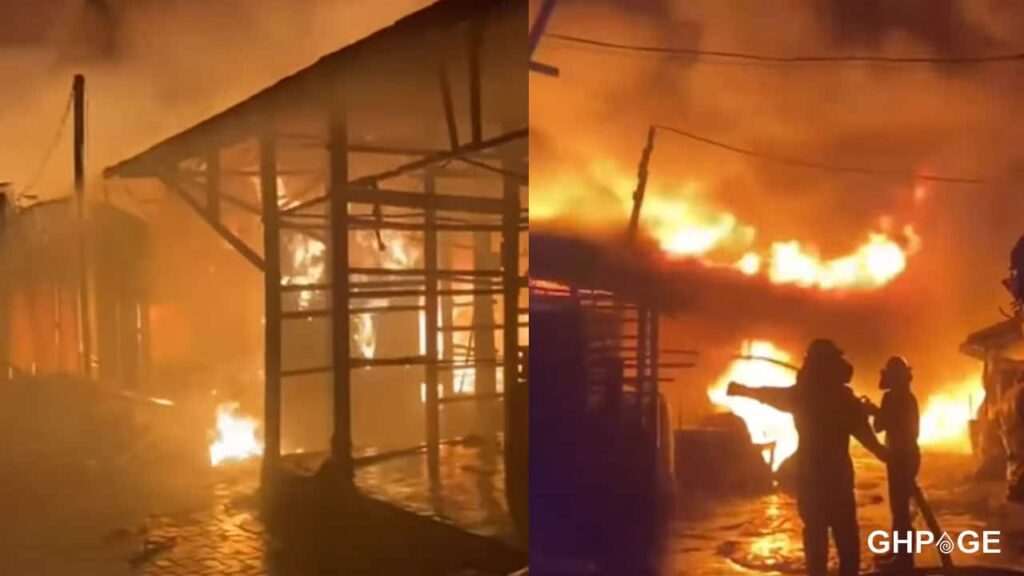
A devastating fire erupted on Thursday at the Kantamanto Market, a prominent commercial center in Accra, the capital of Ghana, leaving widespread property damage in its wake. Witnesses described frantic attempts by onlookers to douse the flames as they rapidly spread through the market, reportedly destroying more than a hundred shops. Emergency services indicated that the fire began in the early hours of the morning, prompting the deployment of 13 fire crews to control the blaze. A representative from the Ghana National Fire Service confirmed that the fire has been contained and announced that an investigation is underway to determine the cause. Fortunately, no injuries have been reported so far, and the origin of the fire remains undetermined.

Fire guts Kantamanto Market, destroys 100+ shops Read More »

Ruto Acknowledges Security Forces’ Abuse of Power

President William Ruto has publicly acknowledged the abuse of power by Kenya’s security forces for the first time, amid a wave of controversial kidnappings that have sparked widespread protests across the country. In his New Year’s address on Tuesday, Ruto admitted that there had been “instances of excessive and extrajudicial actions” by security personnel, though he did not provide specific details. His remarks come in the wake of youth-led demonstrations calling attention to the alleged abductions by security forces, particularly following the violent suppression of protests in June and July. These protests, which focused on growing concerns over disappearances, were met with heavy-handed responses, including the use of tear gas and mass detentions. “That said, it is crucial to remember that every freedom has its limits, and public safety and order must always supersede the desire for unchecked liberty,” Ruto stated. Human rights activists have raised alarms over the government’s failure to adequately investigate the disappearances. A recent court ruling ordered the immediate release of five men allegedly abducted by security forces, or that the police provide an explanation under oath. However, no one was brought to court on Tuesday, and a representative of the police inspector general attended the proceedings instead. Families of the missing individuals are growing increasingly desperate. Many of the recent disappearances involve young people critical of Ruto’s government, including two individuals who shared a controversial AI-generated image of the president in a coffin. In his address, Ruto linked these incidents to the rise in digital manipulation and harmful social media activity. “These are clear signals that our moral fabric is at risk of decay,” Ruto remarked. Human Rights Watch has identified a special security unit composed of multiple agencies allegedly involved in these actions, with the Kenya National Commission on Human Rights reporting seven abductions this month, six of which remain unresolved. Since June, 29 people out of 82 reported disappearances are still unaccounted for, intensifying calls for greater accountability from both the government and security forces.

Ruto Acknowledges Security Forces’ Abuse of Power Read More »

The death penalty has been abolished in Zimbabwe

In a historic move, Zimbabwe has officially abolished the death penalty following the signing of the Death Penalty Abolition Act (2024) by President Emmerson Mnangagwa. This significant legal change follows the approval of the Bill by the Senate and marks a major advancement in the country’s commitment to human rights, recognizing the death penalty as a violation of dignity and the right to life. The abolition of the death penalty comes after nearly two decades without executions, with the last death sentence carried out in 2005. Despite this, courts in Zimbabwe could still impose death sentences for aggravated murder, leaving individuals on death row to endure years of uncertainty and harsh conditions. The new law ensures that those currently sentenced to death—approximately 62 individuals, according to reports—will have their sentences either reduced or commuted, effectively ending the practice of death row in the country. The path to abolition began in November 2023 when Edwin Mushoriwa, a Member of Parliament for Dzivarasekwa, introduced the Death Penalty Abolition Bill as a private member’s initiative. The government’s commitment to abolishing capital punishment was solidified with Cabinet approval in February 2024, and the Bill successfully passed through the National Assembly and Senate. President Mnangagwa’s final assent on December 31, 2024, brought the Bill into law. This achievement is the result of nearly a decade of sustained advocacy and collaboration between Zimbabwe’s government and civil society. The Death Penalty Project, along with local partners such as the Zimbabwean NGO Veritas, worked closely with Mushoriwa to support the development and passage of the Bill. The initiative gained additional momentum through empirical research by the Death Penalty Research Unit at the University of Oxford, which explored public attitudes toward capital punishment, and extensive engagement with Zimbabwe’s political leaders. With the abolition, Zimbabwe joins 29 other African countries that have removed the death penalty for ordinary crimes or all crimes, adding to the continent’s growing momentum toward universal abolition. In this decade alone, countries such as Chad, Sierra Leone, the Central African Republic, Equatorial Guinea, Zambia, and Ghana have followed suit, making Africa the fastest-moving continent in abolishing the death penalty. Zimbabwe’s decision marks an important turning point for other abolitionist de facto states in Africa, where the death penalty is still retained in law but executions have not occurred in over a decade. Among these are Zimbabwe’s regional neighbors, including Malawi, Kenya, Tanzania, and Uganda, which may now be encouraged to take similar steps toward permanent abolition. This historic moment is a testament to the power of political will, civil society collaboration, and sustained international advocacy, as Zimbabwe steps into a new era of human rights protections.

The death penalty has been abolished in Zimbabwe Read More »

South Sudan receives 1.1 Million cholera vaccine

South Sudan received 1.1 million cholera vaccine doses on Monday as part of its efforts to combat a growing outbreak. The vaccines, donated by the Global Alliance for Vaccines and Immunizations (GAVI), arrived in Juba via air. Gabriel Buom Tap, UNICEF Immunization Officer, explained, “This is a two-dose vaccine, but even a single dose provides immunity within two weeks for up to six months. The second dose offers protection for up to three years.” The cholera outbreak, declared in October in a border town between Sudan and South Sudan, has spread to six of the country’s 10 states. The most affected populations are those displaced by floods and refugees from Sudan. More than 100 deaths have been reported, with over 6,000 people currently infected. The South Sudan government is urging the health sector and other stakeholders to intensify efforts to contain the disease. Health Minister Yolanda Awel Deng emphasized, “I urge the media and civil society to join in raising awareness about the importance of vaccination.”

South Sudan receives 1.1 Million cholera vaccine Read More »

Malawi’s president sacks defense minister in mini Cabinet reshuffle

Malawi’s President Lazarus Chakwera sacked Defense Minister Harry Mkandawire in a mini Cabinet reshuffle Wednesday. Chakwera also fired Deputy Education Minister Nancy Mdooko and reassigned other ministers to new portfolios in a move he said in his New Year’s message to the nation was aimed at “offering the best service to the country in 2025.” Chakwera had come under intense pressure from various sectors of society to fire Mkandawire over the manner in which the death of Vice President Saulosi Chilima on June 10 last year in a military plane crash was handled. Chilima and eight others died in the crash in a forest in the northern part of Malawi in dense fog and the military has been accused of “negligence” in terms of organizing search and rescue efforts. George Phiri, political and social commentator, applauded the president for his decision to sack Mkandawire, describing it as a “step in the right direction.” “At least the president has demonstrated that he has heard what people have been saying about the Ministry of Defense and the minister responsible. Although the decision to sack him has come a bit late, it’s better than no action at all. Ministers and other public servants should be held accountable for their actions,” Phiri told Anadolu. But some critics have faulted the president for maintaining a 31-member Cabinet at a time when the country’s economy is “bleeding.” Economist Milward Tobias told Anadolu that the idea to maintain 31 Cabinet ministers “was just being insensitive to the plight of Malawians.” “The state of our economy is very poor at the moment, and the president could have seized this as an opportunity to trim the size of his Cabinet. Our economy isn’t fit to accommodate a Cabinet of this size. The government has to be sensitive to what people are complaining about. They are preaching of austerity measures, but there is nothing on the ground to demonstrate that,” Tobias said. Malawians are gearing up to head to the polls in September, and already the political temperature is heating up.

Malawi’s president sacks defense minister in mini Cabinet reshuffle Read More »

Scroll to Top