Africa

Kenyan court finds LGBTQ activist’s housemate guilty of murder

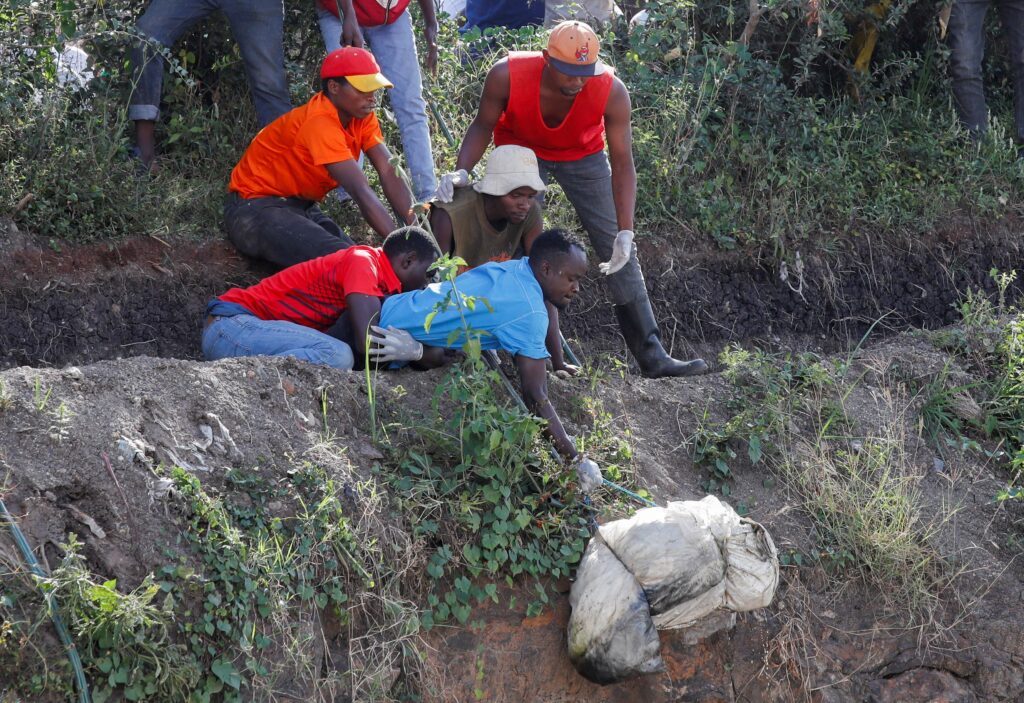
A Kenyan court has found the housemate of LGBTQ activist Edwin Chiloba guilty of murder after the activist’s body was discovered in a metal box two years ago. On Wednesday, a High Court judge in Eldoret ruled that Jacktone Odhiambo suffocated Chiloba and hid his body in a metal box, which was later dumped on the roadside. Odhiambo, who denied the charges, was found to have DNA evidence linking him to the victim, and witnesses testified to hearing a heated argument between the two and seeing Odhiambo moving the box. The court did not determine the motive for the killing, though DNA evidence indicated that Odhiambo and Chiloba had an intimate relationship. Despite this, the killing was not considered a hate crime by the police, who arrested Odhiambo, Chiloba’s housemate in Eldoret. Chiloba’s death in January 2023 garnered international attention, highlighting issues surrounding LGBTQ rights in Kenya, where same-sex relationships are illegal. At the time, Chiloba was known for his activism and fashion sense within the LGBTQ community. Kenya remains a largely conservative society, with the president stating in the past that gay rights are not a priority for the country.

Kenyan court finds LGBTQ activist’s housemate guilty of murder Read More »

DR Congo to execute gang members

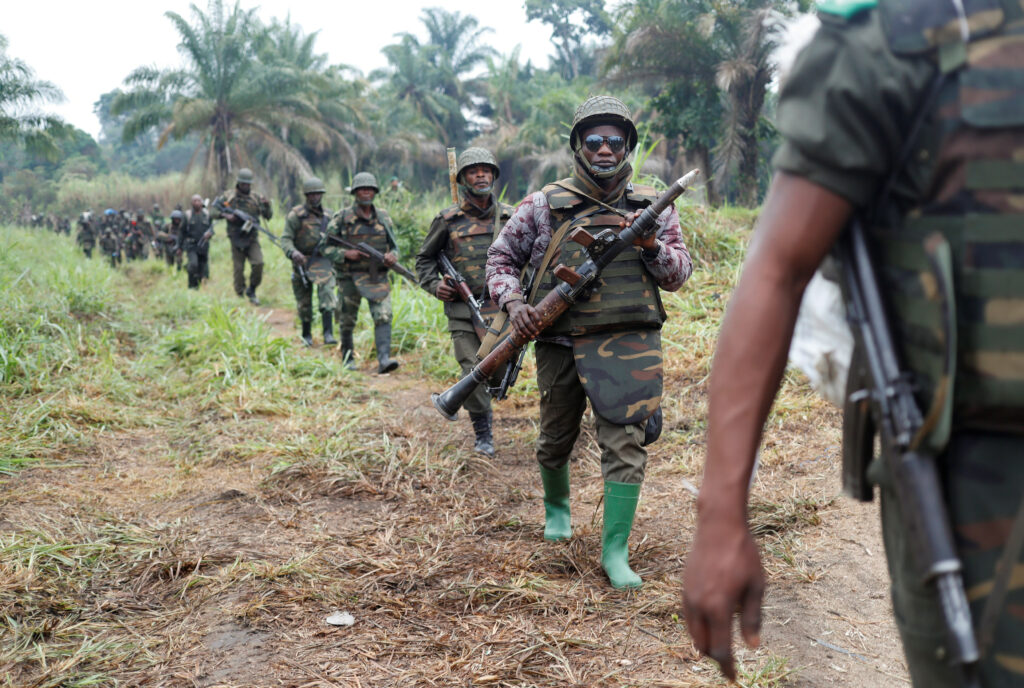
The government of the Democratic Republic of the Congo (DRC) has announced that the death penalty will be applied to members of the “Kuluna” gangs operating in urban areas. In a recent statement, DRC Minister of Justice Constant Mutamba revealed new measures to combat these gangs. He highlighted the creation of the “Urban Gangs Combat Commission” and plans to launch operations in neighborhoods where gang activity is most prevalent. Mutamba emphasized that gang members will be prosecuted as “terrorist criminals” and stressed that strict measures would be taken against them. “We will impose the death penalty on gang members operating in urban centers,” Mutamba stated. In the capital, Kinshasa, home to around 20 million people, “Kuluna” gangs are infamous for crimes such as robbery, extortion, assault, and murder. These gangs, largely made up of unemployed youth, have made life increasingly difficult for residents. Although the death penalty remains legal in the DRC and is often handed down by courts, it has not been carried out since 2003.

DR Congo to execute gang members Read More »

Heading towards Ghana’s general election

Public frustration over Ghana’s economic struggles, including rising prices and a lack of jobs, has dominated the lead-up to Saturday’s general election, which is expected to test the nation’s democratic resilience. Support for outgoing President Nana Akufo-Addo and his ruling New Patriotic Party (NPP) has plummeted during his second term, amid the worst economic crisis in decades, protests over the cost of living, and instability in key industries such as cocoa and gold. As a result, the push for change has tipped both the presidential and legislative races in favor of opposition leader John Dramani Mahama and his National Democratic Congress (NDC), according to recent polls. However, many voters are growing disillusioned with the political process. “The country is ruined. I will vote, but I don’t think it will change anything,” said 18-year-old Emmanuel Kwaku Jr, a high school graduate casting his ballot for the first time. A recent survey by pan-African research group Afrobarometer found that 82% of Ghanaians feel the country is headed in the wrong direction, with fewer than half expecting improvement in the coming year. “We have the trappings of democracy: we hold elections every four years, yet the benefits are minimal,” said Abena Tekyiwaa Manuh, senior fellow at the Accra-based Centre for Democratic Governance (CDD). “That’s dangerous.” Ghana’s commitment to two-term limits for presidents and largely peaceful transitions of power has made it an exception in a region increasingly plagued by coups and political instability. However, whoever wins the election will face immense pressure to fulfill campaign promises and improve the lives of citizens. If not, the youthful population may begin to question whether democracy is overrated, said Manuh and two Western diplomats. “We see a lot of anger among the youth, a sense of hopelessness, but also a sense of change. If that change doesn’t happen after the elections, what will happen?” one diplomat asked, speaking on condition of anonymity. “There is growing concern that Ghana’s peace and democracy are fragile.” A ‘Tricky Phase’ Twelve candidates are running for president, with Mahama and Vice President Mahamudu Bawumia of the ruling NPP seen as the leading contenders. Both have pledged to address the economic instability that has plagued the country since 2020, including soaring inflation, a $3 billion IMF bailout, and massive debt restructuring. Polls open at 0700 GMT and close at 1700 GMT for the 18.7 million registered voters. Legislative results are expected by early Monday, with presidential results due by Tuesday. However, trends may allow the outcome to be called earlier. The results period is expected to be “a tricky phase,” with rising tensions due to a lack of trust in institutions, including the electoral commission, said Jonas Claes, elections lead for the EU delegation in Ghana. Mahama and the NDC have repeatedly questioned the commission’s ability to conduct a credible election, citing voter roll irregularities and other concerns. Bawumia and the NPP, on the other hand, argue that the allegations are an attempt by Mahama to prepare for rejecting the results if they don’t go his way. “I don’t think widespread violence is expected, but it’s hard to be 100% sure,” Claes said.

Heading towards Ghana’s general election Read More »

Burundian youth flee to Tanzania for Work, face abuse and deportation

Young Burundians are fleeing to Tanzania in search of work, but many face harsh treatment upon arrival. Accused of being illegal migrants, they are often hunted down, arrested, beaten, and imprisoned before being deported back to Burundi. Once home, many are taken in by families in Mabanda, southern Burundi. Habimana Domatien, a 23-year-old from Kayanza in northern Burundi, recalls his traumatic experience in Kasulu Prison. “We were surrounded, arrested, and taken to a station. We were beaten at night, slapped, and severely mistreated. It was very hard,” he says. Host families in Burundi are calling on Tanzanian authorities to stop the mistreatment of these young migrants. “We ask Tanzania not to harm them. Some return traumatized, depressed, and almost beyond recovery. The Tanzanian government should treat our youth with kindness, as we do when they come to us,” says Olive Sindayihebura, a representative of host families. NGOs report that around 300 children have been expelled from Tanzania in the past two months. Ferdinand Simbaruhije, spokesperson for the National Federation of Associations for Children’s Welfare in Burundi (FENADEB), states that between July and September of this year, 149 children were expelled—147 boys and two girls. An additional 182 children returned voluntarily, bringing the total to 291. FENADEB attributes the migration of Burundian youth to widespread poverty, with many falling prey to human trafficking networks operated by Burundians in collaboration with Tanzanian traffickers.

Burundian youth flee to Tanzania for Work, face abuse and deportation Read More »

Scroll to Top