Africa

Russia, African states to set up security dialogue mechanism

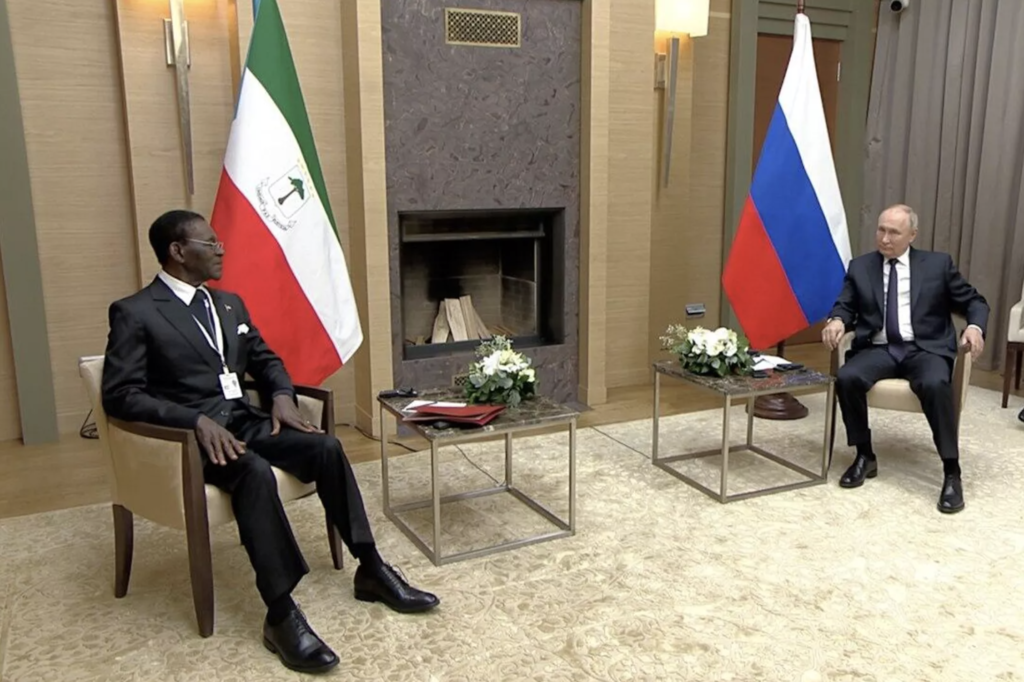
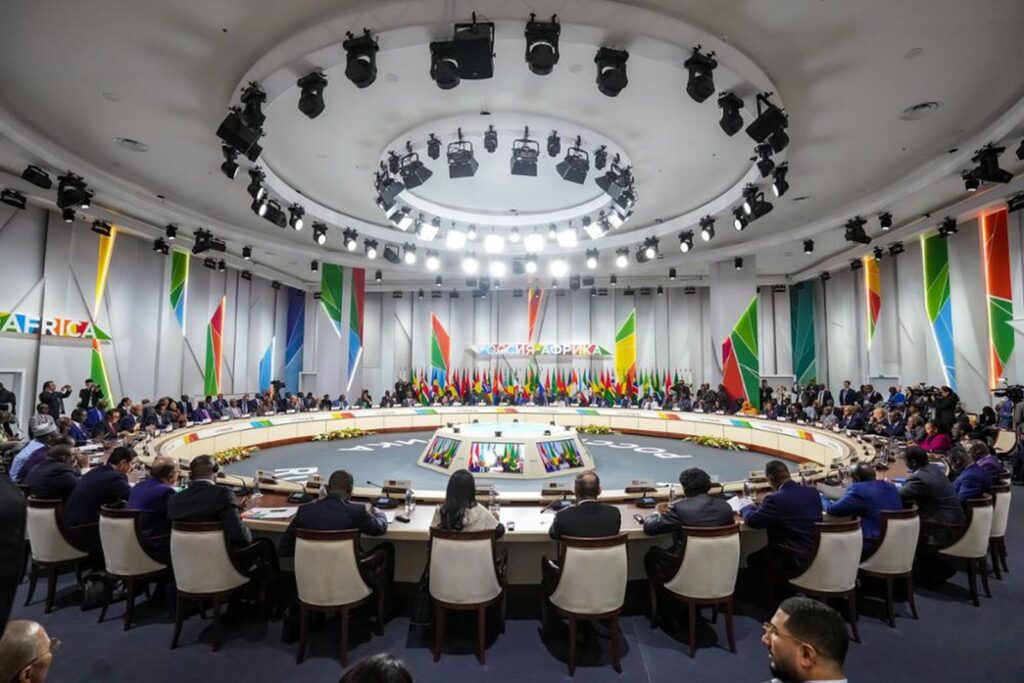
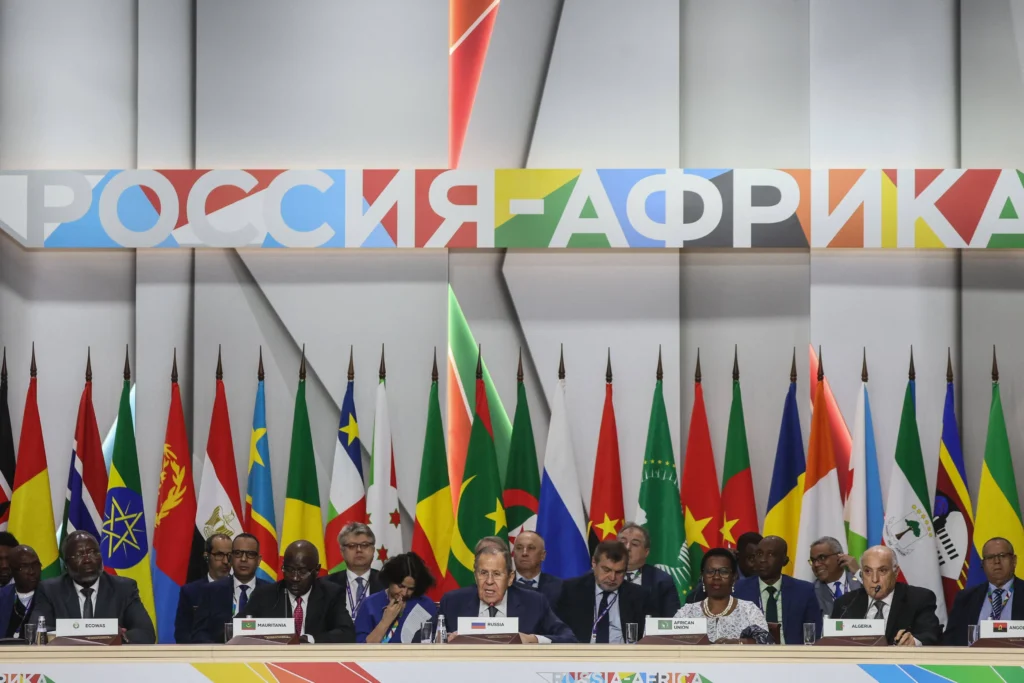
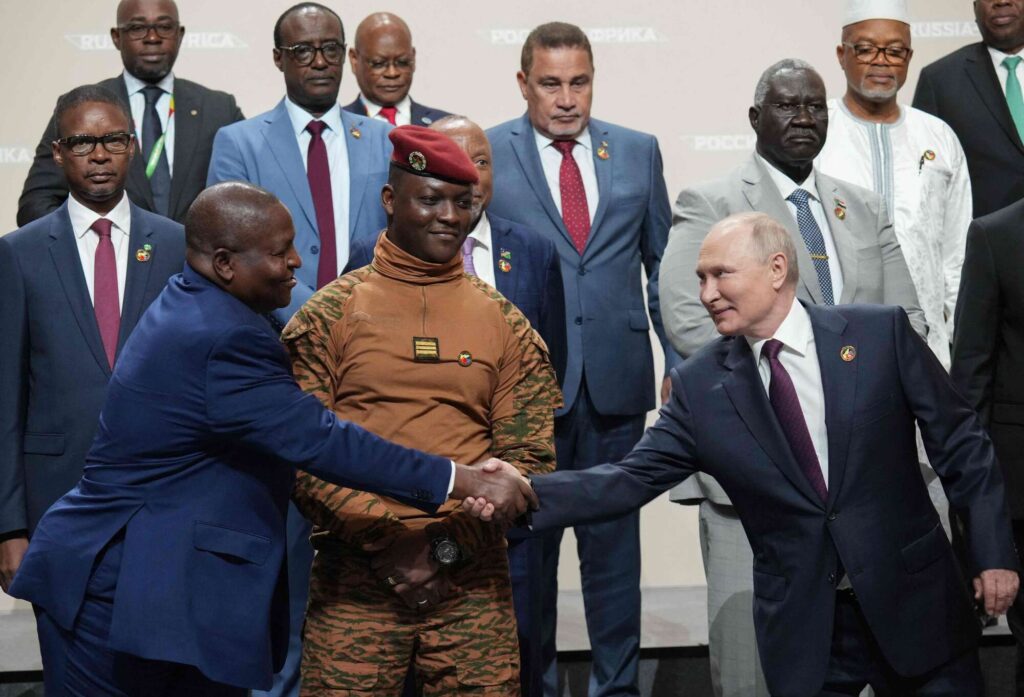
Russia and African states have confirmed their readiness to set up a dialogue mechanism in a bid to coordinate efforts on multiple security-related issues following a forum held in the Russian resort city of Sochi on Nov. 10, according to a joint statement. “We reaffirm our readiness to set up a standing top-level Russia-Africa dialogue mechanism that will contribute towards peace, stability and security as well as coordinating efforts in combating terrorism and extremism, addressing environmental problems and food and information security issues,” the statement said following the first ministerial meeting of the Russia-Africa Partnership Forum. Expressing concern among the meeting’s participants over the growing activity of terrorist groups in different African regions, the joint statement said they confirmed the importance of conflict resolution based on the principle of “African Solutions to African Problems.” It further emphasized the need for collective efforts and comprehensive approaches to assess and bolster international peace and security architecture, emphasizing the need to address the root causes of intrastate and interstate conflicts “based on the inviolability of the principle of equal and indivisible security.” The statement also expressed all parties’ commitment to the Treaty on the Non-Proliferation of Nuclear Weapons, believing that ensuring the treaty’s implementation as soon as possible is a priority for maintaining the international security system. The statement went on to convey the parties’ concern about the ongoing conflicts in the Middle East, particularly the developments in Gaza and Lebanon, adding that they support Palestine’s membership to the UN.

Russia, African states to set up security dialogue mechanism Read More »

IFAD calls for climate finance goal for farmers at COP29

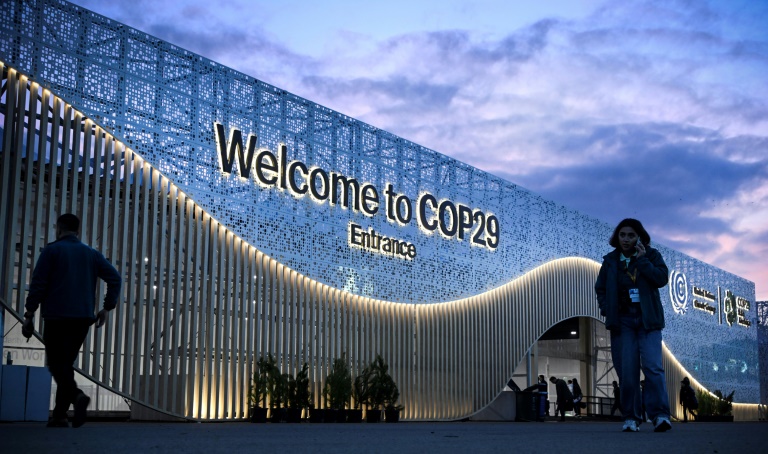
Ahead of the COP29 climate change summit, the United Nations International Fund for Agricultural Development (IFAD) is urging world leaders to set an ambitious global finance goal for climate adaptation. One of the key topics for discussion at the summit in Azerbaijan will be the New Global Quantified Goal (NCQG), with a focus on supporting small-scale farmers in adapting to climate change. Although African countries have contributed little to global climate change, they are among the most severely impacted. African leaders have long advocated for increased funding for both mitigation and adaptation efforts to address the continent’s climate challenges. In Africa, agriculture is largely dependent on rainfall, making it highly vulnerable to the extreme weather events exacerbated by climate change. Zimbabwe, for example, is currently facing its worst drought in over four decades. However, thanks to an IFAD-funded irrigation project, farmers have still been able to grow crops despite the drought. “This year, we couldn’t harvest anything because the rains didn’t come as expected. The seasons have changed,” said Tinomuounga Hove, chairperson of the Biri Irrigation Scheme. “Having an irrigation scheme helps us a lot. Even without rains this year, we were still able to grow crops.” IFAD is also supporting similar climate adaptation projects around the world to help smallholder farmers increase their food production in the face of climate challenges. The COP29 climate summit will take place in Baku, Azerbaijan, from November 11-22, bringing together climate negotiators, activists, and leaders from around the globe. “This is essentially a negotiation on how much wealthier countries should contribute to help developing nations cope with climate change,” said IFAD President Alvaro Lario. Lario emphasized the importance of a climate finance plan that includes a specific goal for adaptation, with a focus on the needs of small-scale farmers. “Small farms are the backbone of global food systems, but they are also the most vulnerable to climate change,” he said. “Investing in them is crucial if we are to ensure global food security.”

IFAD calls for climate finance goal for farmers at COP29 Read More »

500 rebels surrender weapons in Central African Republic

In the Central African Republic, 478 members of the rebel group Coalition of Patriots for Change (CPC) surrendered their weapons. According to military sources cited in national media, the 478 rebels voluntarily joined the National Disarmament, Demobilization, Reintegration, and Repatriation (DDRR) program. As they surrendered, the rebels handed over 1,788 pieces of military ammunition, 30 AK-47 assault rifles, and 8 rocket launchers to DDRR authorities. In the past two weeks, around 150 rebels had already surrendered their weapons in the country. Armed groups such as Seleka, Anti-Balaka, 3R (Return, Reclamation, Reinforcement), the Union for Peace in the Central African Republic (UPC), the Patriotic Movement of Central Africa (MPC), and the Lord’s Resistance Army (LRA) are fighting for control of resource-rich areas, particularly in the country’s mining regions. The CPC rebel groups had launched an offensive in December 2020 to capture the capital, Bangui, but were unsuccessful. Since 2013, ongoing violence in the country has resulted in the deaths of thousands, mostly Muslims, and displaced over one million people.

500 rebels surrender weapons in Central African Republic Read More »

13 Killed in mine collapse in Nigeria

At least 13 people were killed when a mining site collapsed in the Plateau State, northcentral Nigeria. Joshua Riti, a government official in the state, told Anadolu on Tuesday that the victims were aged between 18 and 30 and belonged to the Bassa Local Government Area. The collapse occurred on Saturday at the borders of Bassa, Jos South, and Jos North Local Government Areas, where these young individuals sought to earn a living in the mining pit, he added. Recently, 22 miners died when a mining pit collapsed at an illegal site located within a national game reserve that spans the Gashaka Local Government Area in Taraba State and the Toungo Local Government Area in Adamawa State.

13 Killed in mine collapse in Nigeria Read More »

Haiti’s new prime minister sworn in amid surge in violence

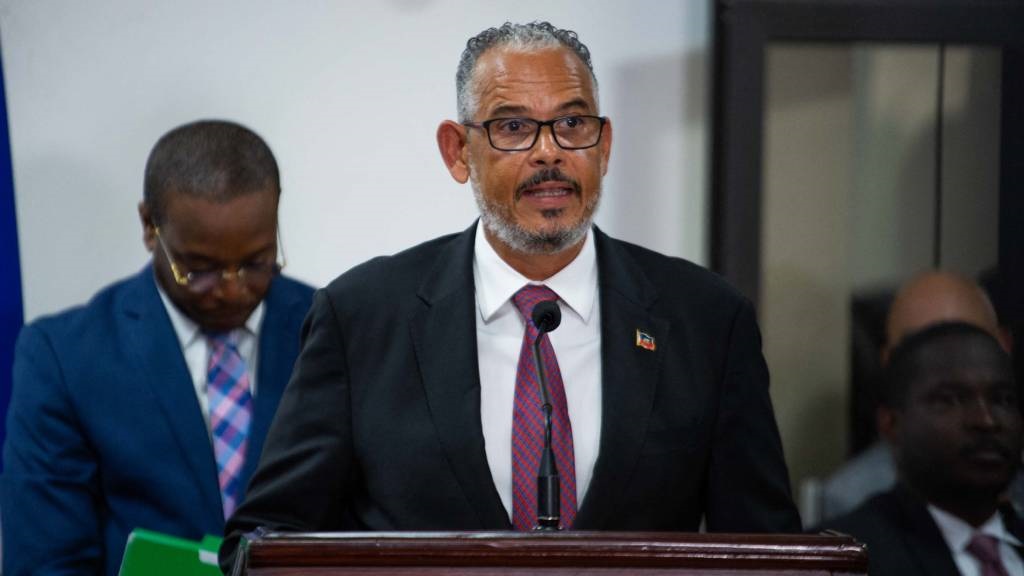
Haiti’s newly appointed interim Prime Minister, Alix Didier Fils-Aimé, was sworn in on Monday as violence surged in the capital, Port-au-Prince. Shortly after his inauguration, gunfire erupted at Toussaint Louverture International Airport, where armed gangs targeted a Spirit Airlines flight arriving from Fort Lauderdale, Florida. Shots fired at the plane struck a flight attendant, who suffered minor injuries, according to reports from Spirit Airlines and the U.S. Embassy. The flight, originally scheduled to land in Port-au-Prince, was diverted to the Dominican Republic and landed safely. In response to the escalating violence, some airlines have temporarily suspended flights to Haiti due to security concerns. During his inauguration, Fils-Aimé emphasized the urgent need for security, stating, “The first essential task that will determine the success of the transition is to re-establish the security of people, property and infrastructure, food security, and freedom of movement throughout the country.” Fils-Aimé, a prominent businessman and former president of Haiti’s Chamber of Commerce and Industry, assumes office at a particularly turbulent time for the country. The transitional council overseeing the restoration of democratic rule has recently faced allegations of corruption against three of its members, further hindering efforts to stabilize the government. Fils-Aimé’s appointment follows his 2015 Senate campaign and studies at Boston University. He was previously considered a private sector candidate for interim prime minister before the role was held by Garry Conille.

Haiti’s new prime minister sworn in amid surge in violence Read More »

Scroll to Top