Africa

Senegal’s Military recovers 30 bodies from migrant boat

Senegal’s military reported on Monday that at least 30 bodies have been recovered from a boat along a migrant route off the coast of Dakar. The navy discovered the vessel on Sunday evening and dispatched a patrol to investigate. Authorities indicated that further investigations will provide more details about the boat’s origin and the total number of casualties. This incident follows a separate tragedy earlier in September, when a boat carrying 89 people capsized off Senegal’s coast, resulting in numerous fatalities. Many migrants are fleeing poverty and unemployment in Senegal, aiming for the Canary Islands, which have seen over 22,300 arrivals since the start of the year. The route from West Africa to the Canary Islands is among the deadliest in the world. In August, Senegal’s military announced the arrest of hundreds of migrants and members of smuggling networks.

Senegal’s Military recovers 30 bodies from migrant boat Read More »

Nigeria’s inflation drops, but fuel prices threaten recovery

Nigeria’s inflation rate experienced a slight decrease in August, dropping from 33.40% in July to 32.15%. However, the declining value of the naira and rising fuel prices are undermining this progress, potentially reigniting inflation. Michael Anthony, an engineer and father of four, continues to face steep costs despite the small dip in inflation. “In July, I bought a bag of rice for 65,000 naira, but just three days ago, it cost me 95,000 naira,” he said, expressing concern that prices may rise again due to fuel costs. At a market in Abuja, food trader Blessing Ochuba is feeling the pinch. With customers unable to purchase in bulk, she’s reducing her stock and adjusting prices to stay afloat. “Customers who used to buy in bags are now buying half or a quarter because they can’t afford more,” she explained. “I used to buy 10 bags of rice, but now I can barely afford five. Everything is going up.” Despite the reported dip in inflation, Nigeria’s currency has weakened significantly, moving from 1,200 to 1,600 naira to the dollar, and gasoline prices have surged from 620 to nearly 1,000 naira per liter in just three months. Development economist Hauwa Mustapha attributed the slight decline in inflation to a government policy exempting food imports from excise duty for 90 days. “That helped boost food supply, but it doesn’t indicate a long-term recovery,” she noted, emphasizing the need for effective government measures. To manage inflation in both the short and long term, Mustapha suggests focusing on food supply policies. “As we approach harvest season, it’s crucial to minimize post-harvest losses to maintain a steady food supply.” Experts believe the government’s upcoming actions will determine if this inflation decrease marks a genuine recovery or merely a temporary reprieve.

Nigeria’s inflation drops, but fuel prices threaten recovery Read More »

Congo faces Mpox outbreaks amid healthcare crisis

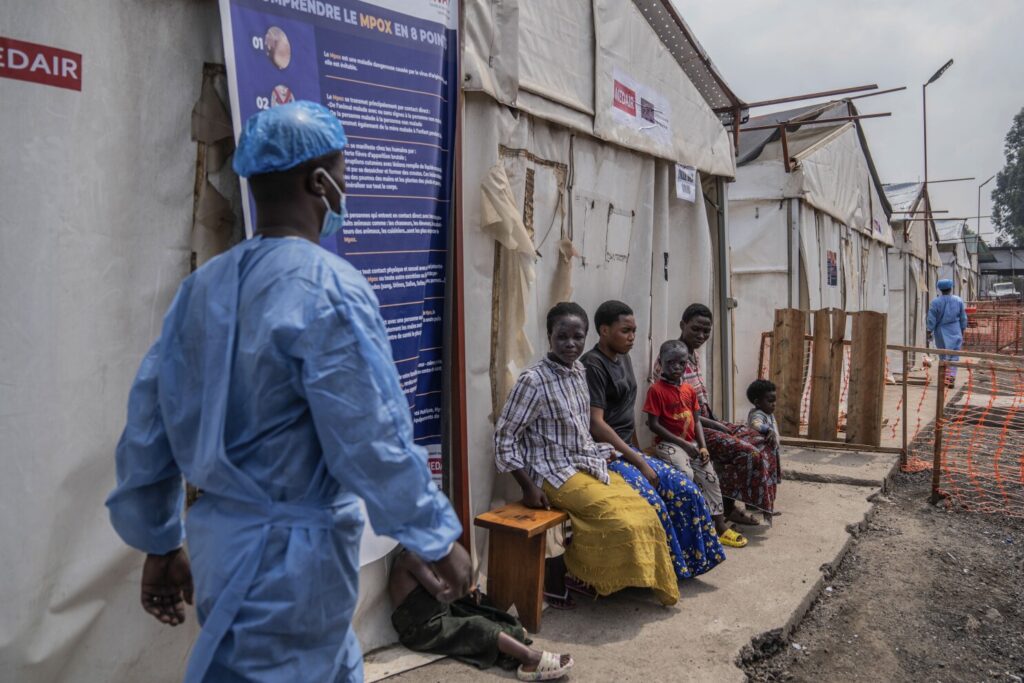
Health authorities have struggled to contain outbreaks of mpox in Congo, a huge central African country where a myriad of existing problems makes stemming the spread particularly hard. Last month, the World Health Organization declared the outbreaks in Congo and about a dozen other African countries a global health emergency. And in Congo, scientists have identified a new strain of mpox that may spread more easily. It has reached areas where conflict and the displacement of a large number of people have already put health services under pressure. Overall, Congo has more than 21,000 of the 25,093 confirmed and suspected mpox cases in Africa this year, according to WHO’s most recent count. Has Congo seen cases of mpox before? Yes, Congo is one of the African countries where mpox has been endemic for decades. Mpox, once known as monkeypox, comes from the same family of viruses as smallpox but causes milder symptoms such as fever. People with more serious cases can develop skin lesions. More than 720 people in Africa have died in the latest outbreaks, mostly in Congo. Mpox is a zoonotic disease, meaning it can spread to humans from infected animals. In the global mpox outbreak of 2022, the virus spread between people primarily through sex and close physical contact. What changed in Congo? In September 2023, mpox spread to Congo’s eastern province of South Kivu; it had previously been seen in the center and far west. Scientists then identified a new form of mpox in South Kivu that may be more infectious. The WHO said that from the outbreak in South Kivu, the virus spread among people elsewhere in the country, arriving in neighboring province North Kivu. Those two provinces — some 2,000 kilometers from the capital, Kinshasa — face escalating violence, a humanitarian crisis and other issues. What are the problems in eastern Congo? More than 120 armed groups have been fighting each other and the Congolese army for years in the eastern part of the country over the control of minerals. That has forced millions of people fleeing violence into refugee camps or nearby towns. That means mpox is hitting already-stretched health facilities. Dr. Musole Mulambamunva Robert, medical director of the Kavumu hospital in eastern Congo, said it is “truly a challenge” — sometimes treating as many as four times the facility’s capacity for patients. With more than 6 million displaced people in the east, authorities and aid agencies were already struggling to provide food and healthcare, while fighting other diseases such as cholera. Many people have no access to soap, clean water or other basics. Some eastern Congo communities are out of reach of health clinics — roads are unreliable, and hourslong risky boat trips are sometimes the only means of transport, said Mercy Muthee Lake of the International Federation of Red Cross and Red Crescent. People can be more susceptible to severe mpox cases because of malnutrition and undiagnosed HIV, she said. She also said health workers in eastern Congo have requested more mpox training as medications to treat fever and ease pain run out. Health authorities “are up against it because it’s such a complex area,” said Chris Beyrer, of Duke University’s Global Health Institute. What about vaccines? Africa has no capacity to produce mpox vaccines. Around 250,000 doses have arrived in Congo from the European Union and the United States, and more are expected. Congolese authorities say they need around 3 million vaccines. It will likely be weeks before any vaccines reach people in eastern Congo. For now, the vaccine is approved only for adults. There’s limited evidence of how it works in children. Vaccines are desperately needed, but they’re just “an additional tool,” said Emmanuel Lampaert, the Congo representative for Doctors Without Borders. The key, Lampaert said, is still identifying cases, isolating patients, and executing grassroots health and education campaigns. Local conditions make that trying — Lampaert noted it’s almost impossible to isolate cases among poor, displaced people. “Families with six to eight children are living in a hut, which is maybe the space of the bed we are sleeping in,” he said. “So, this is the reality.” Why are critics blasting the mpox response? Unlike the millions of dollars that poured into Congo for Ebola and COVID aid, the response to mpox has been sluggish, many critics say. Health experts say the sharp contrast is due to a lack of both funds and international interest. “Ebola is the most dangerous virus in the world, and COVID wiped out the world economy,” said professor Ali Bulabula, who works on infectious diseases in the medical department at Congo’s University of Kindu. “While mpox is a public health emergency of international concern, there is a lack of in-depth research and interest in the virus, as it’s still seen as a tropical disease, localized to Africa with no major impact on Western economies.”

Congo faces Mpox outbreaks amid healthcare crisis Read More »

Somalia strengthens security training to combat IED threat

As Somalia progresses toward self-reliance and sustainability in national security, the threat of Improvised Explosive Devices (IEDs) remains significant. Over the past year, approximately 600 IEDs have caused around 1,500 casualties, severely impacting local communities and national armed forces. The Somali National Army (SNA), supported by the United Nations Mine Action Service (UNMAS), is leading efforts to combat this persistent IED threat. “The seriousness of this threat is well understood here. The primary targets are your fellow SNA soldiers. It is vital that we find a solution,” stated James Swan, the UN Acting Secretary-General’s Special Representative for Somalia, during the launch of a month-long ‘train-the-trainer’ course aimed at enhancing the SNA’s capabilities in countering IEDs. Many attendees at the training have firsthand experience of the dangers faced by soldiers. “We faced numerous threats, including enemy blockades and remote-controlled IEDs, leading to the loss of many comrades,” recalled Lieutenant Colonel Mohamed Mohamud Awale, reflecting on his operational experience in the Hiraan and Galgaduud regions. Colonel Faisal Ali Noor shared his haunting memories of IED incidents: “At times, IEDs detonated while we were digging, resulting in casualties. Our limited knowledge even led us to use fire to attempt to defuse them, which caused more fatalities.” The statistics are alarming: in 2023 alone, the SNA reported 378 deaths and 451 injuries due to IEDs, underscoring the ongoing risks faced by both military personnel and civilians. As Somalia strives to take full responsibility for its security, training initiatives like the one beginning today in Mogadishu aim to better equip national forces through comprehensive training, mentoring, and hands-on experience.

Somalia strengthens security training to combat IED threat Read More »

Kenyan court rules Meta can be sued over content moderator firings

A Kenyan court of appeal declared Friday that Meta can be sued in Kenya over the firing of dozens of content moderators. The decision paves the way for a legal battle between the Facebook parent company and the aggrieved moderators, who allege wrongful termination. In a statement, their lawyer Mercy Mutemi applauded the ruling, saying: “The Court of Appeal has today upheld the Employment Court’s decision that Facebook can be sued in Kenya.” Noting that the cases by the content moderators could now proceed, he said Facebook had “argued it’s a foreign company that can’t be sued in Kenya.” The development follows an out-of-court settlement in August last year, where Meta reached an agreement with the group of content moderators who had previously sued the company over similar claims of unjust dismissal. The dispute originated from when 260 Kenyan-based content moderators employed by Sama, a company contracted by Meta for content moderation, were abruptly informed of their redundancy in March 2023. In response, the moderators filed a lawsuit against Meta, asserting that their terminations were unlawful and lacked valid justification. This incident was not the first legal challenge Meta has faced in Kenya. In December 2022, the company was sued for $2 billion over accusations of exacerbating ethnic violence in the East African country, as well as in neighboring Ethiopia.

Kenyan court rules Meta can be sued over content moderator firings Read More »

Gang violence spreading across Haiti 

Gang violence is still spreading across Haiti, while the UN-backed mission to combat crime in the Caribbean country continues to lack sufficient funds to act, UN human rights expert William O’Neill warned on Friday. O’Neill, who concluded a visit to Haiti this week, said gangs are invading new territories as weapons and ammunition enter the country despite an international embargo. “Areas previously not impacted by gang violence are now directly impacted, with galloping inflation, lack of basic goods and flows of internally displaced people,” O’Neill warned at a news conference in Port-au-Prince. “The human rights and humanitarian consequences are dramatic.” He warned that the UN-backed mission, led by 400 Kenyan police officers who arrived in Haiti at the end of June, has deployed less than one-quarter of the promised contingent and has less than two weeks left in their initial one-year mandate. “The equipment it has received is inadequate, and its resources are insufficient,” he said. At least 2,900 troops were promised by countries including Antigua, Barbados, Bangladesh, Belize, Benin, Chad, Bahamas and Jamaica to help Haitian police. More than 1,379 people were killed or injured in Haiti, and 428 kidnapped from April to June, according to the UN. “The solutions are there, and they already exist. But efforts must be redoubled immediately,” said O’Neill. He pointed out that the population continues to suffer from sexual violence, displacement and children are being forcibly recruited into gangs. The children, he said, are “being used to carry out attacks against public institutions and police operations.” “Youth are losing hope of a better future,” he said. Less than one-third of Haiti’s health services are functioning normally, and almost 5 million people are suffering from hunger.

Gang violence spreading across Haiti  Read More »

Maiduguri faces crisis as devastating floods hit West Africa

Torrential rains across Central and West Africa have caused devastating floods, with Maiduguri, the capital of Nigeria’s Borno state—already struggling with an ongoing insurgency—bearing the brunt of the disaster. This year alone, the floods have claimed over 1,000 lives and displaced hundreds of thousands in countries like Chad, Nigeria, Mali, and Niger. The United Nations reports that more than four million people have been affected in West Africa, a dramatic increase from last year. As rescue operations continue, the exact death toll remains uncertain, but preliminary figures indicate at least 230 deaths in Nigeria, 265 in Niger, 487 in Chad, and 55 in Mali, which has seen its worst flooding since the 1960s. Despite contributing only a small fraction of global greenhouse gas emissions, Africa is highly vulnerable to extreme weather, with adaptation costs projected to reach $30-50 billion annually over the next decade. Maiduguri is in crisis, as the region has faced a relentless wave of attacks from Boko Haram, resulting in over 35,000 deaths in the past decade. Local resident Saleh Bukar recalled being awakened by neighbors’ urgent cries for help as floodwaters surged. Many older adults and those with disabilities were unable to escape in time, leading to tragic losses. With over 600,000 people displaced in Borno state alone, the local government struggles to cope. Recent floods have devastated wildlife, destroyed vital infrastructure, and caused significant structural damage, including the collapse of key bridges and a dam that released vast amounts of water into the city. Governor Babagana Zulum has called for urgent international aid, emphasizing that local resources are overwhelmed. The World Food Program is providing food assistance, but many survivors report feeling abandoned. In Niger, floods have affected over 841,000 people, with single mother Harira Adamou lamenting the loss of her home and the absence of state support. She and her children are now living in a temporary shelter, fearing more rains. As Maiduguri remains partially submerged, forecasts suggest further rain, prompting warnings of additional flooding. Bukar, displaced and living in a shelter with thousands, has taken it upon himself to help others while grappling with his own loss. “I am volunteering to help, but I am also a victim,” he said, highlighting the resilience of the community amid profound suffering.

Maiduguri faces crisis as devastating floods hit West Africa Read More »

Scroll to Top