Africa

South Africa’s unemployment rate climbs, over 8 million jobless

South Africa’s unemplyment rate increased by 0.6 percentage points from 32.9% in Q1 2024 to 33.5% in Q2 2024, the government’s statistics office reported Tuesday. Africa’s most industrialized economy has struggled to create jobs in recent years due to a long recession and most recently the Covid-19 pandemic.  About 8.4 million people were out of work, up from 5.2 million in 2014. The number of employed persons fell by 92,000 to 16.7 million in Q2 2024. The sectors which saw the most job decreases include trade, agriculture and construction.  Only manufacturing, social services and utilities added jobs.  The figures are the first to be released since the May elections which brought in a coalition government which put reviving the ailing economy top of its agenda.  Unemployment was a key political issue in the vote, likely contributing to the loss of an absolute majority by the African National Congress (ANC).  The statistics affice said that the most significant decrease in employment was observed in the Western Cape, Mpumalanga and KwaZulu-Natal provinces.

South Africa’s unemployment rate climbs, over 8 million jobless Read More »

Tanzania’s president sacks health minister in mini-Cabinet reshuffle

Tanzanian President Samia Suluhu Hassan removed long-serving Health Minister Ummy Mwalimu in a mini-Cabinet reshuffle Wednesday, a move seen as part of broader efforts to realign her government ahead of general elections next year. According to a statement issued by Chief Secretary Moses Kusiluka, the president has appointed Jenista Mhagama as the new minister of health. Mhagama previously served as the minister of state in the Prime Minister’s Office responsible for Policy, Parliament and Coordination. Mwalimu, who held the health portfolio for a long time, has not been reassigned with any other duty. In the same reshuffle, President Hassan appointed renowned law professor Palamagamba Kabudi as the Minister of Constitution and Legal Affairs, a portfolio previously held by Pindi Chana. Chana, in turn, has been appointed as the Minister of Natural Resources and Tourism, the docket she had held previously. The president also promoted William Lukuvi to the position of Minister of State in the Prime Minister’s Office, tasked with overseeing policy, parliament and coordination. The reshuffle, which includes key changes in the Attorney General’s Office, where a senior aviation expert, Hamza Johari, has been appointed attorney general, replacing Eliezer Feleshi, who has been appointed as a judge of the Court of Appeal, signals President Hassan’s ongoing efforts to consolidate her administration and strengthen governance as the country navigates through its development challenges.

Tanzania’s president sacks health minister in mini-Cabinet reshuffle Read More »

Monkeypox cases surge in Goma as WHO declares global emergency

In Goma, Democratic Republic of Congo, health teams are working tirelessly to identify monkeypox cases as the number of infections in the city continues to rise daily. On Wednesday, the World Health Organization declared the mpox outbreaks in Congo and across Africa a global emergency. Confirmed cases have now been reported in children and adults across more than a dozen countries, with a new, more virulent strain of the virus emerging. Earlier this week, the Africa Centers for Disease Control and Prevention labeled the mpox outbreaks a public health emergency, citing over 500 deaths and calling for international assistance to curb the virus’s spread. “Since Friday (August 9), we have confirmed nine cases of monkeypox. We first isolate individuals with suspicious lesions and then collect samples,” said Dr. Rachel Maguru, General Practitioner at Goma Provincial Hospital and Head of the Multi-Epidemic Center. Dr. Maguru expressed concern that individuals with symptoms might avoid visiting the hospital to escape isolation, which could lead to further infections spreading within communities. Recent reports have highlighted the emergence of a more lethal form of mpox in a Congolese mining town, which has a mortality rate of up to 10% and may spread more easily. This new variant is more difficult to detect as it causes milder symptoms and lesions primarily on the genitals, making it easier for people to unknowingly transmit the virus. “We are seeing a rising number of cases, with a mortality rate higher than acceptable. New countries are now reporting cases that hadn’t in recent years, with several of them identifying the variant of mpox currently spreading in the DRC,” stated Prof. Salim Abdool Karim, chair of the Emergency Consultative Group for the Africa Centers for Disease Control and Prevention.

Monkeypox cases surge in Goma as WHO declares global emergency Read More »

Warming sea waters in South Africa threaten fish migration

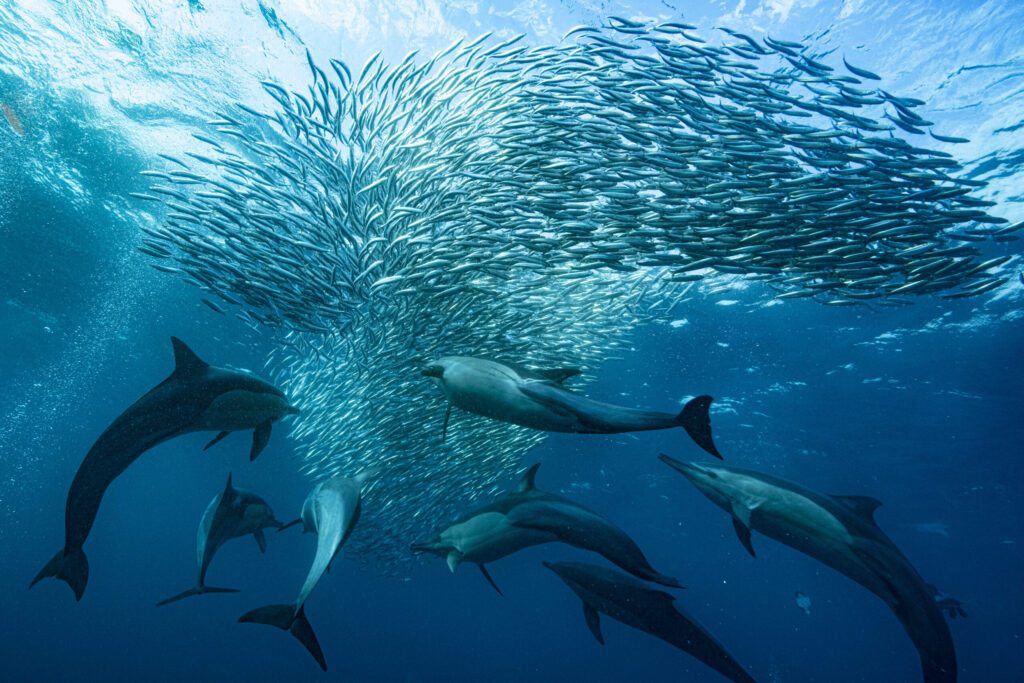
Experts warn that the number of fish participating in South Africa’s sardine migration, the largest animal movement in the world by biomass, may decline due to warming sea temperatures driven by the climate crisis. Known as the “KwaZulu-Natal Sardine Run,” this massive, one-way migration spans 1,500 kilometers from temperate regions to the Indian Ocean and involves billions of sardines. According to an article titled “The Mass Migration of Sardines in Southeast Africa: An Ecological Trap,” prepared by academics from various South African universities and research centers, the migration occurs along the Agulhas Current—a swift ocean current also supporting various predatory birds and marine life. This migration is crucial for local economies as it provides significant commercial income. Professor Lorien Pichegru from Nelson Mandela University’s Coastal and Marine Research Institute highlighted that the migration remains mysterious in many aspects. He described the Sardine Run as the largest animal movement in the world by biomass, underscoring its importance for numerous predators, particularly seabirds. Pichegru explained, “Cape gannets, for example, time their breeding cycles to coincide with the sardine run, ensuring that their young hatch during a period of abundant and easily accessible food. Many animals synchronize their life cycles with the sardine run.” He also noted that sardines do not thrive in warm waters and that climate change is adversely affecting them. “Sardines are declining in Africa due to climate change and overfishing pressures. Their 2-3 year lifespan means their survival depends on the successful development of their eggs and larvae, which is directly impacted by sea temperatures. Higher temperatures make it harder for larvae to grow and mature, leading to a potential decline in sardine numbers. This could halt the sardine run in the coming years, affecting many animals, including sharks, and further endangering the already threatened Cape gannet. Fishermen dependent on these fish for their livelihood would also be impacted, disrupting the entire food chain.” Pichegru further pointed out that ongoing oil and gas exploration in the region affects the habitat, with seabed excavation creating significant noise pollution that harms marine life. Concerns about potential oil spills were also raised. “The Agulhas Current, one of the fastest currents globally, could spread the effects of a potential spill over a large area,” Pichegru warned. The 1 Ocean Foundation, established under the French National Center for Scientific Research (CNRS) and supported by UNESCO, is documenting this migration with scientists, artists, and activists through their project “The Great Migration of Life.” Alexis Rosenfeld, an underwater photographer and co-founder of the foundation, stated that their project aims to “make the invisible visible” and emphasize the importance of biodiversity. The project name reflects its significance. Rosenfeld explained that their motivation stemmed from concerns over natural gas and oil exploration off South Africa’s coast. Rather than directly opposing the projects, they chose to illustrate the potential consequences through their film. Rosenfeld said, “We believe in the power of positive narratives. By showcasing the endangered ecosystem and the great migration of life, we aim to highlight its beauty, which is a more impactful approach than direct confrontation.” He also noted that climate change is a significant factor affecting their project. “Climate change has a substantial impact on ocean currents, influencing migrations. While the sardine migration typically happens every year, we observed it less frequently in recent years and now see it restricted. This is a direct result of climate change.” Rosenfeld concluded by emphasizing the migration’s scale: “Sometimes, you can’t see in front of you because the view is filled with animals. You might find yourself surrounded by millions of sardines, dozens of swimming birds, and 20-30 dolphins, making you forget where you are and what you’re doing.”

Warming sea waters in South Africa threaten fish migration Read More »

Ex-rebel leader convicted of atrocities in special trial in Uganda

Uganda’s high court International Crimes Division on Tuesday convicted a former commander of the Lord’s Resistance Army (LRA) rebel group. The Gulu high court circuit convicted Thomas Kwoyelo of 78 out of 93 charges including murder, crimes against humanity including torture, rape, and enslavement, and kidnapping with intent to murder among others committed during the rebellion against Uganda of 1992-2005, but did not immediately sentence him. Kwoyelo’s trial began in September 2018, and he has been in custody at Luzira Maximum Prison since 2009 after being captured by the Ugandan Army in the Democratic Republic of Congo that March. He is the first top-level LRA commander to face a domestic court on crimes committed in northern Uganda. It is also the first time Uganda tried an LRA member under a special division of the High Court that focuses on international crimes.

Ex-rebel leader convicted of atrocities in special trial in Uganda Read More »

Russian defense minister meets with African counterparts

Russian Defense Minister Andrey Belousov held talks Tuesday with his Southeast Asian and African counterparts in Moscow. The Russian Defense Ministry said Belousov held talks with his counterparts from Vietnam, Myanmar, Laos, Mali and the Central African Republic on the sidelines of the Army-2024 International Military-Technical Forum. “Belousov discussed the current state and prospects for developing bilateral military cooperation,” it said. It also said that an exchange of views took place on the “most challenging issues of the international situation and regional security.” “Following the talks with the Minister of Defense of Laos, the parties signed an updated bilateral agreement on military cooperation,” it added.

Russian defense minister meets with African counterparts Read More »

Algeria and Niger have agreed to “revive” their relations

Algeria and Niger have agreed to “revive” their bilateral relations based on the principles of “good neighborliness, brotherhood, and friendship.” According to the official Algerian news agency, Algerian President Abdelmadjid Tebboune met with a delegation led by Niger’s Prime Minister and Minister of Economy and Finance, Ali Mahamane Lamine Zeine. The delegation was sent by Niger’s President, General Abdurrahmane Tchiani, head of the National Council for the Safeguard of the Homeland (CNSP), and conveyed an important message to President Tebboune. Following their discussions, Algeria and Niger committed to restoring their relations on the foundation of “good neighborliness, brotherhood, and friendship.” Prime Minister Zeine highlighted that the relationship between the two countries had suffered due to the military coup that ousted former Nigerien President Mohamed Bazoum on July 26, 2023. He remarked, “The relations, which were harmed by these events, needed to be revived. Niger regards Algeria as a brotherly, neighboring, and friendly nation, and it should have supported us from the very beginning of the threat. We felt the absence of this brother and neighbor.” Zeine also noted that the two nations have reaffirmed their commitment to each other’s sovereignty by addressing any issues in their relationship. After the coup, Algeria had called for the restoration of constitutional order in Niger but opposed the West African Economic Community’s (ECOWAS) proposed military intervention. Algerian Foreign Minister Ahmed Attaf had previously visited Nigeria, Benin, and Ghana, urging them to “avoid using force against Niger.” Algerian state radio reported that on the day of the coup, Algeria refused to allow French warplanes to use its airspace for a potential military operation against Niger. The military regime, which took power under General Abdurrahmane Tchiani on July 26, 2023, announced in August 2023 that Bazoum would be tried for “high treason,” “financing terrorism,” and “conspiring against the state.” Bazoum and his wife Hadiza have been under house arrest since the coup.

Algeria and Niger have agreed to “revive” their relations Read More »

Scroll to Top