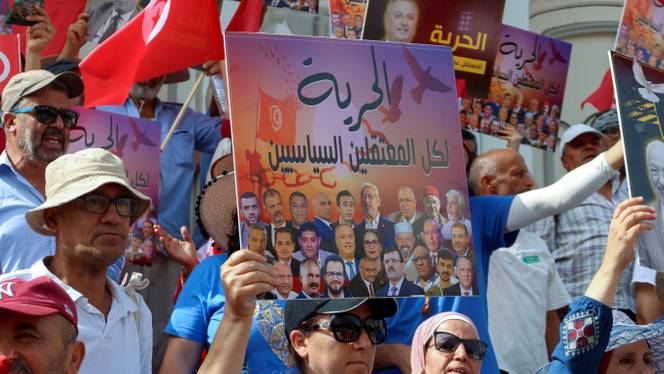
On Friday, Tunisia’s parliament amended a law that limits the judiciary’s authority over decisions made by the election authority, which is appointed by President Kais Saied. This change comes just nine days before the presidential election and amid tensions between the election authority and the courts regarding the exclusion of three candidates from the ballot. The amendment sparked protests from opposition and civil society groups, who accuse the election authority of colluding with Saied to minimize competition for his re-election bid. Demonstrators gathered outside parliament to express their discontent. Since the Arab Spring, Tunisia has seen two presidential elections deemed democratic, but this year’s election cycle has been marred by disputes between the Independent High Authority for Elections (ISIE) and the judiciary. ISIE recently dismissed a court ruling that ordered the reinstatement of three candidates—Monther Zenaidi, Abdellatif Mekki, and Imed Daimi—claiming their campaign filings were incomplete. Parliament members criticized the judiciary’s neutrality, suggesting that judges were acting under foreign influence, reflecting Saied’s longstanding rhetoric against opponents. Zina Jiballah, an independent MP, accused some parties of receiving instructions from abroad. Saied, who won his first term in 2019, will face two relatively unknown candidates, Ayachi Zammel and Zouhair Maghzaoui, next weekend, as prominent opposition figures remain imprisoned. Zammel is currently incarcerated on election fraud charges.