Featured

Rwanda’s president denies supporting M23 rebels

Rwandan President Paul Kagame dismissed reports claiming that his country supports the M23 rebel group, which recently seized key towns in the eastern Democratic Republic of Congo. Kagame told reporters in the capital Kigali on Thursday that Rwanda has nothing to do with the rebel group and it does not make sense to blame Rwanda for the conflict in the DR Congo. “These leaders of M23 and the majority of their fighters came from Uganda, where they had been refugees,” he said, adding that M23 rebels are not Rwandans but speak the Rwandan language, Kinyarwanda. Kinshasa accuses Kigali of supporting the M23 rebels, a claim that Kagame has frequently denied. A recent report by the United Nations Group of Experts claimed that Rwandan forces were helping the rebels in DR Congo. Kagame said M23 fighters are Congolese, and even the past and present leaders admit it.  ‘‘Why do we have over 100,000 refugees here in Rwanda originating for eastern Congo?” he said. He said the Rwandan government disarmed M23 fighters who crossed into Rwanda in 2012-13 and gave back their arms to the authorities in DR Congo. Kagame urged Congolese authorities to address the root causes of the conflict and negotiate with the rebel group to find a solution to end it. Angolan President Joao Lourenco had been mediating between Tshisekedi and Kagame, but talks hit a deadlock last month.

Rwanda’s president denies supporting M23 rebels Read More »

PLO warns of grave repercussions from Israeli laws targeting UNRWA

 A senior member of the Palestine Liberation Organization (PLO) warned Thursday of severe consequences from two Israeli laws targeting the UN agency for Palestinian refugees (UNRWA) that are set to take effect soon. The first law, passed in October by Israel’s Knesset, or parliament, bans the UN agency’s operations within Israel. The second revokes a 1967 agreement between Israel and UNRWA. Ahmed Abu Holi, a member of the PLO Executive Committee, said that “implementing these laws could undermine UNRWA’s mandate in the Gaza Strip and the West Bank while eliminating its presence in East Jerusalem.” “This will deprive millions of refugees of vital services, including education, health care and life-saving emergency aid, leading to a humanitarian collapse in Gaza,” he said in a statement on his Facebook page. Abu Holi urged UN General Assembly member states and the UN Security Council to take decisive action to pressure Israel to halt enforcement of the laws and counter efforts to dismantle or undermine UNRWA’s mandate. The refugee agency itself issued a warning last Saturday saying that time was running out before the Israeli ban takes effect at the end of January. This would block the organization from providing services to Palestinian refugees in the Gaza Strip and the occupied West Bank, including East Jerusalem, according to comments by UNRWA’s Director of Communications, Juliette Touma, in an interview with Ireland’s RTE. The laws, finalized by the Knesset on Oct. 28, will force UNRWA to cease operations in areas under Israeli jurisdiction, shut down its offices, and close any associated bank accounts.  Israeli authorities have alleged that some UNRWA staff were involved in the cross-border attacks on Israel by the Palestinian group Hamas on Oct. 7, 2023. UNRWA, established in the aftermath of the 1948 Nakba to assist displaced Palestinian refugees, operates in five regions: Gaza, the West Bank, Jordan, Syria and Lebanon. The agency currently supports approximately 5.9 million Palestinians, according to its data. The Israeli army has continued a genocidal war on Gaza that has killed over 46,000 people, mostly women and children, since Oct. 7, 2023, despite a UN Security Council resolution calling for an immediate cease-fire. In November last year, the International Criminal Court issued arrest warrants for Israeli Prime Minister Benjamin Netanyahu and his former Defense Minister Yoav Gallant for war crimes and crimes against humanity in Gaza. Israel also faces a genocide case at the International Court of Justice for its war on the enclave.

PLO warns of grave repercussions from Israeli laws targeting UNRWA Read More »

Trump says meeting being set up with Putin

US President-elect Donald Trump said Thursday that a meeting with Russian President Vladimir Putin is being set up. “He (Putin) wants to meet, and we’re setting it up,” Trump told reporters ahead of a meeting with Republican governors at his Mar-a-Lago estate in Palm Beach, Florida. He did not provide further details about the possible meeting. “President Putin wants to meet. He said that even publicly, and we have to get that war over. That’s a bloody mess,” he said, referring to the Russia-Ukraine war. Turning to Chinese President Xi Jinping, Trump said they have had “a lot of” communication. “We have a lot of meetings set up with a lot of people. Some have come, but I’d rather wait till after the 20th,” he said, referring to Jan. 20, the date of his inauguration.

Trump says meeting being set up with Putin Read More »

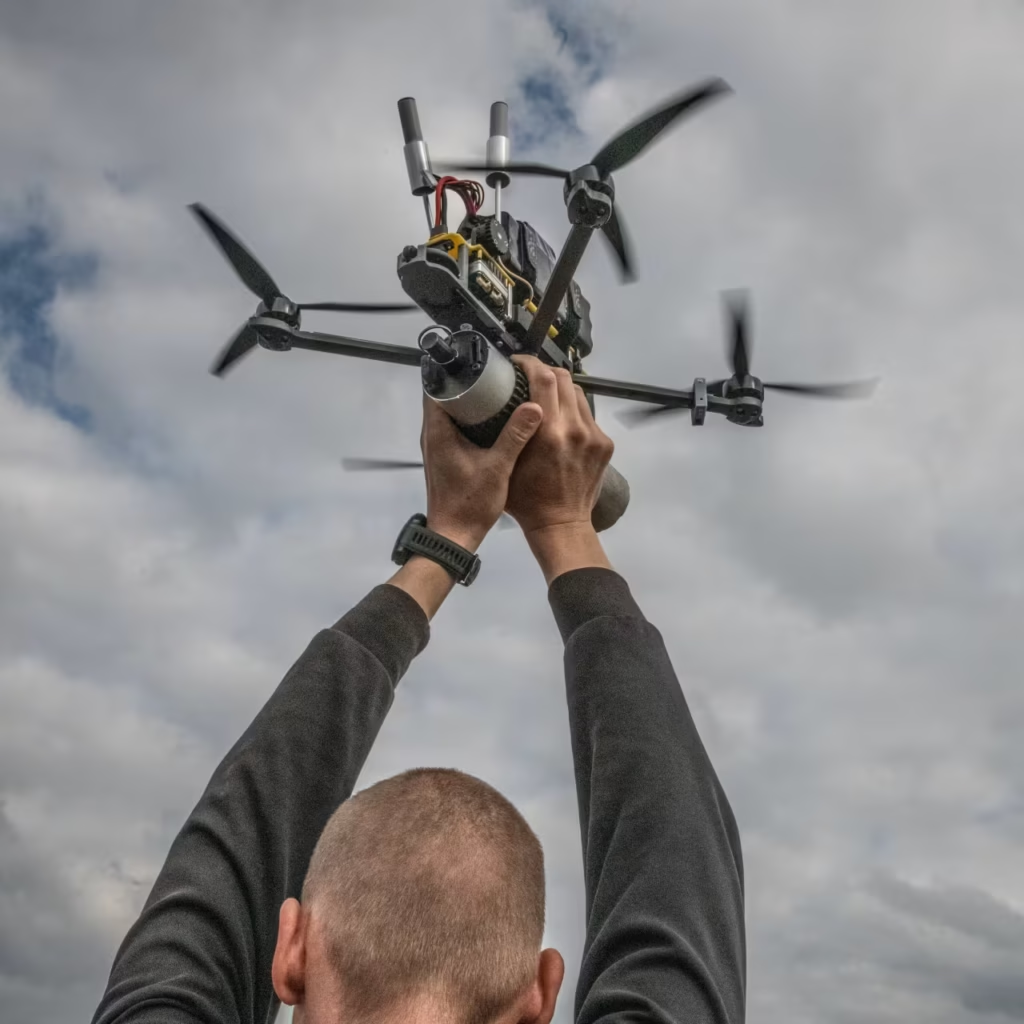
Fiber optic drones revolutionize combat in Russia-Ukraine war

Fiber optic drones capable of penetrating 20 kilometers (12.4 miles) into enemy lines and striking targets with high-resolution imagery have emerged as key tools in the Russia-Ukraine war. With a cable range of up to 20 kilometers, these drones operate at low altitudes, avoiding detection and interception. Anadolu obtained information on fiber optic first-person view (FPV) drones in the Russia-Ukraine conflict from open sources. Ukraine’s Commander-in-Chief of the Armed Forces, Oleksandr Syrskyi, announced on Jan. 5 that Ukraine had struck over 54,000 Russian targets in December 2024, with 49% of these attacks carried out using kamikaze drones. Syrskyi noted that Russia’s increased use of fiber optic drones poses significant risks to troop safety and added that Ukraine has also begun deploying similar technology. – Immune to electronic warfare detection and interception FPV drones are typically low-cost quadcopters or similar models, controlled in real time through goggles worn by the operator. In the Russia-Ukraine war, studies show that electronic warfare devices have downed 75% to 90% of drones, jamming the radio link between the pilot and the drone. Fiber optic drones, however, are undetectable and immune to electronic warfare, transmitting high-resolution video without relying on radio signals. These drones fly at low altitudes, avoiding obstacles and reducing exposure to air defense fire, unlike radio-controlled drones. The system uses a durable fiber optic spool that unravels during flight, maintaining a secure connection. The pilot’s commands and video data are transmitted as light signals via the fiber optic cable at high speeds. Reconnaissance drones equipped with high-resolution cameras offer a critical advantage in detecting enemy positions. However, the use of fiber optic cables increases the drone’s weight and reduces its range. Fiber optic drones face limitations, including slower speeds compared to radio-controlled drones, vulnerability to cable tangling and reduced maneuverability for turns exceeding 45-degree angles. While radio-controlled drones can operate over ranges of 5 to 200 kilometers (3 to 124 miles), fiber optic-guided drones are restricted to a range of 20 kilometers (12.4 miles). In addition to reconnaissance, these drones can carry bombs, explosives or anti-tank warheads for attack missions. – Fiber optic drones in Ukraine’s inventory Ukraine has tested various fiber optic drones, including the 20-kilometer range HCX (Argus 30), which weighs 1.2 kilograms (2.6 pounds) and features optical and thermal cameras alongside a 4-kilogram (8.8-pound) payload. The Khyzak REBOFF kamikaze drone has a 5-kilometer (3-mile) cable range, with an upgraded 10-kilometer (6.2-mile) version capable of carrying up to 2 kilograms (4.4 pounds) of explosives. The E-Banshee drone, a six-propeller fiber optic model, has been successfully tested for bomb delivery, though a 10-kilometer cable tangled during one trial. The Black Widow Web 10 kamikaze drone has a 5-kilometer range and can carry a payload of 2 kilograms of explosives. On Jan. 2, the Ukrainian Defense Ministry announced testing over 12 locally produced drones, each capable of carrying up to 3 kilograms (6.6 pounds). – Fiber optic drones in Russia’s arsenal Since 2024, Russia has deployed the Knyaz Vandal of Novgorod (KVN) drone, developed by NPC Ushkuy in Novgorod. Russian sources claim the drone has a 20-kilometer range, can carry 3.5 kilograms (7.7 pounds) of explosives and is equipped with the PG-7V anti-tank round used in RPG-7 launchers. A captured KVN drone in Ukraine was found to have a 10.8-kilometer (6.7-mile) long fiber optic cable. Ukrainian experts suggest the KVN drone resembles the Chinese-made Skywalker model and was likely imported, as indicated by Chinese-written labels on the captured drone. Russia also uses the Piranha-5 drone, which carries 1 kilogram (2.2 pounds) of explosives and supports infantry within a 1 to 3-kilometer (0.6 to 1.8-mile) radius. The Piranha-13, a multipurpose drone with a heavier payload and fiber optic control, remains less documented. Additionally, Russia deploys the Product 55, a fiber optic-controlled kamikaze drone developed by ZALA. – Impact on battlefield Fiber optic-controlled drones establish a 20-kilometer “no-go” zone for armored vehicles, as they remain undetectable and immune to electronic warfare. This capability disrupts armored assaults and limits defensive measures.

Fiber optic drones revolutionize combat in Russia-Ukraine war Read More »

At least 19 dead as armed attack on Chad’s Presidential complex

At least 19 people have died following a violent confrontation in Chad, where security forces intervened to thwart an armed attack on the presidential complex in N’Djamena. The government reported that 18 of the 24 assailants were killed during the failed raid on Wednesday evening, while one security officer also lost his life. Chad’s Foreign Minister, Abderaman Koulamallah, reassured the public, stating that the president’s safety was secured and that the situation was under control. Residents in N’Djamena reported hearing sustained gunfire near the presidential compound during the attack. Koulamallah confirmed that 18 attackers were killed, six others were wounded, and the security forces had suffered one fatality along with three injuries, one of which was serious. In a video appearance shortly after the violence, Koulamallah, flanked by armed soldiers, declared, “The situation is entirely under control… the attempt to destabilize the government has been thwarted.” This assault took place during an official visit by China’s Foreign Minister Wang Yi, who had just met with President Mahamat Idriss Deby and other senior officials hours before the attack. Koulamallah confirmed that Deby was inside the presidential complex when the violence erupted. Local resident Zakaria Daoud expressed concerns about the region’s security, especially given its history of political instability and coups. Footage from the scene showed military vehicles and heavily armed troops securing the streets around the presidential palace. Koulamallah, in a live broadcast, reassured the public again, saying, “The situation is completely under control, there is no fear,” and emphasized the military’s commitment to protecting the president. The attack occurred just days after parliamentary elections, which were intended to restore democracy but were boycotted by major opposition groups. The election results are still pending, but analysts believe the outcome could further consolidate President Deby Itno’s hold on power. Deby Itno assumed leadership in 2021 after the death of his father, who had ruled for three decades. He was later elected president in 2023, though international observers raised concerns about the credibility of the election.

At least 19 dead as armed attack on Chad’s Presidential complex Read More »

People living near airports face increased heart attack risk

 Living near airports with high aircraft noise could increase the risk of heart issues, including heart attacks and strokes, according to a new study led by University College London researchers. The study analyzed detailed heart imaging data from 3,635 individuals living near four major airports in England and compared it with data from people in areas with lower aircraft noise levels. The risk, researchers found, was particularly true for those exposed to higher aircraft noise at night, likely due to factors such as disrupted sleep and increased time spent at home, leading to greater noise exposure. The researchers found that heart abnormalities in people not exposed to aircraft noise could raise the risk of major cardiac events, such as heart attack, arrhythmias, or stroke, by two to four times compared to those without these abnormalities. “Our study is observational so we cannot say with certainty that high levels of aircraft noise caused these differences in heart structure and function,” said cardiologist Gaby Captur. “However, our findings add to a growing body of evidence that aircraft noise can adversely affect heart health and our health more generally,” she added.

People living near airports face increased heart attack risk Read More »

China reports mpox case linked to traveler from Congo

China on Thursday confirmed an mpox outbreak traced to an individual with a travel history to the Democratic Republic of Congo, according to the Chinese Center for Disease Control and Prevention.  The center said the outbreak was caused by a source “traced to a foreign individual with a travel history in the Democratic Republic of the Congo.”  “Four related cases were identified among close contacts, all of whom were infected after intimate contact,” it added, noting that there were no such infections among the general population.  The infected individuals are receiving medical treatment and remain under observation. “The outbreak has been effectively controlled,” said the center, advising people to avoid contact with wild or unidentified rodents as well as primates, such as monkeys and apes. Mpox cases have been rising in Africa since early 2024, prompting urgent measures at the continental level.  Congo remains the worst-hit country, with the World Health Organization declaring mpox a public health emergency of global concern last August.  More than 1,300 suspected mpox-related deaths have been reported in Africa.

China reports mpox case linked to traveler from Congo Read More »

Ghana to grant visa-free entry to all African citizens starting in 2025

Starting in early 2025, Ghana will grant visa-free entry to all African citizens, following a December announcement by President Nana Akufo-Addo. This move fulfills a pledge made at the Africa Prosperity Dialogues, with the president emphasizing the goal of fostering “stronger ties across Africa.” The policy is expected to boost tourism, trade, and travel to Ghana, addressing concerns that visa restrictions have hindered growth in these sectors. Previously, Ghana allowed visa-free access to nationals from 26 African countries and provided visas on arrival for citizens of 25 others, with only two countries requiring a visa in advance. With this decision, Ghana becomes the fifth African nation to adopt an open-door policy for all African passport holders, joining Rwanda, Seychelles, Gambia, and Benin.

Ghana to grant visa-free entry to all African citizens starting in 2025 Read More »

Scroll to Top