israel-lebanon

UNICEF: ‘Deeply concerned’ over humanitarian situation in Lebanon

UN Children’s Fund (UNICEF) Executive Director Catherine Russell expressed concern Monday over the killing of children in recent Israeli attacks in Lebanon. “I am deeply concerned by the rapidly deteriorating humanitarian situation in Lebanon. Over the last week, at least 80 children have reportedly been killed in attacks, while hundreds more have been injured,” Russell said on X. Citing government reports, she said the number of people internally displaced by the violence has spiked to more than one million, including over 300,000 children. “Thousands of children and families are now living in the streets or in shelters; many having fled their homes without essential supplies and belongings. Humanitarian conditions are growing worse by the hour,” Russell said. Stressing that UNICEF and its partners are on the ground in Lebanon, reaching children and families with essential support, she said the teams are delivering drinking water, medical supplies, mattresses and blankets as well as hygiene and baby kits. “We are providing health and nutrition, child protection and psychosocial support services for children. “But as the violence intensifies, so do the humanitarian needs. Any ground offensive or further escalation in Lebanon would make a catastrophic situation for children even worse. Such an outcome must be avoided at all costs,” she said, calling for an urgent cessation of hostilities. UNICEF reiterates its call for all parties to protect children and civilian infrastructure and to ensure that humanitarian actors can safely reach all those in need, in accordance with their obligations under international humanitarian law, she added. Israel’s army on Monday announced that it had established a closed military zone near the borders with Lebanon as part of preparations for its expected ground offensive into southern Lebanon. Since Sept. 23, Israel has launched massive airstrikes against what it calls Hezbollah targets across Lebanon, killing more than 960 people and injuring over 2,770 others, according to the Lebanese Health Ministry. Several Hezbollah leaders have been killed in the assault, including the group’s leader, Hassan Nasrallah. Hezbollah and Israel have been engaged in cross-border warfare since the start of Israel’s war on Gaza, which has killed nearly 41,600 people, most of them women and children, following a cross-border attack by the Palestinian group Hamas last October. The international community has warned that Israeli attacks in Lebanon could escalate the Gaza conflict into a wider regional war.

UNICEF: ‘Deeply concerned’ over humanitarian situation in Lebanon Read More »
Pope says Israel’s bombings in Lebanon, Gaza ‘immoral’

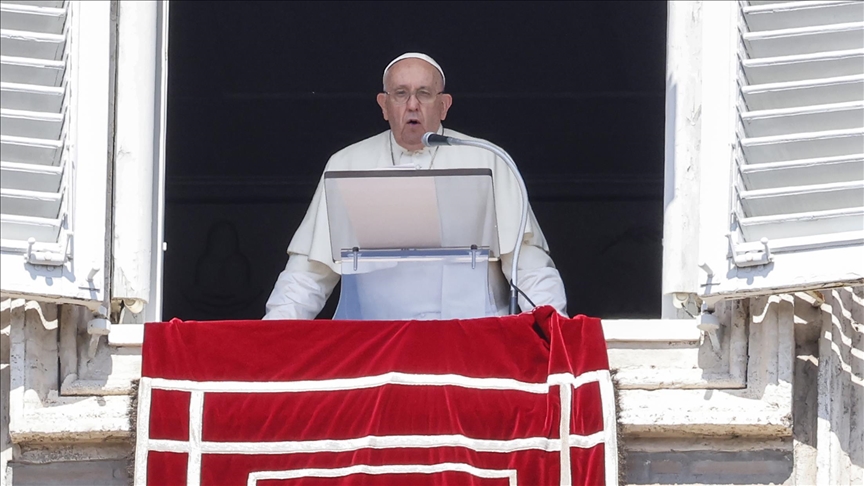
Pope Francis on Sunday said Israel’s attacks in Gaza and Lebanon are “immoral” and “disproportionate.” During his flight back from a four-day trip to Luxembourg and Belgium, the pope was asked about Israel’s targeted killing of Hezbollah leader Hassan Nasrallah in Friday’s strike on Beirut, which led to many casualties and reduced several buildings to rubble. “Every day I call the parish of Gaza. More than 600 people are there, inside the parish and the college, and they tell me about the things that are happening, including the cruelties that are occurring there,” he told journalists. “What you are telling me—I didn’t quite understand how things have been (evolving, ed.)—but defense must always be proportionate to the attack,” he added. The Israeli army has pounded Lebanon against what it called Hezbollah targets since Sept. 23, killing at least 816 people and injuring over 2,500 others, according to the Lebanese Health Ministry. The heavy bombardment also targeted senior Hezbollah commanders and forced tens of thousands of civilians to flee their homes. Hezbollah and Israel have been engaged in cross-border warfare since the start of Israel’s war on Gaza, which has killed more than 41,000 people, mostly women and children, following a cross-border attack by Hamas last Oct. 7. “When there is something disproportionate, a domineering tendency that goes beyond morality is evident,” the pope said. “A country that, with its forces, does these things—I’m talking about any country—that does these things in such a “superlative” way, these are immoral actions,” he added. “Even in war, there is morality to be safe-guarded. War is immoral, but the rules of war indicate some morality. But when this is not respected, you can see—as we say in Argentina—the “bad blood” of these things.”

Pope says Israel’s bombings in Lebanon, Gaza ‘immoral’ Read More »

 Israel seeks to expand war beyond Gaza: Turkish foreign minister

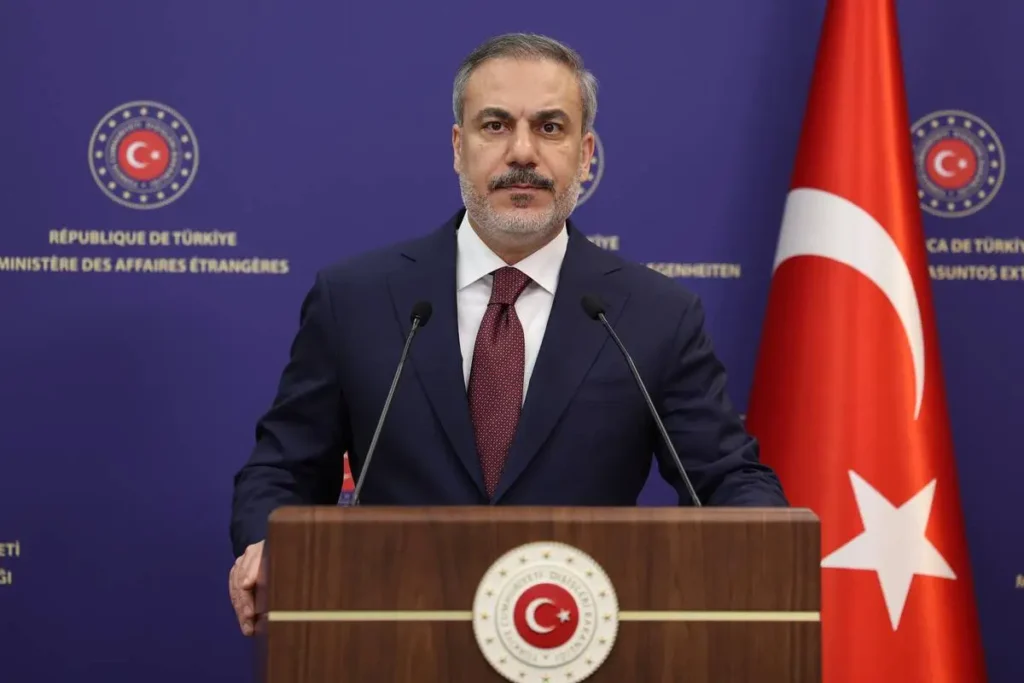
 Turkish Foreign Minister Hakan Fidan on Saturday said Israel’s expanding military actions, particularly the assassination of Hezbollah leader Hassan Nasrallah, suggests it has a desire to take the Gaza conflict to the region. “There is a desire within Israel, including [Prime Minister Benjamin] Netanyahu, to escalate the conflict across the region,” Fidan said. He emphasized that “if Israel is not stopped in Gaza and Palestine, it will spread its war to surrounding regions,” noting that after reaching its military targets in Gaza, Israel is now moving to the front in Lebanon. Hezbollah and Israel continued cross-border warfare since the Gaza war last October, but Tel Aviv recently escalated its offensive in Lebanon, killing hundreds, displacing thousands and also assassinating the group’s leader Nasrallah. The conflict could escalate further, as there are fears of an Israeli military ground invasion. Fidan characterized the ongoing situation in Gaza, where more than 41,000 Palestinians have been killed since the Oct. 7 Hamas incursion, as a “tragedy,” but said if there is greater tragedy than this, it is hypocrisy and inefficiency of the international system. – Need for reform in the UN Fidan said the conflict had showed us that international institutions, including the UN, are not functioning, highlighting an urgent need for reform. He said “the despair in the UN, the silence of the international community on this issue, has become a frightening situation.” The top Turkish diplomat also underscored the importance of establishing an independent Palestine, saying the Gaza Contact Group, formed at a joint summit of the Organization of the Islamic Cooperation and the Arab League in Saudi Arabia last November, continues to take up the matter. More than 150 countries have already supported full recognition of state of Palestine, he added. – Turkey’s role in advocacy The minister said that under the leadership of President Recep Tayyip Erdogan, Türkiye has been proactive in advocating for peace. “Türkiye is not confined to either Western or Eastern axis,” Fidan said, arguing that Ankara will continue to move forward with a constructive, peace-oriented approach in the region. – US role in conflict He criticized the extent of US support for Israel, describing it as troubling that “all of the US’ power is at Israel’s disposal.” Fidan noted that “America’s political, financial, and military support continues,” referencing President Joe Biden’s recent statements about the attacks in Lebanon and Israel’s right to self-defense. He called Nasrallah’s death a significant loss for both Hezbollah and Iran. The foreign minister expressed alarm at Israel’s actions potentially dragging its allies into a wider conflict, saying it is “drawing both itself and its allies into a major conflict.

 Israel seeks to expand war beyond Gaza: Turkish foreign minister Read More »

UN ‘alarmed’ by Israel’s heavy airstrike on Beirut

The UN on Friday expressed “great alarm” over the developments in Lebanon’s Beirut following latest heavy Israeli bombardment.  “We are watching the developments unfolding in Beirut with great alarm,” UN spokesman Stephane Dujarric told reporters during a news conference after Israeli army on Friday evening carried out a heavy and unprecedented airstrike on Beirut’s southern suburb area, claiming to have attacked the main headquarters of Lebanese group Hezbollah. He expressed the UN’s deep concern about “the sharp escalation of hostilities across the Blue Line with strikes in Lebanon.” Emphasizing that the latest developments place both Lebanese and Israeli civilians at risk, Dujarric said they also threaten regional security and stability. “I can tell you that our peacekeeping mission here, better known as UN Interim Force in Lebanon (UNIFIL), continues to engage actively with the parties to help de-escalate tensions along the Blue Line and avoid further misunderstandings,” he added. Dujarric reiterated the UN’s support for diplomatic efforts for ending violence, restore stability and prevent further humanitarian suffering in the region. He also renewed calls for an immediate de-escalation, return to cessation of hostilities and urged for full implementation of the UN Security Council resolution 1701. UN Security Council Resolution 1701, adopted on August 11, 2006, calls for a complete cessation of hostilities between Lebanon and Israel and establishes a zone free of armed personnel and weapons, except for the Lebanese army and UNIFIL forces, between the Blue Line (the border between Lebanon and Israel) and the Litani River in southern Lebanon. “Despite the extremely difficult situation, the peacekeeping missions, military and civilian peacekeepers, remain committed to their mission and continue to adapt in order to deliver on the mission’s mandate amidst a very hostile situation,” he added. In response to a reporter’s question on the cause of “great alarm” for UN regarding Lebanon, Dujarric said: “Anyone who looks at the pictures and smoke billowing from a densely populated area should be alarmed to say the least.” Dujarric also announced Acting Under-Secretary-General for Humanitarian Affairs Joyce Msuya’s allocation of $10 million from UN “Central Emergency Response Fund for the humanitarian response in Lebanon.” “This is in addition to $10 million released earlier this week from the Lebanese humanitarian fund,” he said, adding that the UN will continue to closely monitor the humanitarian situation and further support the Lebanese government, which is leading in the aid response. Israel has pounded Lebanon since Monday morning, killing over 700 people and injuring nearly 2,200 others, according to figures released by the Lebanese Health Ministry. The ministry also said that the death toll in Lebanon since last October is 1,540, in addition to more than 77,000 displaced from southern and eastern parts of the country. Hezbollah and Israel have been engaged in cross-border warfare since the start of Israel’s war on Gaza, which has killed more than 41,500 people, mostly women and children, following a cross-border attack by Hamas last Oct. 7. The international community has warned against the strikes on Lebanon, as they raise the specter of turning the Gaza conflict into a regional war.

UN ‘alarmed’ by Israel’s heavy airstrike on Beirut Read More »

UN: World cannot afford Lebanon to become another Gaza

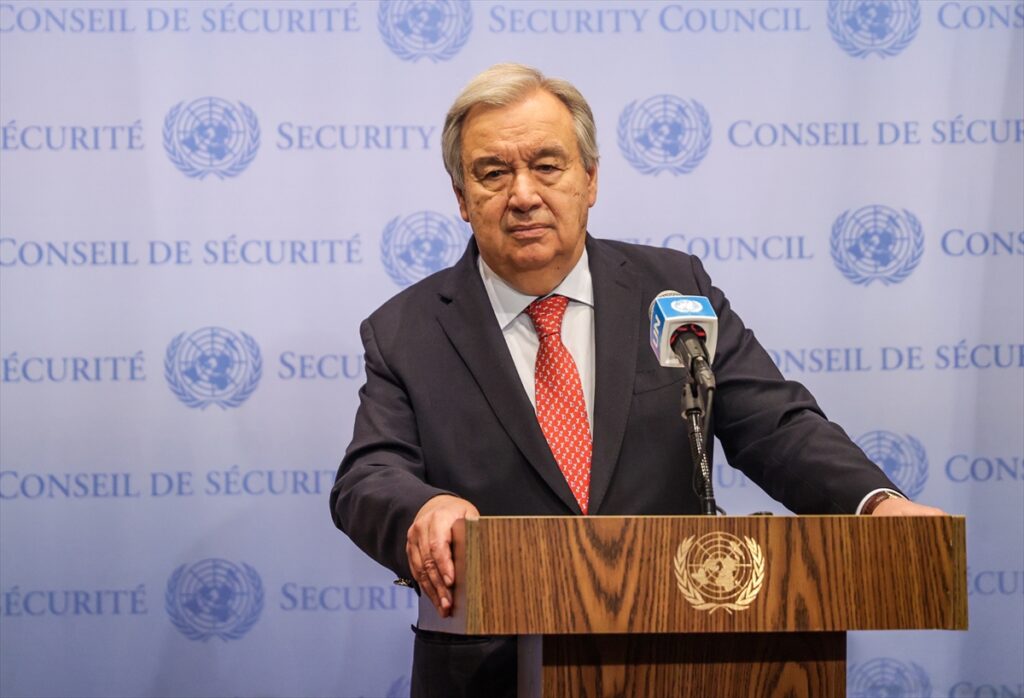
 UN Secretary-General Antonio Guterres said on Wednesday that the world cannot afford Lebanon to become another Gaza, emphasizing that an all-out war “must be avoided at all costs.” “The people of Lebanon, as well as the people of Israel and the people of the world, cannot afford Lebanon to become another Gaza,” Guterres told a UN Security Council meeting on the Middle East situation. He called for an immediate cessation of hostilities and urged all parties to take concrete steps toward implementing UN Security Council Resolutions 1559 and 1701. “Civilians must be protected. Civilian infrastructure must not be targeted,” he added. The UN chief also emphasized the need for the safety and security of all UN personnel, saying international law must be respected by all sides. “Let us say in one clear voice, stop the killing and destruction, tone down the rhetoric and threats step back from the brink. An all-out war must be avoided at all costs. It would surely be an all-out catastrophe,” he warned. The UN chief highlighted that recent exchanges of fire between Lebanon and Israel have repeatedly violated Security Council Resolution 1701, as has the daily use of weapons by non-state armed groups, which also violates Resolutions 1559 and 1701.  Guterres also revealed that escalating violence has forced nearly 200,000 people in Lebanon and over 60,000 people in northern Israel to flee their homes since October of last year. “The communities of northern Israel and southern Lebanon must be able to return to their homes and live in safety and security without fear,” he said, noting that many lives have been lost.  The secretary-general underscored the need for respecting Lebanese sovereignty and allowing the Lebanese state to exercise full control over weapons within its borders. He reaffirmed the UN support for strengthening the Lebanese Armed Forces to help stabilize the region. “All of this must stop,” Guterres said, reiterating the urgent need for peace and stability in the region. Israel has launched waves of deadly airstrikes on Lebanon since Monday morning, killing nearly 610 people and injuring over 2,000 others, according to Lebanese health authorities. Hezbollah and Israel have been engaged in cross-border warfare since the start of the Israeli war on Gaza, which has killed over 41,400 people, mostly women and children, following a cross-border attack by Hamas last Oct. 7. The international community has warned against the strikes on Lebanon, as they raise the specter of spreading the Gaza conflict regionally.

UN: World cannot afford Lebanon to become another Gaza Read More »

Nearly half million people in Lebanon displaced 

Lebanon’s Foreign Minister Abdallah Bou Habib on Tuesday announced that the number of internally displaced persons (IDPs) is approaching half a million due to ongoing Israeli strikes, indicating a significant increase in the country’s displacement crisis. The number of IDPs in Lebanon has surged by nearly 500,000 as a result of Israeli military offensives, according to Abdallah Bou Habib, who addressed an event organized by the Carnegie Foundation on the sidelines of the UN General Assembly in New York. He also emphasized the growing humanitarian impact of the conflict. Prior to the recent Israeli attacks, the country was already grappling with 110,000 displaced people. However, Bou Habib highlighted that the current situation is far more severe, with the displaced population now approaching half a million. The Israeli army launched waves of airstrikes in Lebanon since early Monday against what it claims are Hezbollah targets, as the conflict between the two sides escalates. The Israeli army has carried out waves of deadly airstrikes on Lebanon since early Monday, killing nearly 560 people, including 95 women and 50 children, and injuring 1,835 more, according to Health Minister Firas Abiad.

Nearly half million people in Lebanon displaced  Read More »

Scroll to Top