Kenya

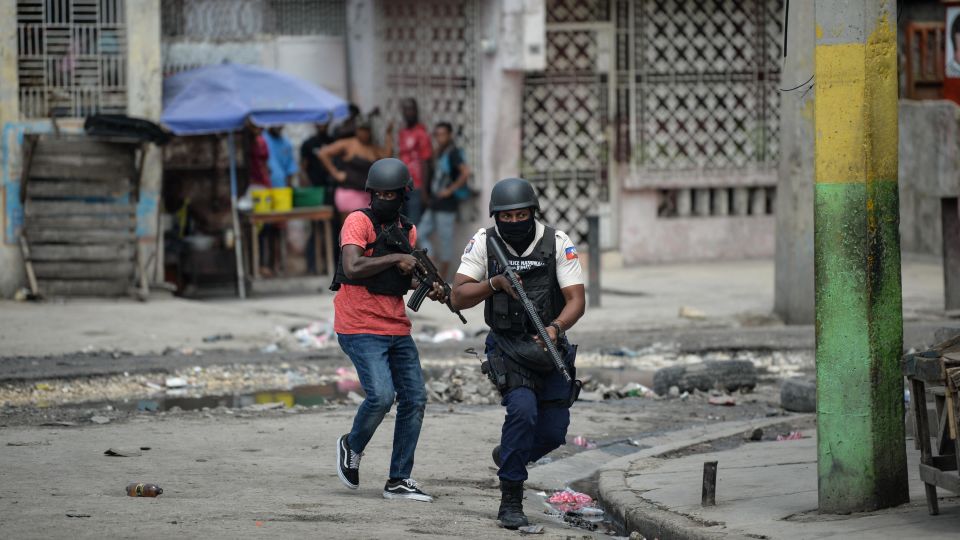
Gangs clash with residents and police in Haiti’s Pétionville

Gangs launched a new assault on Haiti’s capital early Tuesday, targeting the upscale Pétionville area, where gunmen clashed with residents who joined forces with police to defend their community. The attack was led by the Viv Ansanm gang, headed by former elite police officer Jimmy Chérizier, known as Barbecue, who had posted a video announcing the assault. At least 28 gang members were killed, and hundreds of munitions were seized, according to Lionel Lazarre, deputy spokesperson for Haiti’s National Police. It remains unclear whether police were prepared for the attack, given that Chérizier had publicly planned the assault. Local residents, angry over the ongoing violence, reported that some suspected gang members were decapitated or had their feet cut off, with bodies piled up and set on fire. Eyewitnesses said two trucks carrying gang members entered Pétionville, with one truck blocking the community’s main entrance. Chérizier had previously threatened retaliation against hotel staff and management in the area, accusing them of sheltering politicians and “oligarchs.” The attack follows a surge in gang violence that recently led to the closure of Haiti’s main international airport after gunmen opened fire on a plane preparing to land. This violence has displaced more than 20,000 people, with gangs now controlling 85% of Port-au-Prince. Attacks on previously peaceful neighborhoods are part of a broader effort to expand gang control. The escalation of violence coincides with the arrival of a Kenyan-led U.N. peacekeeping mission, and the U.S. is now advocating for a new peacekeeping force due to the Kenyan mission’s funding and personnel shortages.

Gangs clash with residents and police in Haiti’s Pétionville Read More »

G20 summit focuses on climate crisis, global conflicts

Climate Crisis and Global Conflicts Dominate G20 Summit Opening The climate crisis, along with the conflicts in Ukraine and the Middle East, took center stage on the first day of the G20 summit in Brazil on Monday. In a joint statement, leaders from the world’s major economies condemned the suffering in Gaza and Ukraine and emphasized the need for cooperation on poverty reduction, tax policy, and climate change. UN climate chief Simon Stiell had urged G20 leaders over the weekend to break the deadlock in climate finance negotiations ahead of COP29 in Azerbaijan. The summit aims to mobilize hundreds of billions of dollars for climate adaptation and mitigation in developing countries. The G20 statement called for a “rapid and substantial increase” in climate finance, but did not propose a specific solution for how much rich nations should contribute. The debate continues over whether to expand the contributor base to include wealthier developing nations like China and Middle Eastern countries. On Tuesday, leaders are set to discuss sustainable development and the transition to cleaner energy, while working to strengthen global efforts on climate change before a potential shift in US policy under a possible Trump presidency.

G20 summit focuses on climate crisis, global conflicts Read More »

Over 800 million affected by diabetes, treatment lags in Africa

A new study reveals that over 800 million adults worldwide suffer from diabetes, with more than half of those over 30 not receiving any treatment. African countries are among the hardest hit, as non-communicable diseases like diabetes account for 17 million premature deaths each year, many of which occur before the age of 70. The report highlights that in sub-Saharan Africa, only about 5 to 10% of adults with diabetes receive any form of treatment. The World Health Organization’s (WHO) Director-General, Dr. Tedros Adhanom Ghebreyesus, has called for urgent action to address the growing diabetes epidemic. “We’ve seen a concerning rise in diabetes over the past three decades, driven by factors such as increased obesity, the marketing of unhealthy foods, physical inactivity, and economic challenges,” Dr. Ghebreyesus said. He stressed the importance of policies promoting healthy diets and physical activity, as well as strengthening healthcare systems to focus on prevention, early detection, and treatment. The WHO has set global targets for improving diabetes care by 2030, with a particular focus on increasing access to diagnosis and treatment across Africa, aiming to improve the quality of life and health outcomes for millions.

Over 800 million affected by diabetes, treatment lags in Africa Read More »

Scroll to Top