Kenya

World elephant day highlights urgent need for conservation ffforts

Communities around the world observed World Elephant Day on Monday, focusing on raising awareness about protecting elephants from various threats. At the Adventures with Elephants reserve in Bela Bela, South Africa, the annual event featured a herd of rescued elephants grazing and cooling off by the water in the heat. Managing Director Sean Hensman highlighted the significant pressures on elephant habitats, noting, “It’s a day to celebrate elephants and consider their broader conservation needs. Elephants face immense pressure due to shrinking land as human populations surge. Africa’s population is expected to reach 3 to 4 billion by 2050, reducing land available for elephants.” Elephant handler David Mupupu pointed out the drastic decline in African elephant numbers since 1920, from 4 million to just 400,000 today, representing a 90 percent decrease. “We must take care of our elephants,” he emphasized. The World Elephant Day Society reports that both African and Asian elephants are increasingly endangered by poaching and habitat destruction. The organization plans to work with conservation groups to develop effective policies to combat poaching and protect elephant habitats. World Elephant Day, established in 2012, is observed annually on August 12.

World elephant day highlights urgent need for conservation ffforts Read More »

UK terror suspect deported from Kenya after prison term

A British national, Jermaine Grant, has been deported to the UK following the completion of a lengthy prison sentence in Kenya. Grant, 41, was arrested upon arrival at London’s Heathrow Airport on Thursday after flying in from Nairobi. Grant’s legal troubles began in 2011 when Kenyan authorities discovered bomb-making materials in his apartment in Mombasa, a coastal city. At the time of his arrest, he was believed to be sharing the residence with Samantha Lewthwaite, infamously known as the “White Widow.” Lewthwaite is wanted in connection with the 7/7 bombings in London. Kenyan police accused Grant of planning to bomb tourist hotels along the country’s coast. Although he was acquitted of conspiracy charges in 2019, a court found him guilty of possessing bomb-making materials. On Friday, the UK’s Metropolitan Police confirmed that Grant had been detained under the Terrorism Act. “We can confirm that on 8 August, officers from the Met Police arrested a 41-year-old man wanted on recall to prison for breaching licence conditions linked to a previous conviction,” said the force in a statement. Grant was arrested at Heathrow Airport upon his return from Kenya. His licence conditions had been revoked in August 2005 following an initial breach. In addition to his arrest, Grant is also suspected of being a member of al-Shabab, an Islamist militant group based in Somalia. He remains in police custody. Samantha Lewthwaite, who has been on the run since 2011, is still wanted by police in both Kenya and the UK. Dubbed the “White Widow” after the death of her husband, London suicide bomber Germaine Lindsay, Lewthwaite is a Muslim convert who grew up in Aylesbury, Buckinghamshire. She is suspected of having links to al-Shabab and involvement in several attacks. Grant is believed to have become radicalized while serving time in prison with Richard Reid, the notorious “shoe bomber.” Reid is currently serving a life sentence in the US for attempting to blow up a transatlantic flight using explosives hidden in his shoe.

UK terror suspect deported from Kenya after prison term Read More »

Death toll in Nigeria from Lassa fever rises to 163

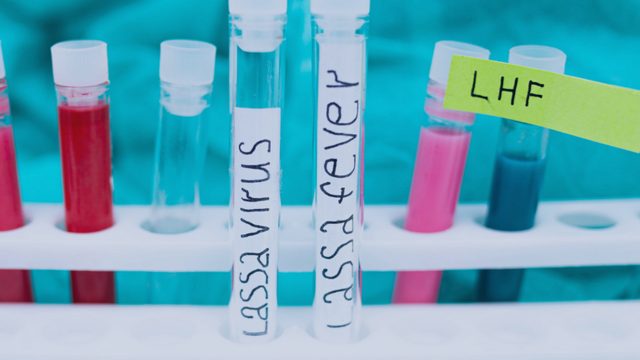
 The death toll in Nigeria from Lassa fever, a deadly hemorrhagic disease, rose to 163 on Thursday. According to a statement from the Nigeria Centre for Disease Control and Prevention, the Lassa fever outbreak continues to spread across 34 states and the Federal Capital Territory. The Nigerian government previously announced that three medications have been identified for treating the disease. During the dry season, which typically runs from November to May, Lassa fever cases tend to increase. In 2023, a total of 1,227 cases of Lassa fever were detected and 219 people lost their lives. Lassa fever, which is also found in several other African countries like Mali, Togo, Ghana, Liberia and Sierra Leone, was first detected in Nigeria in northeastern Borno state in 1969. On Jan. 23, 2019, the Nigerian government declared a state of emergency due to a Lassa fever outbreak. The disease is transmitted through contact with rat feces, can spread from person to person, and can cause fatal hemorrhagic fever. Authorities are warning the public to avoid contact with rats and other rodents.

Death toll in Nigeria from Lassa fever rises to 163 Read More »

Global wind energy plans fall short of reaching the 2030 target

Countries aim to increase global wind energy capacity 2.4-fold by 2030, but national plans fall short of the UN’s COP28 commitment to triple global renewable energy capacity. London-based think tank Ember analyzed the 2030 wind energy targets of 70 countries and the EU, which account for 99% of the current installed wind capacity, to see if they align with the COP28 goal. The report found that while national targets would double global wind capacity by 2030, they are insufficient to meet the COP28 pledge. Current targets would expand wind energy capacity from 901 gigawatts at the end of 2022 to 2,157 gigawatts by 2030. Achieving the tripling goal requires an additional 585 gigawatts worldwide. Most of the expected increase will come from China, which is projected to triple its wind capacity by 2030 and account for over half of the global increase in wind capacity from 2024 to 2030. However, the U.S. and India face significant gaps between their current targets and the needed increase. Not all countries are falling short. Brazil needs to build 0.3 gigawatts of new wind capacity annually from 2024 to 2030 to meet its 2030 targets. Last year, Brazil set a record by adding 5.3 gigawatts of wind capacity, and the IEA predicts it will add an average of 2.4 gigawatts annually until 2030. Turkey has nearly achieved its goal of generating 12% of its electricity from wind by 2030 and has the potential to set higher targets. Ember Electric Analyst Katye Altieri noted, “Governments are not ambitious or proactive enough, especially in onshore wind capacity. Despite its role in providing cheap electricity and complementing solar energy, wind energy isn’t receiving adequate attention.” Ben Backwell, CEO of the Global Wind Energy Council (GWEC), emphasized that wind energy must be central to the clean energy transition. “Every gigawatt installed is a step towards a greener world. Targets play a crucial role in guiding our direction, but only real actions that meet these targets can effectively address climate change, drive clean industry, and ensure secure energy,” he said.

Global wind energy plans fall short of reaching the 2030 target Read More »

Three veterans vie for African Union top job

At least three seasoned African politicians—representing Djibouti, Kenya, and Mauritius—are competing for the position of chair of the African Union Commission. The pan-continental body, comprising 55 member states, will hold elections during its February summit to select a successor to Moussa Faki Mahamat. This year, the role is designated for a representative from East Africa, aiming to replace Chad’s veteran politician, Faki, who has held the position since 2017. Let’s meet the contenders: Mahamoud Ali Youssouf (Djibouti): As Djibouti’s foreign minister since 2005, Youssouf emphasizes his ability to bridge linguistic and regional divides. Fluent in French, English, and Arabic, he aims to promote unity and address pressing issues, including silencing conflicts across the continent. Raila Odinga (Kenya): A seasoned opposition leader, Odinga, 79, has made five unsuccessful attempts to become Kenya’s president. His political journey involved imprisonment and exile as he fought for democracy during President Daniel arap Moi’s autocratic rule. Odinga’s focus is on securing the chairmanship for Kenya and serving Africa. Anil Gayan (Mauritius): Serving as Mauritius’ foreign minister from 1983 to 1986 and again from 2000 to 2003, Gayan brings experience to the race. His diverse background includes roles in tourism and health ministries. Gayan submitted his candidacy last week, adding another dimension to the competition. The deadline for candidacies closed on August 6, but the final list is yet to be released by the African Union, headquartered in Addis Ababa. The election, conducted by secret ballot, requires the winner to secure a two-thirds majority vote among eligible member states. The AU commission chair serves a four-year term, renewable once

Three veterans vie for African Union top job Read More »

World Bank: 100+ Countries Trapped in “Middle-Income Trap”

The World Bank announced on Thursday that over 100 countries risk falling into a “middle-income trap” unless they implement bold economic growth strategies. Countries such as South Africa, India, Brazil, and China face significant challenges that could impede their progress toward becoming high-income nations in the coming decades. The World Development Report 2024: The Middle Income Trap reveals that as countries become wealthier, they often encounter a “trap” when their GDP per capita reaches approximately 10 percent of the annual US GDP per person. Somik Lall, Senior Advisor to the World Bank Group Chief Economist and Director of the report, noted that the outlook for these countries is bleak. “Over the past 30 years, only 34 middle-income economies have successfully transitioned to high-income status, while others remain trapped,” he said. The study highlights that middle-income countries face tougher challenges compared to their predecessors, including rapidly aging populations, increasing protectionism in advanced economies, and the urgent need for faster energy transitions. It presents a “comprehensive roadmap” to help developing countries escape the “middle-income trap” and achieve high-income status. Lall suggests that countries should abandon outdated methods and adopt a “3i strategy” involving a phased approach with progressively sophisticated policies tailored to their development stage. Low-income countries should focus initially on investment policies (the 1i phase). As the benefits of investment diminish, they should then shift to “infusion,” incorporating global ideas and integrating them into local economies. For upper-middle-income countries, the final phase involves “innovation,” where they strive to become global leaders and producers. Lall emphasized that success will depend on how well societies manage the balance between creation, preservation, and destruction. “Countries that avoid the discomfort of reforms and openness will miss out on the benefits of sustained growth,” he concluded.

World Bank: 100+ Countries Trapped in “Middle-Income Trap” Read More »

Scroll to Top