

Mali launches probe into Ukraine’s role in deadly attack
Mali accuses Ukraine of terrorism after a deadly attack that killed Malian soldiers and Russian mercenaries.
Mali launches probe into Ukraine’s role in deadly attack Read More »
Mali accuses Ukraine of terrorism after a deadly attack that killed Malian soldiers and Russian mercenaries.
Mali launches probe into Ukraine’s role in deadly attack Read More »

Mali announced Sunday that it is cutting off diplomatic relations with Ukraine following an admission of Ukrainian involvement in a recent deadly terrorist attack in the West African country. “The transitional government of the Republic of Mali has learned, with deep shock, of the subversive remarks by which Mr. Andriy Yusov, the spokesperson for the Ukrainian military intelligence agency, has admitted Ukraine’s involvement in a cowardly, treacherous and barbaric attack by armed terrorist groups which resulted in the deaths of elements of the Malian defense and security forces in Tinzaouaten, as well as material damage,” said government spokesman Colonel Abdoulaye Maiga in a statement. The Malian army admitted on Monday a high death toll following clashes in Tinzaouaten in the north of the country, while the Russian-affiliated Wagner Group supporting the Malian army had confirmed Russian losses and the death of a commander following heavy fighting there. The comments were reinforced by Yurii Pyvovarov, Ukraine’s ambassador to Senegal, who openly and unequivocally displayed his country’s support for international terrorism, particularly in Mali, according to Maiga. Maiga said Ukrainian officials have done worse by announcing that there are “more results to come.” “These extremely serious accusations, which have not been denied, show the Ukrainian government’s official support for terrorism in Africa, in the Sahel, and more specifically in Mali,” he declared. The remarks by Yusov and Pyvovarov “constitute acts of terrorism and an apology for terrorism,” he added. The Malian government has therefore decided to break off diplomatic relations immediately, to refer the matter to the competent judicial authorities, and to take the necessary measures to prevent any destabilization of Mali from African states, in particular from Ukrainian embassies in the sub-region, by terrorists disguised as diplomats, and to formally alert regional and international bodies as well as states that support Ukraine to the fact that this country has openly and publicly displayed its support for terrorism. Mali considers support for Ukraine “as support for international terrorism” and an aggression which is part of “the broader pattern of certain actors who actively support and instrumentalize terrorist groups in the region.”
Mali cuts diplomatic relations with Ukraine after terrorist attack Read More »

Tuareg rebels in Mali claim to have inflicted heavy losses on Russian Wagner mercenaries and Malian soldiers during recent clashes.
Tuaregs deal devastating blow to Wagner and Mali: 131 soldiers Read More »
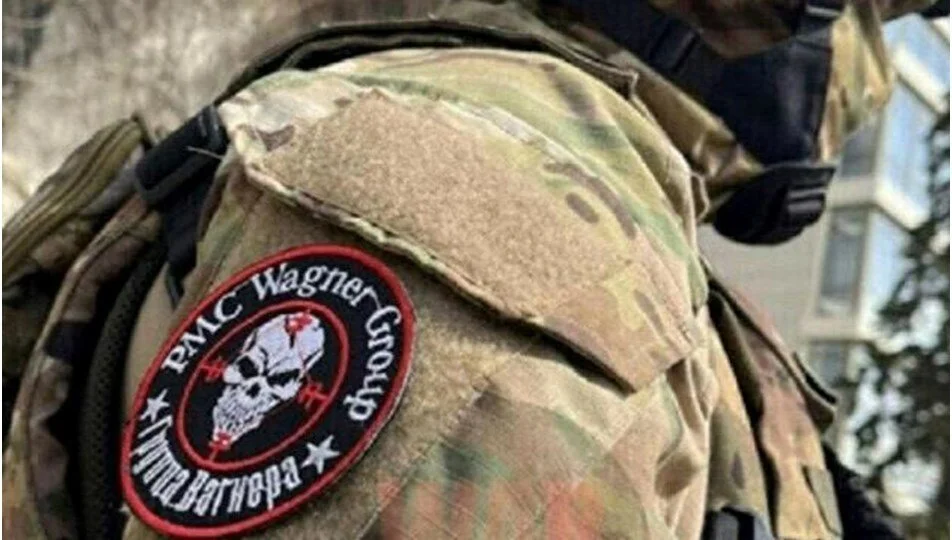
Over the weekend in northern Mali, dozens of Wagner mercenaries were killed by jihadis and rebels in what has been described as the most significant blow to the Russian group in years. At least two Wagner fighters were captured. Around 50 Wagner personnel were killed in an al-Qaida ambush that also involved pursuing rebels near the Algeria border, according to Wassim Nasr, a Sahel specialist at the Soufan Center. Nasr, who reviewed footage of the aftermath, reported that the convoy, which was retreating from a battle with Tuareg rebels and Mali’s army, was attacked south of Tinzaouaten. Wagner confirmed in a Telegram statement that some of its fighters and Malian troops were killed in the clash with hundreds of militants, though they did not specify the number of casualties. Mali’s army reported two soldiers dead and 20 rebels killed. Al-Qaida claimed responsibility for the attack, stating that it was a retaliation for past massacres in Mali, and claimed 50 Wagner fighters were killed. Tuareg rebels reported that some mercenaries and Malian soldiers had surrendered to them. The Associated Press could not immediately verify the video mentioned by Nasr. Nasr described the incident as unprecedented in Africa and likely to shift dynamics in the region. He noted that Wagner’s previous claims of success are contradicted by their limited capacity to sustain such operations or secure territory. Wagner has been active in Mali since late 2021, following a military coup, replacing French troops and international peacekeepers. Their presence, aimed at countering militants and securing mineral resources, has also been marked by allegations of civilian casualties. Independent analyst John Lechner suggested that the ambush reflects Wagner’s overstretched and overconfident stance in Mali. He noted that Wagner’s setbacks are often attributed to private military companies, while Russian defense victories are emphasized.
Mali: Nearly 50 Wagner fighters killed in ambush Read More »

Libya repatriated hundreds of migrants to Nigeria and Mali, including women and children, despite claims of forced deportations.
Libya repatriates over 300 migrants to Nigeria, Mali Read More »

Wagner paramilitary group on Monday conceded in a rare statement that its troops and Malian forces took losses during “fierce battles” with rebels and al-Qaeda in Mali. The statement released on Telegram said that the paramilitary group and servicemen of the Malian Armed Forces (FAM) fought “fierce battles” with Tuareg rebels and al-Qaeda on July 22-27 near the border commune of Tinzaouaten in northeastern Mali. It said the Wagner detachment in the area was commanded by Sergey Shevchenko, saying that his call sign was “Pond.” On the first day, Pond’s group destroyed most of the al-Qaeda terrorists and put the rest to fight, the statement said, adding: “However, the onset of a sandstorm allowed the radicals to regroup and increase their numbers to 1,000 people.” The statement further said that rebels attacked Wagner forces again on July 25, but that this attack was repelled together with Malian military personnel. “Over the next two days, the radicals increased the number of massive attacks, using heavy weapons, drones and suicide vehicles, which resulted in losses on the part of Wagner and FAM soldiers,” it added. The statement went on to say that the last message sent by the group commanded Pond was received on July 27, adding that he was killed. On Sunday, the Coordination of Azawad Movements (CMA) claimed it won a major victory over the Malian army and Wagner forces near Tinzaouaten, located on the country’s border with Algeria. Mali has been fighting an insurgency linked to al-Qaeda and Daesh/ISIS since 2012 when unrest erupted in the north of the country. In 2015, the government signed a peace agreement with several rebel groups in a bid to curb the violence. But last August, fighting erupted between the separatists and the Mali government troops after eight years of lull, as the UN peacekeepers began to withdraw from the West African country. There were also global and regional concerns over developments in Mali as a military coup overthrew the civilian government in 2020.
Wagner paramilitary group admits losses in ‘fierce battles’ in Mali Read More »
A devastating bus accident in Mali claimed the lives of 16 people and injured 48, with six in critical condition.
Deadly bus collision kills 16 in Mali Read More »

Fighting erupted near the Algeria border as Mali troops and Wagner mercenaries clashed with separatist rebels.
Mali, Russian fighters clash with separatists near Algeria border Read More »

An Al Qaeda affiliate has claimed responsibility for a deadly attack on a Togolese army barracks, marking a new chapter in the region’s growing insecurity.
Al Qaeda affiliate claims deadly attack in Togo Read More »

Mali is once again the scene of a devastating attack, as 26 people were killed while working in their fields.
Gunmen slaughter 26 in Mali village attack Read More »