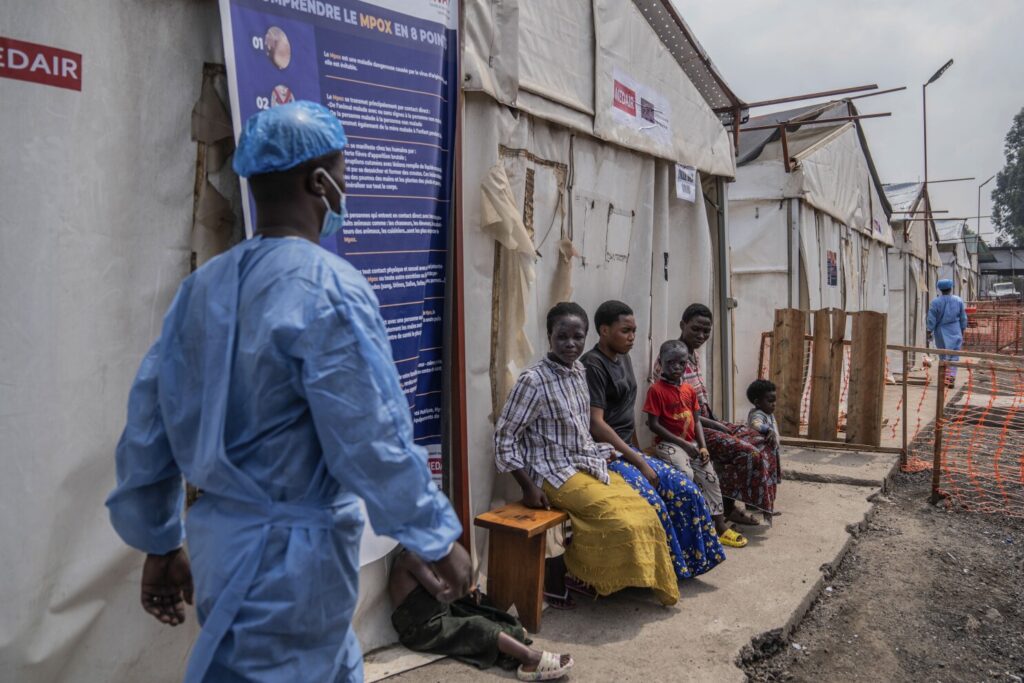
Mpox in Africa

WHO declares Mpox outbreak ongoing public health emergency

WHO Declares Mpox Outbreak Ongoing Public Health Emergency The World Health Organization (WHO) has reiterated that the mpox outbreak remains a public health emergency of international concern, citing the rising number of cases, continued geographic spread, and operational challenges in managing the crisis. The WHO’s emergency committee issued this assessment on November 22, extending the emergency declaration first made in August. Africa has been the hardest-hit region, with 19 countries reporting mpox cases since the start of the year. The Democratic Republic of the Congo (DRC) continues to be the epicenter of the outbreak. Canada has also confirmed its first case of Clade I mpox, linked to travel associated with the ongoing outbreak in Central and Eastern Africa. To combat the spread, over 50,000 people have been vaccinated in high-risk areas, with plans to expand the vaccination program to the capital, Kinshasa, next week. Last week, the WHO approved a second mpox vaccine for emergency use, following a review of its safety, quality, and efficacy. As of now, Africa has reported over 46,000 suspected mpox cases and 1,081 deaths in the current outbreak.

WHO declares Mpox outbreak ongoing public health emergency Read More »

WHO allocates 900,000 Mpox vaccines to Africa

Several African countries, including the Central African Republic, Côte d’Ivoire, Democratic Republic of the Congo, Kenya, Liberia, Nigeria, Rwanda, South Africa, and Uganda, are set to benefit from a new mpox vaccine allocation. The Democratic Republic of the Congo (DRC), which has reported 80% of Africa’s confirmed mpox cases this year, will receive 85% of nearly 900,000 doses allocated. The vaccine distribution is part of the World Health Organization’s Access and Allocation Mechanism (AAM), aimed at expanding access to mpox vaccines, treatments, and diagnostic tools. Limited vaccinations have already been carried out in DRC and Rwanda. The outbreak, which has spread across 19 African countries this year, was declared a public health emergency by the WHO and Africa CDC in mid-August. With over 38,000 suspected cases and more than 1,000 deaths, DRC remains the epicenter of the outbreak. Wealthier countries have pledged over 3.6 million vaccine doses to aid the response.

WHO allocates 900,000 Mpox vaccines to Africa Read More »

WHO approves mpox vaccine for teens amid African surge

The World Health Organization (WHO) has approved the Bavarian Nordic mpox vaccine for use in adolescents aged 12 to 17, a group considered particularly vulnerable to the disease. This decision follows the WHO’s endorsement of the vaccine for adults in September, which facilitated access for African countries heavily impacted by mpox. Danish pharmaceutical company Bavarian Nordic is also preparing to conduct a clinical trial to assess the vaccine’s safety for children aged 2 to 12. As parts of Africa face a rise in mpox cases, which present flu-like symptoms and skin lesions, the urgency for vaccination has increased. In August, the WHO declared mpox a global public health emergency after a new strain of the virus spread from the Democratic Republic of Congo to neighboring countries, including Burundi and Rwanda. Scientists have identified this new strain, known as clade 1b, as a more dangerous variant. Nearly 30,000 suspected cases of mpox have been reported across Africa this year, with a few cases also recorded in Europe and Asia.

WHO approves mpox vaccine for teens amid African surge Read More »

DRC begins mpox vaccinations amid outbreak surge

After a delay due to logistical difficulties, Congolese authorities have started administering vaccinations against mpox in an attempt to curb the outbreak.  265,000 doses were given to the DRC by the EU and the US, have been administered in the city of Goma and north Kivu province, where healthcare resources have been stretched amid the surge in mpox cases. The country, which has recorded some 30,000 cases, accounts for more than 80% of all the cases and 99% of deaths reported on the continent this year. More than 850 deaths from the disease have been reported in the DRC this year. Back in August, the WHO declared that the surge in mpox cases in the DRC, which spread to several countries, constituted a global health emergency.  Beyond the African continent, a handful of cases have also been recorded in countries including Sweden and Pakistan. Caused by a virus in the same family as smallpox, mpox was initially passed from animals to humans. It is transmitted from person to person through close contact with someone who is infected. The current outbreak has seen the spread of a new strain of the disease dubbed clade 1b, which is more serious than clade 2, which triggered a public health emergency in 2022.

DRC begins mpox vaccinations amid outbreak surge Read More »

Logistic issues delay rollout of Congo’s mpox vaccine campaign

The launch of a mpox vaccination campaign was postponed Wednesday in the Congo because of logistics issues, officials said Wednesday. “There is necessary equipment for the transportation of the vaccine in different parts and the authorities are working hard to make sure that the vaccine arrives on time and the date will be announced,” said Chris Kasita, director of the Department of Infection Prevention (PEV) in the Congo. The Congo has experienced an influx of mpox cases as the number has reached 26,267 with 833 associated deaths since the beginning of 2024, according to statistics by the World Health Organization and Congo Health Ministry. Despite the rising fear of additional infections, a new date for the start of the vaccination campaign has not been announced. The campaign was to begin Wednesday in Kinshasa and the most-affected regions in eastern Congo, including North Kivu, the south and central areas. The Congo has become the epicenter of the disease which is found in 14 countries in Africa including Burundi, Congo-Brazzaville and the Central African Republic, according to the head office of the African Union Centers for Disease Control (Africa CDC). A total of 265,000 vaccines were received by the Congo last month fom the EU and the US, manufactured by the Danish Bavarian Nordic laboratory.

Logistic issues delay rollout of Congo’s mpox vaccine campaign Read More »

Burundi implement safety measures for Mpox

According to UNICEF, children aged 5 to 19 make up 33 percent of mpox cases in Burundi. As the new academic year begins, schools and parents are taking this data seriously. At a school in western Burundi, staff are implementing measures to protect both students and themselves. The director of the ‘Les Petits Trésors’ school stated, “When they line up in front of the flag, they must keep their distance to avoid touching each other, and handwashing is mandatory.” In recent weeks, Burundi has seen a more than 40 percent increase in mpox cases, with hundreds reported since July. Meanwhile, neighboring Democratic Republic of Congo is also experiencing a rise in mpox cases. The World Health Organization recently noted that suspected cases in the DRC account for a significant portion of the nearly 30,000 cases recorded across Africa this year. In August, the WHO declared the outbreak a public health emergency in parts of Africa. Beyond the continent, a few cases have also been confirmed in countries like Sweden and Pakistan.

Burundi implement safety measures for Mpox Read More »

Congo faces Mpox outbreaks amid healthcare crisis

Health authorities have struggled to contain outbreaks of mpox in Congo, a huge central African country where a myriad of existing problems makes stemming the spread particularly hard. Last month, the World Health Organization declared the outbreaks in Congo and about a dozen other African countries a global health emergency. And in Congo, scientists have identified a new strain of mpox that may spread more easily. It has reached areas where conflict and the displacement of a large number of people have already put health services under pressure. Overall, Congo has more than 21,000 of the 25,093 confirmed and suspected mpox cases in Africa this year, according to WHO’s most recent count. Has Congo seen cases of mpox before? Yes, Congo is one of the African countries where mpox has been endemic for decades. Mpox, once known as monkeypox, comes from the same family of viruses as smallpox but causes milder symptoms such as fever. People with more serious cases can develop skin lesions. More than 720 people in Africa have died in the latest outbreaks, mostly in Congo. Mpox is a zoonotic disease, meaning it can spread to humans from infected animals. In the global mpox outbreak of 2022, the virus spread between people primarily through sex and close physical contact. What changed in Congo? In September 2023, mpox spread to Congo’s eastern province of South Kivu; it had previously been seen in the center and far west. Scientists then identified a new form of mpox in South Kivu that may be more infectious. The WHO said that from the outbreak in South Kivu, the virus spread among people elsewhere in the country, arriving in neighboring province North Kivu. Those two provinces — some 2,000 kilometers from the capital, Kinshasa — face escalating violence, a humanitarian crisis and other issues. What are the problems in eastern Congo? More than 120 armed groups have been fighting each other and the Congolese army for years in the eastern part of the country over the control of minerals. That has forced millions of people fleeing violence into refugee camps or nearby towns. That means mpox is hitting already-stretched health facilities. Dr. Musole Mulambamunva Robert, medical director of the Kavumu hospital in eastern Congo, said it is “truly a challenge” — sometimes treating as many as four times the facility’s capacity for patients. With more than 6 million displaced people in the east, authorities and aid agencies were already struggling to provide food and healthcare, while fighting other diseases such as cholera. Many people have no access to soap, clean water or other basics. Some eastern Congo communities are out of reach of health clinics — roads are unreliable, and hourslong risky boat trips are sometimes the only means of transport, said Mercy Muthee Lake of the International Federation of Red Cross and Red Crescent. People can be more susceptible to severe mpox cases because of malnutrition and undiagnosed HIV, she said. She also said health workers in eastern Congo have requested more mpox training as medications to treat fever and ease pain run out. Health authorities “are up against it because it’s such a complex area,” said Chris Beyrer, of Duke University’s Global Health Institute. What about vaccines? Africa has no capacity to produce mpox vaccines. Around 250,000 doses have arrived in Congo from the European Union and the United States, and more are expected. Congolese authorities say they need around 3 million vaccines. It will likely be weeks before any vaccines reach people in eastern Congo. For now, the vaccine is approved only for adults. There’s limited evidence of how it works in children. Vaccines are desperately needed, but they’re just “an additional tool,” said Emmanuel Lampaert, the Congo representative for Doctors Without Borders. The key, Lampaert said, is still identifying cases, isolating patients, and executing grassroots health and education campaigns. Local conditions make that trying — Lampaert noted it’s almost impossible to isolate cases among poor, displaced people. “Families with six to eight children are living in a hut, which is maybe the space of the bed we are sleeping in,” he said. “So, this is the reality.” Why are critics blasting the mpox response? Unlike the millions of dollars that poured into Congo for Ebola and COVID aid, the response to mpox has been sluggish, many critics say. Health experts say the sharp contrast is due to a lack of both funds and international interest. “Ebola is the most dangerous virus in the world, and COVID wiped out the world economy,” said professor Ali Bulabula, who works on infectious diseases in the medical department at Congo’s University of Kindu. “While mpox is a public health emergency of international concern, there is a lack of in-depth research and interest in the virus, as it’s still seen as a tropical disease, localized to Africa with no major impact on Western economies.”

Congo faces Mpox outbreaks amid healthcare crisis Read More »

Scroll to Top