

Iconic Niger mosque destroyed by torrential rains
The iconic building, dating back to the 19th century, was completely destroyed by the torrential rains.
Iconic Niger mosque destroyed by torrential rains Read More »
The iconic building, dating back to the 19th century, was completely destroyed by the torrential rains.
Iconic Niger mosque destroyed by torrential rains Read More »

African nations are losing up to 5% of their GDP annually due to climate change, with the continent experiencing a significant impact from global warming, according to a new report released Monday. The World Meteorological Organization (WMO) noted that African countries are allocating up to 9% of their budgets to climate adaptation. WMO Secretary-General Celeste Saulo highlighted the accelerated warming in Africa, which is outpacing the global average and impacting food security, public health, and stability. Despite contributing less than 10% of global greenhouse gas emissions, Africa is highly vulnerable to extreme weather, including droughts, floods, and heatwaves. The report, focusing on 2023—one of Africa’s hottest years—urges investment in early warning systems and meteorological services. Without adequate measures, up to 118 million Africans could face severe weather events by 2030. In sub-Saharan Africa, adaptation costs could reach $30-50 billion per year over the next decade. Recent extreme weather events, including floods affecting 300,000 people in West Africa and a severe drought in Zambia, underscore the urgency. The pattern of extreme weather continues into 2024, with significant flooding in the Sahel and an unprecedented heat wave in West Africa earlier this year.
African nations losing 5% of GDP to climate change Read More »

Germany has officially withdrawn its troops from an airbase in Niger, marking the end of its military presence in the Sahel nation.
Germany completes withdrawal from Niger airbase Read More »
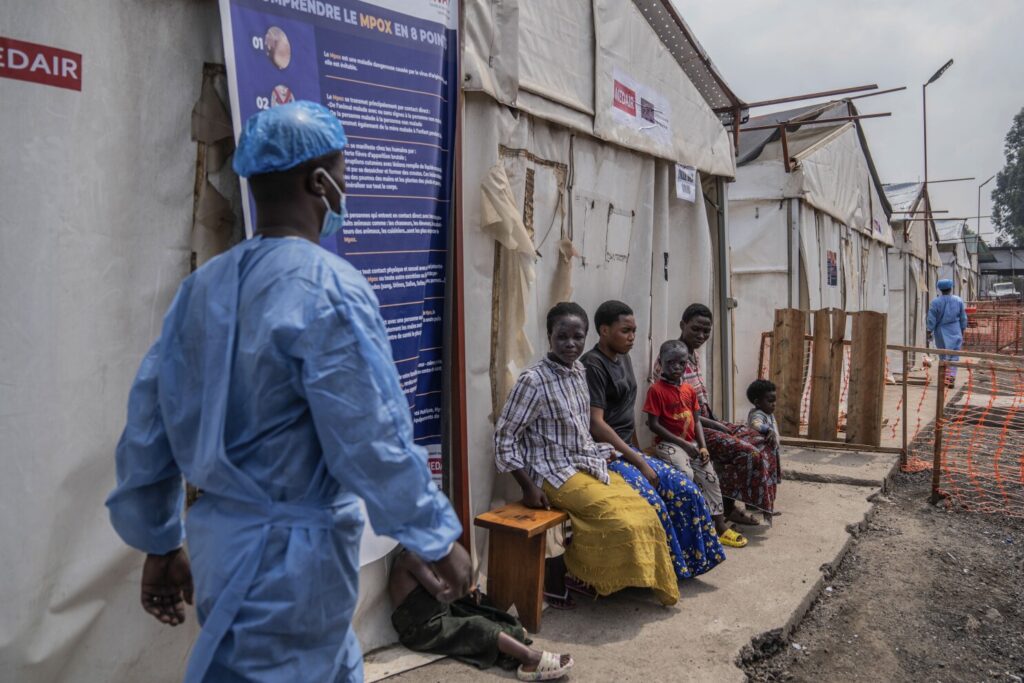
Africa is experiencing a sharp rise in mpox cases, with nearly 4,000 reported in the past week, according to the continent’s public health body. Dr. Jean Kaseya, head of the Africa Centers for Disease Control and Prevention (Africa CDC), shared this update during an online briefing on Tuesday. In the past week, Africa reported 81 mpox-related deaths, bringing the totals to 22,863 cases and 622 deaths. Despite promises of 380,000 doses of mpox vaccines from Western partners like the European Union and the United States, this amounts to less than 15% of what is needed to control the outbreaks, particularly in Congo, the epicenter of the global health emergency. The first batch of promised vaccines for Congo, including 50,000 doses from the U.S. and 15,000 from the GAVI vaccines alliance, is now expected to arrive on September 1 after delays related to documentation and emergency authorization. Congo has also requested at least 2 million additional doses from Japan, with negotiations reportedly advanced. The new mpox variant, first identified in Congo, is causing significant community transmission elsewhere, including nearly 800 cases in neighboring Burundi over the last month. The U.S. has donated 10,000 doses of mpox vaccines to Nigeria, marking the first known donation to Africa since the current outbreaks began. Nigeria has recorded 40 mpox cases this year. The Africa CDC is developing a unified response plan for the outbreaks, which will be presented to African heads of state in September. Meanwhile, health measures and hygiene practices are being promoted across Africa to slow the virus’s spread, though enforcing these measures is challenging in Congo’s displaced camps amidst ongoing humanitarian crises.
Africa has almost 4,000 new mpox cases in a week Read More »

Nigeria, Africa’s most populous country, has received 10,000 doses of Mpox vaccine from the U.S. as part of the fight against the Mpox virus. The 10,000 doses of Jynneos vaccine, sent through the U.S. Agency for International Development (USAID), were delivered to officials in the capital, Abuja. The delivery ceremony was attended by U.S. Ambassador to Abuja Richard Mills, Permanent Secretary of the Ministry of Health and Social Welfare Daju Kachillom, and other guests. Ambassador Mills stated that the vaccines would support the Nigerian government’s response to the ongoing Mpox outbreak. Nigeria has reported 39 Mpox cases this year. To prevent the spread of the disease, the Nigerian government has prepared a health declaration form for international travelers. The African Union has declared a continent-wide public health emergency in response to the rapidly spreading Mpox virus in African countries. Mpox virus is transmitted from rodents such as rats and squirrels or from infected individuals. Key transmission methods include touching body lesions, using contaminated clothing or bedding, and contact with body fluids. Symptoms can appear 5 to 21 days after infection and include high fever, headaches, back and muscle pain, swollen lymph nodes, fatigue, chills, and a rash similar to chickenpox. There is no specific treatment for Mpox; antiviral medications are used, and most cases are mild, with recovery occurring within a few weeks. In 2022, the World Health Organization (WHO) renamed “monkeypox” to “mpox” to address concerns about racism and discrimination.
Nigeria has received 10,000 doses of Mpox vaccine sent by the U.S Read More »

In the village of N’Dounga Tarey, located about fifteen kilometers from Niamey, the impact of the heavy rains from a week ago is still evident. The village has seen its homes reduced to rubble, and resident Idrissa Issoufou Souley surveys the damage. “In N’Dounga Tarey, over 12 houses have collapsed due to the heavy rains. Although there were no casualties, we have suffered significant material damage to our homes, millet fields, and rice fields,” said Souley. The main road to Niamey has been severed, with two other roads completely submerged. This has isolated Niamey, cutting off not only internal connections but also essential supplies like fuel. “Since Sunday, all routes have been blocked, including supply routes, because the Niamey depot is on the Sorey plateau. At Sorey Ganda, the bridge was submerged and impassable. It is a situation of force majeure, but Sonidep has been actively working to supply the country,” explained Maazou Aboubacar Oumani, Commercial Director of SONIDEP. There have been long queues at the few gas stations still with fuel, and people are struggling to fill their tanks. Fuel has been unavailable for four days. “Since 1 p.m., I haven’t been able to get any fuel and have had to park my vehicle. We urge the government to find a solution for fuel supply. We are enduring hardships,” said taxi driver Chamsou Moussa Oumarou. Authorities recently managed to restore this route to enable resupply to the capital. “This restoration is a relief for the people of Kollo and Niamey. Traffic was halted for over a week, and we faced significant difficulties. There was no passage between Niamey and Kollo due to the heavy rains,” noted Aissatou Harouna Faran Maiga, the mayor of Kollo. Since June, floods in Niger have resulted in nearly 200 deaths and substantial material damage. The heavy rains have also led to shortages of various goods due to deteriorated roads.
Torrential rains isolate Niamey from the rest of the country Read More »

Spain’s Prime Minister Pedro Sánchez visited the Canary Islands on Friday to meet with regional President Fernando Clavijo amid a surge in migrant arrivals and challenges in caring for thousands of unaccompanied minors. Sánchez’s minister for territorial policy and democratic memory, Ángel Victor Torres, who previously served as the regional president of the Canaries, spoke on behalf of Sánchez’s government after the meeting. Torres announced an additional 50 million euros in financial aid for the archipelago, building on previous support. While adult migrants typically leave the islands for mainland Spain or other European destinations, the regional government is responsible for unaccompanied minors. The Canary Islands are currently caring for over 5,000 children and teenagers who arrived alone or lost their parents during the perilous journey from West Africa. Sánchez and Clavijo agreed to pursue long-term solutions for irregular migration, particularly for unaccompanied minors. Torres noted that a proposed legal change to mandate solidarity among Spanish regions must pass through parliament. However, a similar attempt in late July was unsuccessful, with lawmakers rejecting a proposal to distribute unaccompanied minors among other regions. Sánchez’s visit comes just before his trip to Mauritania, Senegal, and Gambia to address migration issues at their sources. Between January and mid-August this year, over 22,300 migrants arrived in the Canary Islands, a 126% increase compared to the same period last year. On Friday, Spain’s Maritime Rescue Service reported rescuing 173 people, including six babies and eight women, and recovering two bodies from a boat near El Hierro. The Atlantic route from West Africa to the Canaries is among the world’s deadliest, with migrant rights group Walking Borders estimating thousands of fatalities due to the lack of precise departure data. Boats often disappear in the Atlantic or are found adrift in the Caribbean, carrying the remains of their passengers.
Spain pledges €50 million to tackle migrant crisis in the Canary Islands Read More »

The city of Niamey is facing a transportation crisis due to rising floodwaters that have made roads impassable.
Niger’s capital isolated by rising floodwaters Read More »

It remains unclear how the dispute was resolved, as Nigerien and Beninese officials could not be reached for comment
Niger resumes oil exports via Benin after suspension Read More »

The military juntas of Burkina Faso, Mali, and Niger have turned their backs on traditional Western allies in favor of Russia.
West African nations write to UN over Ukraine’s Sahel role Read More »