
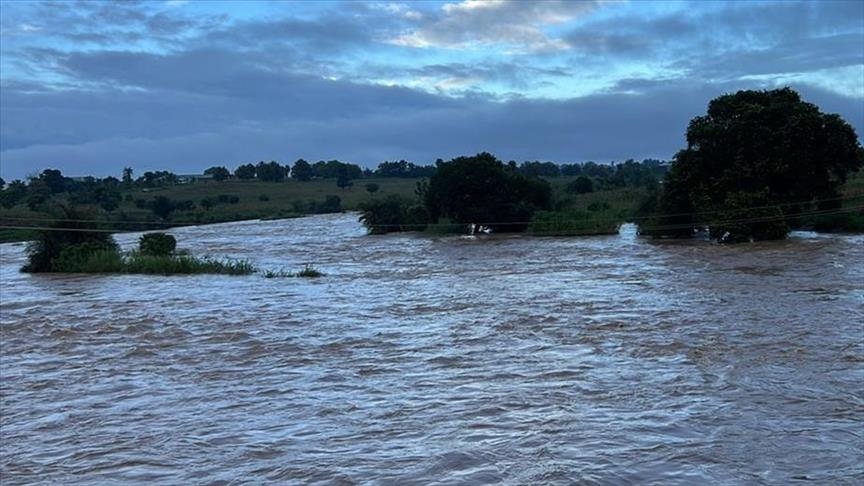
Severe floods devastate Central, West Africa, displacing tens of thousands
AI experts urge flood prediction solutions as humanitarian efforts intensify
Severe floods devastate Central, West Africa, displacing tens of thousands Read More »
AI experts urge flood prediction solutions as humanitarian efforts intensify
Severe floods devastate Central, West Africa, displacing tens of thousands Read More »
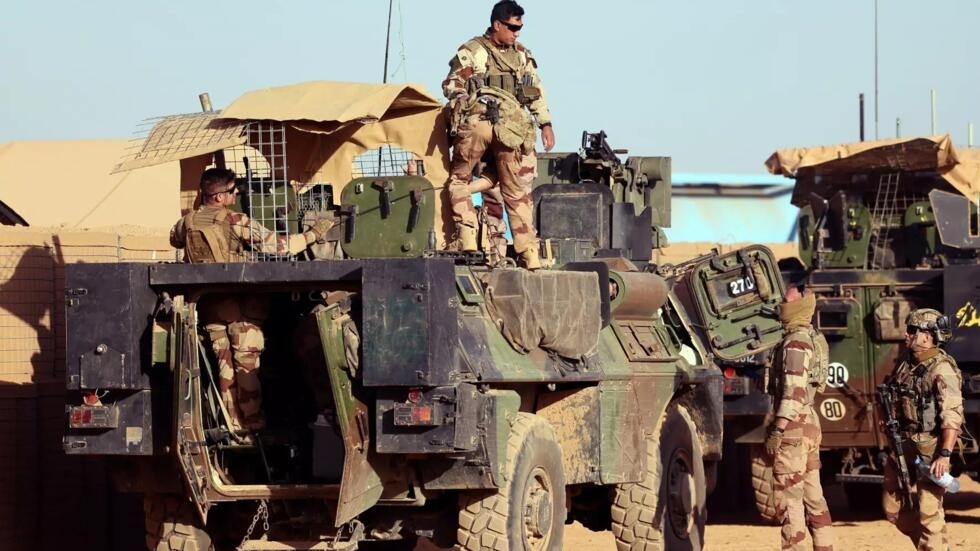
The United States military on Monday said it had completed the withdrawal of its troops and assets from Niger, meeting a 15 September deadline. Its pull-out took place in phases, starting in May, after Niger’s new leaders scrapped a military cooperation deal with Washington. They seized power in a coup last year and in recent months, Niamey has pulled away from its Western partners, turning instead to Russia for security. The withdrawal of the US’ nearly 1,000 military personnel is seen as a major setback for Washington. Prior to the coup, Niamey had been a key partner in its battle against Islamist insurgents operating in the region. Together with France and other European countries, Washington had invested hundreds of millions of dollars in military assistance and training to Niger. The US had handed over its last military bases to local authorities last month, but about two dozen soldiers had remained, largely to oversee the withdrawal. Their departure comes amid concerns about the growing number of extremist groups operating in the West Africa region. Groups linked to al-Qaeda and the Islamic State organisation operate in the vast region south of the Sahara desert. One of them, Jama’a Nusrat ul-Islam wa al-Muslimin, known as JNIM, is active in Mali, Burkina Faso, and Niger, and is looking to expand into Benin and Togo.
US confirms completion of military withdrawal from Niger Read More »

Niger’s coup leaders have forced the US military to depart the country, ending a significant presence in the region.
US completes Niger withdrawal amid coup tensions Read More »

Meeting aims to ‘identify actions and measures’ for coordination of diplomacy by Alliance of Sahel States, says official
West African breakaway alliance diplomats meet in Mali Read More »

The Alliance of Sahel States (AES), a regional bloc that was established last September by the military leaders of Mali, Niger and Burkina Faso, announced Sunday that they will launch a common passport to enhance cooperation and security. AES Chair and Mali’s junta leader Col. Assimi Goita said in a TV address that the alliance would soon launch a common biometric passport that will also facilitate the mobility of citizens across the three nations. He made the statement to mark the one-year anniversary of the AES since its creation on Sept. 16 last year. Burkina Faso, Mali and Niger formed the AES and announced the creation of a joint military force to counter spiraling security challenges posed in their countries by terrorist groups. The three West African nations withdrew from the Economic Community of West African States (ECOWAS), which had threatened to intervene militarily in Niger following a coup in that country in July last year. The three countries, with a combined population of 72 million, are affected by instability caused by militant groups. In July this year, the leaders of the three military regimes held their first joint summit in the Nigerien capital of Niamey, where they announced the confederation of three Sahel states. Highlighting joint “significant victories” against terrorist groups in the region, Goita said the AES was “open to discussion with international partners as well as sub-regional partners.” “This enhanced cooperation has helped to significantly weaken these (terror) groups, thus contributing to an improvement in security in the region, he added. Goita said the AES will also launch a common TV station.
West African nations to launch common passport Read More »

Meeting in capital Niamey comes amid rise in extreme climate disasters affecting nearly 28M people
Niger hosts international West Africa climate change conference Read More »

The Africa Centre for Disease Control and Prevention (Africa CDC) and the World Health Organization have launched a comprehensive response plan to tackle the mpox outbreak across Africa. Announced on Friday, this joint initiative aims to enhance and expedite the continent’s efforts to control the virus, save lives, and protect public health. The plan, set to begin this month and continue through February next year, has an estimated budget of nearly $600 million. It follows the WHO’s declaration of a public health emergency of international concern due to the new strain of mpox three weeks ago. According to Africa CDC Director-General Dr. Jean Kaseya, 55% of the funding will be allocated to the 14 countries with confirmed cases and to improve readiness in 15 additional nations. The remaining 45% will be used for operational and technical support through various partners, though specific funding sources were not disclosed. WHO Regional Director for Africa, Matshidiso Moeti, explained that countries are classified based on their risk levels, with targeted support for areas experiencing intense outbreaks, such as eastern DRC, and preparations in lower-risk regions like Guinea. The response plan will focus on enhancing surveillance, laboratory testing, and community engagement, emphasizing that vaccines alone are insufficient to combat the outbreak. Since the beginning of 2024, Africa has reported 5,549 confirmed mpox cases and 643 deaths, marking a significant rise in both infections and fatalities compared to previous years. The Democratic Republic of Congo alone accounts for 91% of these cases, with a high prevalence among children under 15.
$600M Africa-wide plan launched to fight Mpox outbreak Read More »

Save the Children warns of a humanitarian crisis in West Africa as severe flooding has left millions without homes and food.
Floods in West Africa displace nearly 950,000 — charity Read More »

Mali’s president meets with leaders of Burkina Faso and Niger in Beijing
West African military alliance strengthens ties with China Read More »

China’s President Xi Jinping Thursday pledged more than $50 billion in funding to the African continent, and announced elevating ties with all member nations to “strategic level.” The Chinese government “will provide RMB360 billion yuan ($50.7 billion) of financial support through the next three years” to African nations, Xi told the 9th Summit of the Forum on China-Africa Cooperation (FOCAC) in Beijing. Beijing is hosting the largest diplomatic gathering with leaders and representatives of nearly 53 African nations attending the three-day summit which began Wednesday. Xi boasted China’s relations with African nations were “now at its best in history.” “With its future growth in mind,” Xi told the summit, “I propose that bilateral relations between China and all African countries having diplomatic ties with China be elevated to the level of strategic relations.” He added: “The overall characterization of China-Africa relations be elevated to an all-weather China-Africa community with a shared future for the new era.” Referring to the pledges of new funding, the Chinese leader said more than half of $50 billion will be in credit while nearly $11 billion will be given in various types of grants. It also includes $10 billion investments through Chinese firms, said the 71-year-old Xi, who also leads Chinese Communist Party. In the Action Plan adopted at the Beijing summit, Xi announced 10 areas where China will cooperate and work with African nations in jointly advancing “modernization that is just, equitable, open, win-win, eco-friendly, featuring diversity and inclusiveness and underpinned by peace and security.” Besides, he said China will partner with the African continent in industrial chain cooperation, green development as well as common security. The FOCAC summit has been held every three years since 2000 when it was founded. Xi also met UN Secretary-General Antonio Guterres, who also attended the summit. “China seeks no selfish interest in Africa, and the new cooperation initiatives and actions announced at FOCAC (summit) are all aimed at turbocharging African countries’ development and making lives better for the African people,” Xi told Guterres. The Chinese leader told the world body chief that China was “ready” to work more closely with the UN to jointly support Africa’s effort for peace, stability, development and prosperity. In the past 22 years since 2000 when FOCAC was established, China has built some 100,000 kilometers (62,138 miles) of highways and 10,000KM of railways in Africa. Besides, China built over 200 schools, over 130 hospitals, nearly 100 ports as well as 50 stadiums on the continent. According to the Boston University Global Development Policy Center database, Chinese lenders provided 1,306 loans amounting to $182.28 billion to 49 African governments and seven regional borrowers from 2000 until last year. Beijing also founded the China-Africa Development Fund in 2006.
China Pledges $50 Billion to Africa Read More »