Nigeria

2M people remain displaced after devastating floods in Nigeria

About two million people are still displaced days after devastating floods struck Nigeria’s northeast Maiduguri city, an official said on Friday.  Babagana Zulum, governor of northeastern Borno State, said victims of the Sept.10-11 massive floods are still in displaced persons camps established by the government in the wake of the disaster. “Most of our people are still displaced and many infrastructure damaged by the flood,” Zulum told officials at a Nigerian bank, which donated N1 billion (about $600 million) to help rehabilitate infrastructure destroyed by the floods and resettle victims. Zulum promised all the donations into the relief basket account would be used for affected persons and not diverted by officials. Thousands of people have been taking refuge in open places, religious centers, and 32 displaced persons camps, including public schools, since the severe floods killed at least 40 people. Local authorities have commenced distribution of money, food, and nonfood items to displaced persons in camps and a few people taking refuge in safer areas. Bulana Abiso, head of the coalition for civil society organizations, told Anadolu that economic activities are yet to return to the city days after the incident. Abiso said most victims are still in shock and struggling to overcome the trauma of their losses and displacement caused by the disaster. Institutions and individuals, including Africa’s richest man Aliko Dangote, donated money to support victims.

2M people remain displaced after devastating floods in Nigeria Read More »

African countries, partners pledge $800M for Africa’s mpox response

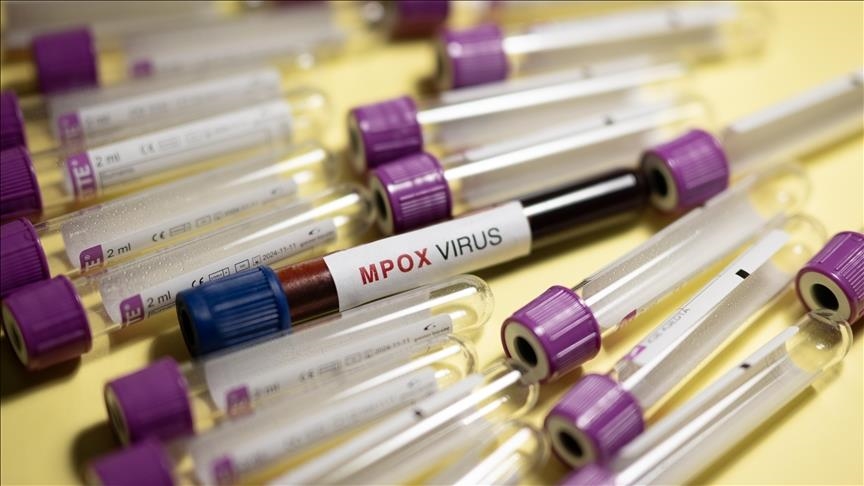
African countries and partners have pledged more than $800 million towards the continent’s mpox response amid surging infection, the director-general of the Africa Centres for Disease Control and Prevention (Africa CDC) announced Thursday. Jean Kaseya said $314 million was pledged to a new mpox fund created at a meeting of African heads of state earlier this week, of which $129 million is from the pandemic fund to support 10 countries impacted by mpox, while about $145 million from the Coalition for Epidemic Preparedness Innovations (CEPI). “Today we have around $814 million,” he said. Money from the pandemic fund will support 10 countries impacted by mpox: the Democratic Republic of Congo, Burundi, Rwanda, Uganda, Kenya, Sudan, Djibouti, Ethiopia, Somalia, and South Sudan. “Our team is working with the pandemic fund team on the way to allocate these resources in the 10 countries approved for support,” Kaseya said at a virtual news conference. The funding, created at a meeting of African heads of state earlier this week, is expected to bolster country and regional capacity in critical areas, including disease surveillance, diagnostics, laboratory networks and health workforce while addressing the immediate challenges posed by mpox. The continental preparedness and response plan for Africa has a budget of about $600 million. Kaseya said the US has also committed to provide $500 million to support the continental response plan and 1 million vaccine doses. He said Africa has secured 4.4 million vaccine doses against 10 million doses needed to control the disease spread. A total of 2,910 new cases of mpox, mostly in central and eastern Africa, were recorded last week and 16 new deaths, according to the latest data from Africa CDC. More than 32,000 confirmed cases in 2024 have been recorded on the continent with 840 deaths. Compared to the same period last year, Kaseya said there has been more than a 194% increase in cases in 15 African nations. Mpox cases are steadily increasing across all affected countries, Kaseya said, citing contact tracing and low testing capacity among the challenges. The testing rate on the continent stands at 49.5%, whereby many cases cannot be confirmed. Kaseya said this week Africa CDC would deliver available vaccines from the EU to some affected countries such as Rwanda, the Central African Republic, South Africa, Burundi and Cameroon. Congo, the most affected country in the region, will begin vaccinations in the first week of October. “Our objective is to stop this outbreak in the next six months and we need full support from member states and our partners,” he said.

African countries, partners pledge $800M for Africa’s mpox response Read More »

Nigeria advocates for permanent African seat on UN security council

Nigeria has joined the growing call among African leaders for permanent representation on the United Nations Security Council. During the 79th U.N. General Assembly in New York, Nigerian Defense Minister Mohammed Badaru emphasized that such a change would enhance fairness and inclusivity. “Having participated in 41 different U.N. missions globally, Africa deserves a permanent seat on the Security Council for justice and equity,” he stated. Other African leaders are echoing this sentiment. South African President Cyril Ramaphosa recently remarked that relying on a select few for global security is “unjust and unsustainable.” Kenyan President William Ruto also criticized the current multilateral system as inadequate. Historically, many African nations were still under colonial rule when the Security Council was established. In 2005, the African Union adopted the Ezulwini Consensus, advocating for at least two permanent and five non-permanent seats for Africa on the council. Currently, the U.N. General Assembly elects five new members for two-year terms, with Africa holding three rotational seats on the 15-member council. Patrick Agbambu, founder of Security Watch Africa Initiative, noted that Africa’s lack of unity is a major barrier to securing representation. “Without a united front, Africa cannot effectively advocate for a permanent seat,” he said, highlighting the divisions within the African Union. Recently, the United States, a permanent member of the Security Council, expressed openness to two African seats, though without veto power. Security analyst Senator Iroegbu acknowledged the need for African representation but cautioned that it won’t resolve all issues. “Nigeria, as Africa’s most populous nation with significant economic potential, is well-positioned, but Security Council membership alone won’t ensure stability unless underlying issues are addressed,” he said.

Nigeria advocates for permanent African seat on UN security council Read More »

Nigeria’s inflation drops, but fuel prices threaten recovery

Nigeria’s inflation rate experienced a slight decrease in August, dropping from 33.40% in July to 32.15%. However, the declining value of the naira and rising fuel prices are undermining this progress, potentially reigniting inflation. Michael Anthony, an engineer and father of four, continues to face steep costs despite the small dip in inflation. “In July, I bought a bag of rice for 65,000 naira, but just three days ago, it cost me 95,000 naira,” he said, expressing concern that prices may rise again due to fuel costs. At a market in Abuja, food trader Blessing Ochuba is feeling the pinch. With customers unable to purchase in bulk, she’s reducing her stock and adjusting prices to stay afloat. “Customers who used to buy in bags are now buying half or a quarter because they can’t afford more,” she explained. “I used to buy 10 bags of rice, but now I can barely afford five. Everything is going up.” Despite the reported dip in inflation, Nigeria’s currency has weakened significantly, moving from 1,200 to 1,600 naira to the dollar, and gasoline prices have surged from 620 to nearly 1,000 naira per liter in just three months. Development economist Hauwa Mustapha attributed the slight decline in inflation to a government policy exempting food imports from excise duty for 90 days. “That helped boost food supply, but it doesn’t indicate a long-term recovery,” she noted, emphasizing the need for effective government measures. To manage inflation in both the short and long term, Mustapha suggests focusing on food supply policies. “As we approach harvest season, it’s crucial to minimize post-harvest losses to maintain a steady food supply.” Experts believe the government’s upcoming actions will determine if this inflation decrease marks a genuine recovery or merely a temporary reprieve.

Nigeria’s inflation drops, but fuel prices threaten recovery Read More »

Scroll to Top