Sudan

Over 600 million women and girls affected by war, U.N. warns

Over 600 million women and girls are now affected by war, marking a 50% increase in a decade, and they fear being forgotten amid a global backlash against women’s rights, according to top U.N. officials. U.N. Secretary-General Antonio Guterres highlighted in a recent report that progress in women’s rights is eroding amid escalating armed conflicts. He noted that the goals of equal participation in peace negotiations, outlined in a Security Council resolution from 2000, remain largely unmet. Guterres pointed out that women’s leadership in peace efforts is being undermined, with decision-making predominantly male-dominated. He warned that as long as patriarchal structures persist, achieving peace will remain challenging. The report revealed alarming statistics: the proportion of women killed in armed conflicts doubled in 2023, cases of conflict-related sexual violence rose by 50%, and the number of girls affected by serious violations increased by 35%. Sima Bahous, head of UN Women, echoed these concerns, emphasizing the lack of attention to women’s voices in peace initiatives. She highlighted the dire situations faced by women in places like Afghanistan, Gaza, Sudan, and Myanmar, expressing that 612 million affected women and girls wonder if they have been forgotten by the international community. Bahous stressed the urgent need for action, noting that many women in conflict zones face severe food insecurity and high maternal mortality rates. Women’s participation in peace negotiations remains low, with less than 10% involvement in peace processes overall. To address these issues, U.N. Deputy Secretary-General Amina Mohammed announced a “Common Pledge on Women’s Participation in Peace Processes,” calling for concrete commitments to include women as mediators and ensure their meaningful involvement in peace negotiations. Ambassadors at the meeting highlighted a persistent lack of political will to support women’s roles in peace processes, underscoring the need for renewed commitment from member states.

Over 600 million women and girls affected by war, U.N. warns Read More »

African Union, SADC urge lifting of US sanctions on Zimbabwe

The Chairperson of the African Union Commission Moussa Faki Mahamat, and the Southern African Development Community (SADC) on Friday called for the unconditional lifting of all sanctions imposed against Zimbabwe. “The Chairperson remains concerned by the negative impact of continued sanctions against the Republic of Zimbabwe on the country’s socio-economic development and recovery efforts,” his office stated in a message marking SADC’s Anti-Sanctions Day, observed annually on Oct. 25. “In solidarity, the SADC community today joins Zimbabwe in calling for the immediate and unconditional removal of these unwarranted and cruel sanctions, which violate the basic tenets of international law and the Charter of the United Nations,” stated Zimbabwe’s President and current SADC chairperson, Emmerson Dambudzo Mnangagwa. Mnangagwa emphasized that the imposition of sanctions undermines the collective efforts toward regional integration and sustainable development. “May this message transcend our borders and reach the ears and rattle the conscience of those perpetuating these cruel sanctions. They must realize the extent of harm their reprehensible actions inflict on the generality of the people of Zimbabwe, on the SADC region, and Africa at large,” he said. – March to US Embassy in Harare In Zimbabwe, Anti-Sanctions Day was marked under the banner of the Broad Alliance against Sanctions, with a small group of citizens gathering outside the US Embassy to call for the removal of US-imposed sanctions on Zimbabwe. The Broad Alliance Against Sanctions is a group of supporters of Zimbabwe’s ruling party who have protested outside the US Embassy for about five years, making headlines with their near-daily picketing in the capital Harare. The anti-sanctions demonstrators have blamed the sanctions for harming Zimbabwe’s economy, asserting that the embargoes are responsible for the challenges the country faces, including difficulties in obtaining credit, medicine, and educational opportunities. “The sanctions must go. Every ordinary Zimbabwean is suffering because of these sanctions,” Edwin Mbewe, a protester, said. However, the US Embassy refuted claims that the sanctions are to blame for the country’s economic struggles, instead attributing Zimbabwe’s economic crisis to government corruption. “The notion that U.S. sanctions are the cause of Zimbabwe’s difficulties does not align with reality. This false narrative diverts attention from the real issues plaguing Zimbabwe. According to reports by Zimbabwe’s own Prosecutor General, Zimbabwe loses $1.8 billion to corruption annually,” said Pamela Tremont, the US ambassador to Zimbabwe, in a statement. Further commenting on its page on X, formerly Twitter, the US Embassy stated, “there are no sanctions on the 16 million people in Zimbabwe. We urge the Government to deal with economic mismanagement and corrupt actors who are the root causes of Zimbabwe’s economic troubles.” Ambassador Tremont also indicated that Zimbabwe’s economic problems are largely due to mismanagement, which she attributed to corruption costing the country about $2 billion annually. The US Embassy concluded, “sanctions affect only 11 individuals and 3 companies in Zimbabwe, preventing them from using the U.S. financial and banking systems for their personal affairs and traveling to the United States.”

African Union, SADC urge lifting of US sanctions on Zimbabwe Read More »

3.7M children in Sudan at risk of acute malnutrition, warns UN

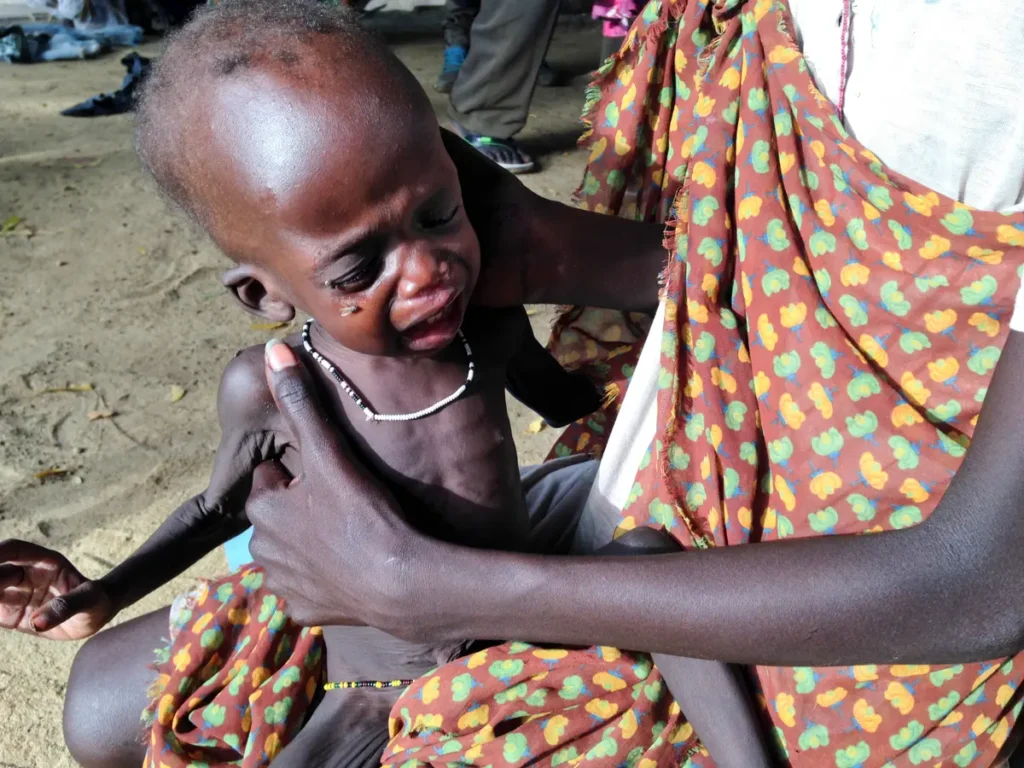
The humanitarian crisis in Sudan is worsening, leaving millions in urgent need of aid, the UN said on Friday, warning that 3.7 million children are at risk of acute malnutrition. “There are 3.7 million children under five projected to suffer from severe acute malnutrition this year alone who are in urgent need of life-saving treatment,” the UN refugee agency (UNHCR) and UN Children’s Fund (UNICEF) said in a joint statement. “These children are already weakened by hunger. If not reached soon, these children are 11 times more likely to die from preventable diseases than their healthier peers inside Sudan,” warned the statement. There is a severe shortage of access to essential services like clean water, health care, and shelter, said the statement. “As we witness the collapse of vital infrastructure, the international response must intensify immediately to match the overwhelming scale of need,” it added. Calls from the UN and the international community for an end to the fighting are increasing as the war threatens to push millions into famine and death due to food shortages caused by the conflict, which has spread to 13 of Sudan’s 18 states. Since mid-April 2023, the Sudanese army and the Rapid Support Forces (RSF) have been engaged in the conflict, resulting in over 20,000 deaths and more than 10 million displaced people and refugees, according to the UN.

3.7M children in Sudan at risk of acute malnutrition, warns UN Read More »

Africa looks to BRICS for UN security council membership

African Union Chair and Mauritanian President Mohamed Ould Ghazouani stated that Africa is counting on BRICS countries for support in obtaining permanent membership in the UN Security Council. Speaking at the “Expanded BRICS+” meeting during the BRICS Leaders Summit in Kazan, Russia, Ghazouani highlighted that the delays in achieving sustainable development goals and the current inadequacies in addressing serious global security, economic, and environmental challenges stem from political and economic imbalances in the international system. He emphasized the need for Africa to foster a new dynamic of multilateral cooperation, international solidarity, and assistance. For this to happen, he argued, the financial and political rules of international governance must be reformulated. Ghazouani pointed out that Africa’s ability to leverage development opportunities and unlock its growth potential is hindered by debt issues. He also noted that Africa’s weak representation in multilateral financial institutions has led to urgent development needs—particularly in infrastructure, technology transfer, and education—not being prioritized on the international agenda. He called for the establishment of a new development finance agreement that ensures equitable access to financing aligned with the priorities of least developed countries. Ghazouani underscored the importance of granting Africa permanent membership in the UN Security Council to ensure its voice is heard and its priorities are considered globally, expressing trust in BRICS countries for this support.

Africa looks to BRICS for UN security council membership Read More »

African leaders condemn Terror attack on Turkish defense facility

Mali, Senegal, and Somalia condemned a “heinous” terrorist attack on a defense industry facility in Turkey’s capital on Wednesday. Mali’s transitional government president, Col. Assimi Goita, expressed “total solidarity” with Turkey, a key defense partner, and extended condolences to the victims’ families. The attack on Turkish Aerospace Industries (TAI) resulted in at least five deaths and 22 injuries, according to Turkish Interior Minister Ali Yerlikaya. Senegal’s President Bassirou Diomaye Faye labeled the attack “cowardly,” expressing compassion for the Turkish people and condolences to President Recep Tayyip Erdogan. Somalia condemned the incident as a “heinous” act, noting it poses a threat to global peace. The Foreign Ministry commended the swift response of Turkish security forces and expressed confidence that the perpetrators would be brought to justice. Somalia reiterated its commitment to fighting terrorism alongside Turkey and the international community, calling for strengthened cooperation against such threats.

African leaders condemn Terror attack on Turkish defense facility Read More »

Sudan’s water crisis deepens amid cholera threat

Khartoum, are facing a deepening water crisis alongside severe food shortages. Many now rely on fetching water from the Nile River using carts or purchasing untreated water, which has become increasingly scarce. “We’ve been without water for 17 days. The situation is unbearable. Now we have to buy water, but prices are skyrocketing—two barrels cost 1,000 Sudanese pounds (about $1.66),” says local resident Ahmed Musa. For context, the average annual income in Sudan is $2,379, or roughly $6.50 per day, according to UN statistics. The city’s vital water infrastructure, including a treatment plant on the Nile and several supply stations, has been severely damaged by ongoing fighting. A shortage of personnel and spare parts has further disrupted water networks across multiple districts, leaving tens of thousands of households without access to clean water. The reliance on untreated water has led to a rise in illnesses, including cholera, a waterborne bacterial disease. As winter approaches, the escalating health crisis and lack of basic necessities threaten to worsen the humanitarian situation in Sudan. Epidemic diseases such as cholera, malaria, measles, and dengue fever have emerged, resulting in hundreds of deaths. The health ministry has reported 25,037 cholera cases and 702 related fatalities. On Friday, UNICEF warned that 3.1 million people, including 500,000 children under five, are at risk of cholera in Sudan. In response, the Sudanese Ministry of Health announced that a vaccination campaign targeting more than 1.4 million people against cholera has begun in the eastern and northern regions of the country.

Sudan’s water crisis deepens amid cholera threat Read More »

Scroll to Top