Sudan

Africa feels climate change effects more severely

The impacts of climate change on livelihoods are varying significantly across regions, with the most vulnerable areas, including many African countries, experiencing severe daily disruptions. According to the Intergovernmental Panel on Climate Change (IPCC), African countries, despite contributing minimally to greenhouse gas emissions, are among the hardest hit by human-induced climate change. Factors such as high dependence on rain-fed agriculture, inequitable access to financial resources, and weak adaptation capacity contribute to the heightened impact. The ND-GAIN index highlights that nine out of the ten most vulnerable and least resilient countries to climate change are in Africa, including Chad, the Central African Republic, Guinea-Bissau, Eritrea, the Democratic Republic of the Congo, Sudan, Niger, Zimbabwe, and Liberia. Climate change is causing rising ocean levels that threaten Africa’s coastal metropolises with reduced land area, increased coastal flooding, and stronger storm surges. The African coastline has been experiencing a steady rise in sea levels for the past four decades. Experts predict that if this trend continues, sea levels could rise by 0.3 meters by 2030, affecting 117 million Africans. The survival of Africa’s coastal ports, which handle an estimated 90% of the continent’s import and export trade, is at risk. This poses a concern for Africa’s rapidly growing population and urbanization in coastal areas. Rising sea levels reveal the stark and destructive impact of global warming on a continent already facing rapid population growth and land pressure. Coastal cities are also facing increased public health risks due to rising groundwater levels and the transformation of urban areas into wetlands. In addition, rising sea levels are causing severe flooding and erosion. The World Bank estimates that erosion, flooding, and pollution are causing approximately $3.8 billion in annual damage along 56% of the coastline in Benin, Ivory Coast, Senegal, and Togo. Alexandria, located in the Nile Delta, is among the densely populated coastal cities at risk of being submerged within 30 years. A sensitivity assessment for Alexandria, Rosetta, and Port Said predicts that a 0.5-meter rise in sea levels by 2050 could displace over 2 million people, result in 214,000 job losses, and cause over $35 billion in damages. A 1-meter rise could lead to $50 billion in damage solely in Alexandria. In Lagos, Nigeria, a city of over 20 million people, the total annual cost of river and water flooding is estimated at $4 billion. Some forecasts suggest that a 3-degree increase in global warming could force one-third of Lagos’s population to relocate due to rising sea levels. The World Bank reports that Dakar, Senegal, has $39 billion worth of economic assets vulnerable to flooding. The city of St. Louis in Senegal is disappearing under rising waters, displacing many residents. Mozambique’s coastal cities are also at risk, situated along a cyclone path that is expanding and intensifying due to rising sea surface temperatures.

Africa feels climate change effects more severely Read More »

Flooding in Eastern Sudan’s Kassala province displaces residents

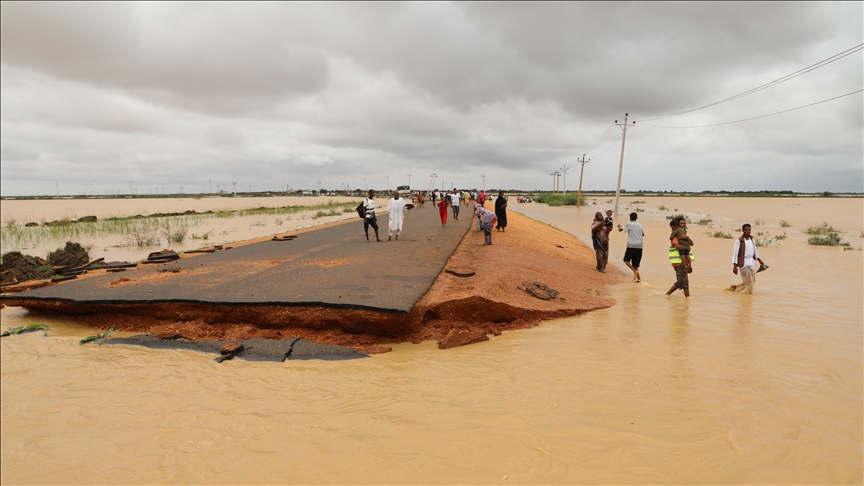
Flooding in Kassala Province, eastern Sudan, has exacerbated the plight of displaced individuals seeking refuge there. In the Industrial School area, one of Kassala’s largest displacement camps, residents are urgently appealing for aid. Ali Abdul Jabbar, an internally displaced person from Sennar, shared his situation: “We’ve been here for 20 days after fleeing Sennar. The rain and water conditions are evident. We’re facing issues with our accommodations, but once they’re repaired, we’ll move in. We urge authorities to address these conditions swiftly.” Another displaced resident, Merwan Abood from Sennar, described the situation as dire and called for immediate assistance: “I urge all compassionate individuals in Kassala, Sudan, and beyond to provide essential supplies such as equipment, shelter, blankets, clothing, and medicine.” In Kassala, people are navigating knee-deep floodwaters, holding onto their salvaged belongings, while some have resorted to resting on dry ground after abandoning their partially submerged tents. According to the Sudanese Ministry of Health, at least 12 people have died due to the flooding that began on Saturday, which has submerged homes and tents. The crisis follows last year’s upheaval in Sudan, where clashes between the military and the RSF in Khartoum and other regions led to widespread violence. The U.N. reports over 14,000 deaths and 33,000 injuries from the conflict, though activists believe the figures may be higher. This ongoing conflict has resulted in the largest displacement crisis globally, with over 11 million people displaced from their homes.

Flooding in Eastern Sudan’s Kassala province displaces residents Read More »

Activists urge action to address global food crisis

Activists and chefs worldwide joined a new campaign on Thursday (July 25) to spotlight the global food crisis. In Rio de Janeiro, Brazil, where G20 leaders were meeting for a two-day summit, campaigners staged a demonstration. Members of various NGOs distributed empty plates from a mock food truck. The CEO of Sustainable Development Goal 2 Advocacy explained the symbolism behind the empty plates: “We use these plates to represent the 733 million people worldwide who face hunger. We need urgent action and commitment to drive change, building on Brazil’s and the G20’s promises to create an alliance for this cause.” The protest came after Brazil committed to partially funding the global alliance against hunger and poverty.

Activists urge action to address global food crisis Read More »

Burhan-controlled army hampers famine relief efforts in Sudan

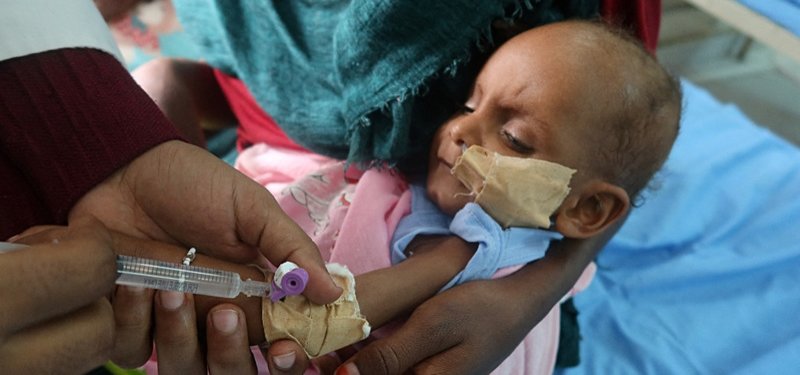
Sudan is on the brink of famine, with general Burhan-controlled SAF blocking the UN from delivering food through a crucial border crossing, a report revealed. This has cut off aid to hundreds of thousands during a severe civil war. Experts fear a catastrophic famine unless immediate action is taken. After 15 months of conflict, Sudan is nearing one of the worst famines in decades. Burhan-controlled SAF’s blockade prevents essential UN aid, risking up to 2.5 million deaths by year’s end. Darfur, particularly, is at high risk, with eight of 14 famine-threatened districts. The closed Adré border crossing from Chad to Sudan is critical for aid delivery. Despite the flow of refugees and goods, UN food trucks are banned, leaving 440,000 people in Darfur on the edge of starvation. Refugees cite hunger as their primary reason for fleeing. Burhan forces claim the blockade prevents weapon smuggling, yet arms and rival forces still cross the border. Though the rival army, Rapid Support Forces, controls the Sudanese side of Adré and the UN respects the army’s edict. However, this forces aid trucks on a perilous, lengthy detour to Tine. The detour, dangerous and inefficient, is significantly delaying aid. Since February, only a fraction of the needed aid has reached Darfur, with seasonal rains further complicating delivery. The US, the largest donor, deems the blockade unacceptable, stressing the urgent need to lift it to prevent mass starvation.

Burhan-controlled army hampers famine relief efforts in Sudan Read More »

Scroll to Top