Tunisia

Tunisia, US discuss Libya’s political future

Tunisian Foreign Minister Nabil Ammar expressed support Monday for all efforts to ensure security in Libya. Ammar received US Ambassador to Tunisia Joey Hood and US special envoy for Libya Ambassador Richard Norland to discuss strengthening ties between Tunisia and the US and also Libya’s political future. Regarding the political process in Libya, Ammar said the political solution for the country must be Libyan-Libyan in a framework of consensus and a Libyan leadership under the auspices of the UN, according to the Tunisian Foreign Ministry. He also reiterated Tunisia’s support for all efforts aimed at reaching a “comprehensive and lasting” settlement that would guarantee Libya’s security, stability, unity and sovereignty, the ministry said. Norland paid tribute to Tunisia’s “positive and constructive “role in bridging the gap between the Libyan interlocutors. He reiterated the US’s refusal to impose solutions by force from any party and expressed his country’s willingness to coordinate with Tunisia to move towards a political settlement based on dialogue and negotiation. Libya has been plagued by sporadic security issues amid ongoing political division since 2022. The country is currently governed by two rival administrations: the UN-recognized Government of National Unity (GNU) led by Abdul Hamid Dbeibeh based in Tripoli, which controls the western part of the country, and the government of Osama Hammad, appointed by the House of Representatives, which operates out of Benghazi and governs the eastern region and parts of the south. Efforts led by the UN to hold parliamentary and presidential elections have repeatedly stalled, prolonging the country’s political deadlock and exacerbating the security situation in the oil-rich nation.

Tunisia, US discuss Libya’s political future Read More »

Tunisia’s president fires prime minister, appoints successor

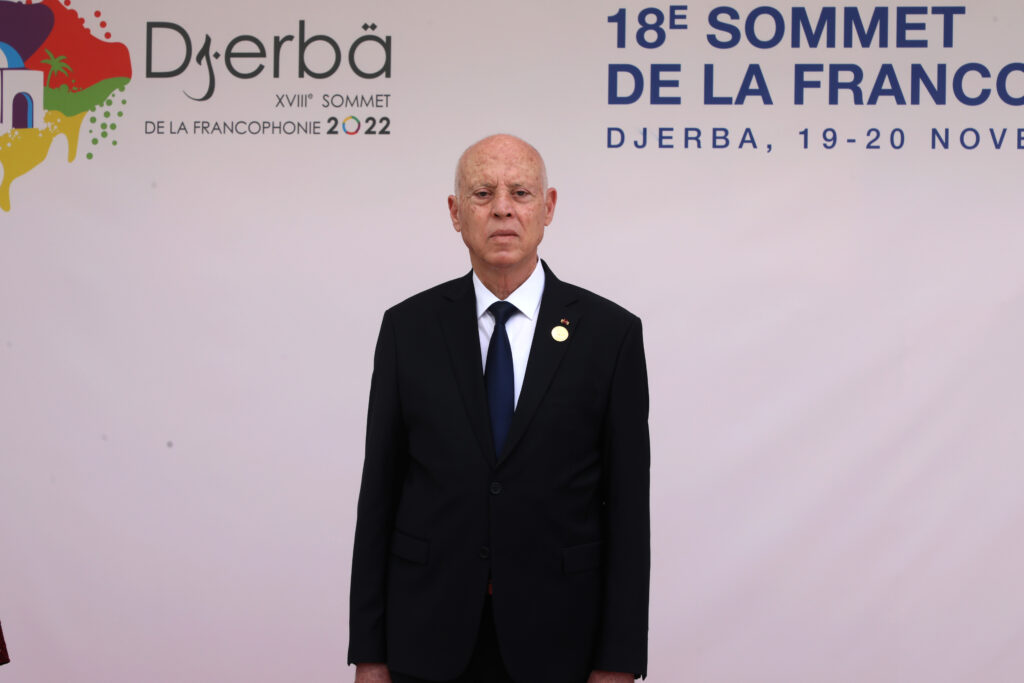
Tunisian President Kais Saied dismissed Prime Minister Ahmed Hachani on Wednesday, just a year into his tenure. Saied appointed Kamel Maddouri, the Minister of Social Affairs, as the new Prime Minister, according to a presidential statement. Hours before his dismissal, Hachani claimed in a video message that the government had made progress despite challenges with high food and energy prices. The dismissal comes amid widespread discontent over water and electricity outages across the country. The government blames these issues on a severe drought, leading to water rationing. The agriculture ministry reports that dam levels are critically low at 25 percent, while Saied views the water shortages as a conspiracy against him, asserting that the dams are actually full. Saied has announced his intention to run for president in October, facing strong opposition and criticism from human rights organizations and rivals who accuse him of suppressing and intimidating opponents to secure a second term.

Tunisia’s president fires prime minister, appoints successor Read More »

Protests erupt in Tunisia, Morocco against Israeli attacks on Gaza

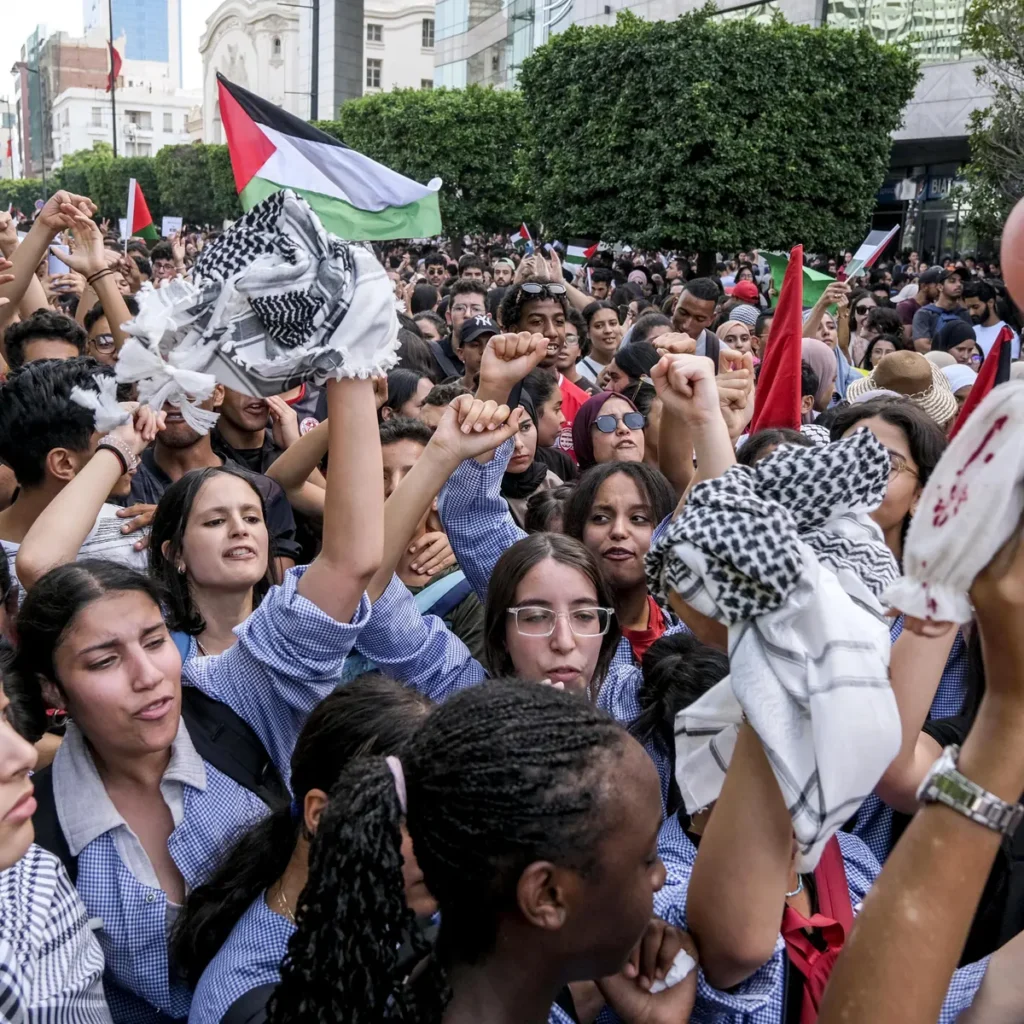
Demonstrations against Israel’s attacks on the Gaza Strip took place Friday in Tunisia and Morocco, drawing thousands of protesters. In the Tunisian capital of Tunis, protesters gathered on Habib Bourguiba Avenue for a Solidarity with Palestine march. Demonstrators carrying Palestinian and Tunisian flags, chanted slogans such as “Freedom for Palestine” and “The hypocritical world has set Gaza and Palestine on fire.” Human rights activist Said Buacle, who participated, told Anadolu that protesters have been holding support demonstrations for Gaza for 37 weeks and plan to continue. Similar demonstrations were held in cities across Morocco, including Rabat, Fez, Meknes, Tangier, Kenitra, Nador, Ahfir, Taroudant and Agadir. Thousands took part to demand that Israel stop its attacks on Gaza and allow humanitarian aid into the enclave. Israel, flouting a UN Security Council resolution demanding an immediate cease-fire, has faced international condemnation amid its continued brutal offensive on Gaza since an Oct. 7 attack by the Palestinian resistance group, Hamas. More than 38,800 Palestinians have since been killed, mostly women and children, and nearly 89,400 injured, according to local health authorities. Over nine months into the Israeli onslaught, vast tracts of Gaza lie in ruins amid a crippling blockade of food, clean water and medicine.

Protests erupt in Tunisia, Morocco against Israeli attacks on Gaza Read More »

Scroll to Top