

Mali junta adjusts strategy after deadly militant attacks
The meeting aimed to reassess the threat and provide additional guidelines for security.
Mali junta adjusts strategy after deadly militant attacks Read More »
The meeting aimed to reassess the threat and provide additional guidelines for security.
Mali junta adjusts strategy after deadly militant attacks Read More »
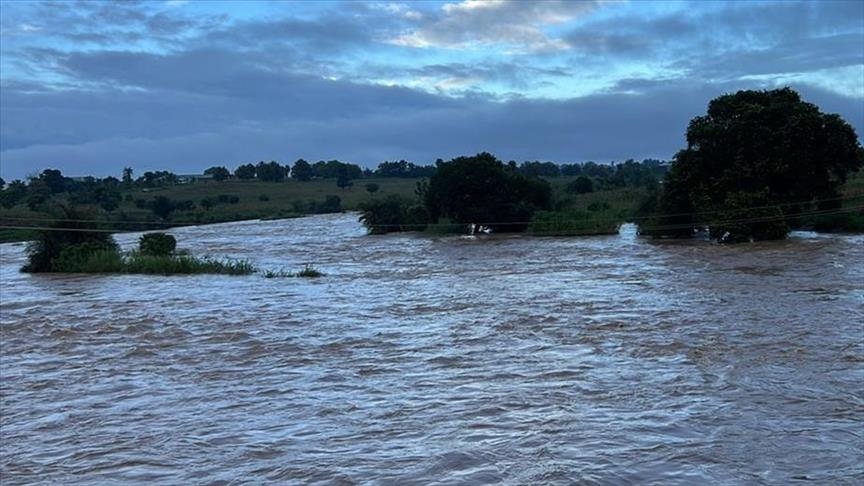
AI experts urge flood prediction solutions as humanitarian efforts intensify
Severe floods devastate Central, West Africa, displacing tens of thousands Read More »

Torrential rains across Central and West Africa have caused devastating floods, with Maiduguri, the capital of Nigeria’s Borno state—already struggling with an ongoing insurgency—bearing the brunt of the disaster. This year alone, the floods have claimed over 1,000 lives and displaced hundreds of thousands in countries like Chad, Nigeria, Mali, and Niger. The United Nations reports that more than four million people have been affected in West Africa, a dramatic increase from last year. As rescue operations continue, the exact death toll remains uncertain, but preliminary figures indicate at least 230 deaths in Nigeria, 265 in Niger, 487 in Chad, and 55 in Mali, which has seen its worst flooding since the 1960s. Despite contributing only a small fraction of global greenhouse gas emissions, Africa is highly vulnerable to extreme weather, with adaptation costs projected to reach $30-50 billion annually over the next decade. Maiduguri is in crisis, as the region has faced a relentless wave of attacks from Boko Haram, resulting in over 35,000 deaths in the past decade. Local resident Saleh Bukar recalled being awakened by neighbors’ urgent cries for help as floodwaters surged. Many older adults and those with disabilities were unable to escape in time, leading to tragic losses. With over 600,000 people displaced in Borno state alone, the local government struggles to cope. Recent floods have devastated wildlife, destroyed vital infrastructure, and caused significant structural damage, including the collapse of key bridges and a dam that released vast amounts of water into the city. Governor Babagana Zulum has called for urgent international aid, emphasizing that local resources are overwhelmed. The World Food Program is providing food assistance, but many survivors report feeling abandoned. In Niger, floods have affected over 841,000 people, with single mother Harira Adamou lamenting the loss of her home and the absence of state support. She and her children are now living in a temporary shelter, fearing more rains. As Maiduguri remains partially submerged, forecasts suggest further rain, prompting warnings of additional flooding. Bukar, displaced and living in a shelter with thousands, has taken it upon himself to help others while grappling with his own loss. “I am volunteering to help, but I am also a victim,” he said, highlighting the resilience of the community amid profound suffering.
Maiduguri faces crisis as devastating floods hit West Africa Read More »

Conflict and instability have forced millions from their homes, straining resources and exacerbating suffering.
West, central Africa displacement doubles in 5 years Read More »

The Alliance of Sahel States (AES), a regional bloc that was established last September by the military leaders of Mali, Niger and Burkina Faso, announced Sunday that they will launch a common passport to enhance cooperation and security. AES Chair and Mali’s junta leader Col. Assimi Goita said in a TV address that the alliance would soon launch a common biometric passport that will also facilitate the mobility of citizens across the three nations. He made the statement to mark the one-year anniversary of the AES since its creation on Sept. 16 last year. Burkina Faso, Mali and Niger formed the AES and announced the creation of a joint military force to counter spiraling security challenges posed in their countries by terrorist groups. The three West African nations withdrew from the Economic Community of West African States (ECOWAS), which had threatened to intervene militarily in Niger following a coup in that country in July last year. The three countries, with a combined population of 72 million, are affected by instability caused by militant groups. In July this year, the leaders of the three military regimes held their first joint summit in the Nigerien capital of Niamey, where they announced the confederation of three Sahel states. Highlighting joint “significant victories” against terrorist groups in the region, Goita said the AES was “open to discussion with international partners as well as sub-regional partners.” “This enhanced cooperation has helped to significantly weaken these (terror) groups, thus contributing to an improvement in security in the region, he added. Goita said the AES will also launch a common TV station.
West African nations to launch common passport Read More »

The Central Bank of West African States (BCEAO) held its main lending rate unchanged at 3.5% in its latest monetary policy decision.
Inflation outlook remains stable for West African states Read More »

Guinea-Bissau police seized 2.6 tons of cocaine from a plane that arrived from Venezuela, arresting the crew of five.
Record-breaking cocaine seizure in Guinea-Bissau Read More »

The dangers of the perilous journey across the Atlantic Ocean were tragically highlighted by a boat accident off the coast of Senegal that resulted in the deaths of six people.
Senegal boat capsizing leaves six dead, many missing Read More »

The junta has been accused of human rights abuses and has faced international condemnation.
Guinea marks 3 years of military rule amid protests Read More »

Guinea has confirmed its first case of mpox, joining other countries in the region experiencing outbreaks of the virus.
West Africa faces new health threat as Guinea reports mpox case Read More »