
Four more men deported from the United States under Washington’s programme for undocumented migrants have arrived in Eswatini, officials confirmed Thursday.
The tiny southern African kingdom previously received 15 men last year under deals with the US criticised by international rights groups.
Two of the new deportees are from Somalia, one from Tanzania, and one from Sudan, a US-based lawyer representing some detainees said.
Eswatini’s government verified the men’s nationalities in a statement, confirming they were received and registered at state facilities without incident.
The quartet arrived late Wednesday at Matsapha Correctional Centre, a maximum-security prison outside the capital, according to an anonymous officer.
“They are in perfect health,” the officer said, adding that social welfare and health authorities are currently orienting the men.
Authorities said the facility is preparing to hold about 140 more deportees under the third-country programme with the United States.
A Human Rights Watch document revealed Eswatini agreed to accept 160 deportees in exchange for US funding for border and migration management.
The kingdom, Africa’s last absolute monarchy, confirmed receiving around $5.1 million from the United States for its role in the programme.
Other African nations, including Equatorial Guinea, Ghana, Rwanda, and South Sudan, have also accepted US deportees this year, while Cameroon received 17.
Eswatini insists deportees are temporarily held while arrangements are made for repatriation to their countries of origin, authorities said.
A 62-year-old Jamaican deportee, having served a US murder sentence, was returned to his home country in September under the programme.
A second detainee will leave the kingdom “shortly,” acting government spokeswoman Thabile Mdluli said, with ongoing talks for remaining nationals underway.
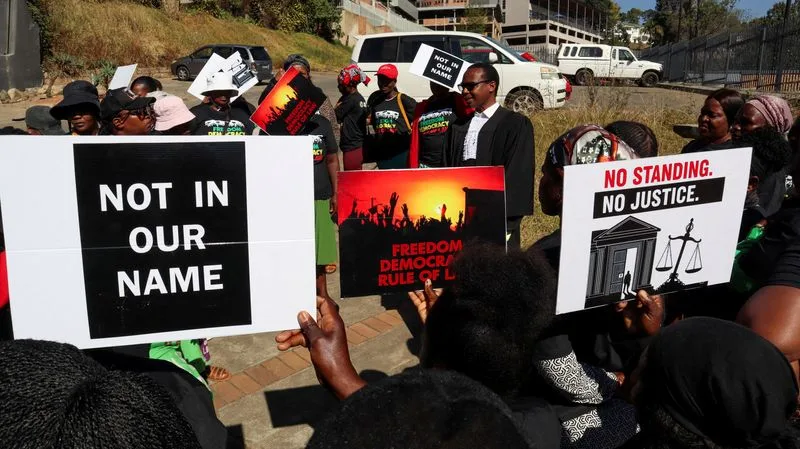
Lawyers and civil society groups have challenged the detentions in court, arguing deportees face indefinite confinement without charges, raising human rights concerns.