
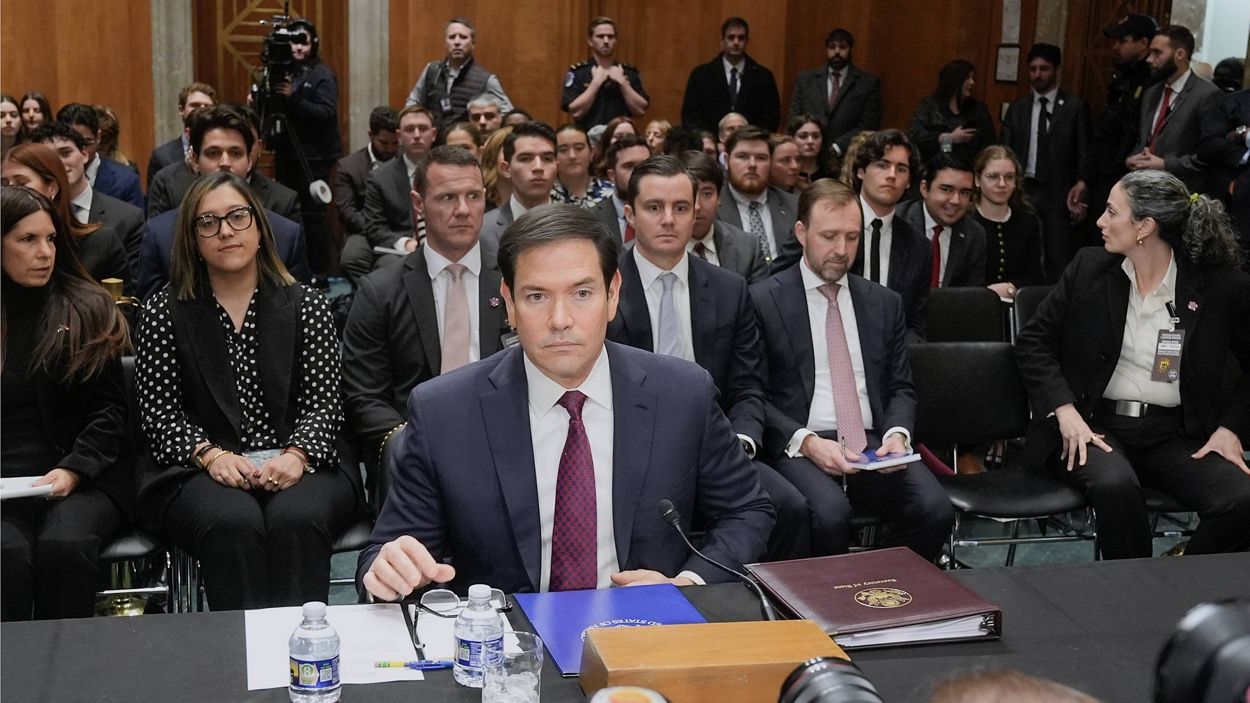
US Secretary of State Marco Rubio has emerged as the most powerful figure overseeing Venezuela’s political and economic affairs, despite remaining in Washington and never relocating to Caracas, according to a report by The New York Times.
The newspaper said Rubio has effectively become Venezuela’s “de facto ruler” in the months since President Nicolás Maduro was removed from power, wielding influence over the transitional government, the economy and the country’s vast natural resources.
His role has drawn comparisons with Paul Bremer, the US administrator who governed Iraq following the 2003 invasion.
According to the report, Rubio exercises day-to-day influence through direct and frequent contact with Delcy Rodríguez, Maduro’s former deputy, who now leads Venezuela’s US-backed transitional administration.
The two are reportedly in constant communication, including through WhatsApp. However, the newspaper said the relationship bears little resemblance to an equal partnership and instead reflects Washington’s direct leverage over the affairs of a sovereign state.
One of the clearest signs of US control is the management of Venezuela’s export revenues.
The US Treasury reportedly receives a substantial share of the country’s earnings before redistributing the money through Venezuela’s banking system under conditions imposed by Washington.
The arrangement has given Rubio extensive authority over how the money is spent and which institutions, companies or government bodies are allowed to benefit from it.
While the system has reportedly helped curb some forms of corruption and shielded Venezuelan funds from creditors, it has also left Rodríguez’s government heavily dependent on US approval to access revenue, stabilise the currency and pay public-sector salaries.
Rubio’s influence also extends to Venezuela’s oil industry, which lies at the centre of President Donald Trump’s strategy toward the country.
The secretary of state has played a leading role in restructuring the energy sector and opening it to American companies, while reducing the influence of some foreign competitors.
He also oversees the implementation of US sanctions, determines which businesses are authorised to operate in Venezuela and has reportedly intervened in sensitive government decisions, including official appointments.
The Trump administration has provided significant support to the transitional government following two major earthquakes in recent weeks, dispatching humanitarian aid, financial assistance and military personnel.
Washington argues that stabilising Venezuela is essential to its broader goal of securing reliable access to the country’s oil reserves.
Critics, however, accuse the United States of exploiting Venezuela’s natural resources while keeping figures linked to Maduro’s former government in power instead of pushing for a genuine democratic transition.
The policy has also prompted questions in Congress over the legal basis for the United States to control or manage the assets of another country.
Rubio’s role marks a significant shift in his political career. For years, he presented himself as one of Washington’s strongest advocates for democracy in Latin America.
He is now pursuing a more pragmatic strategy based on the direct exercise of American power to secure strategic and economic objectives.
The outcome of the US experiment in Venezuela could have major implications for Rubio’s political future, particularly amid speculation that he could eventually seek to succeed Trump.
Despite Washington’s declared goal of restoring democracy, no timetable has been set for free elections.
Opposition leader María Corina Machado, once strongly supported by Rubio, has also reportedly become more distant from the administration, which has chosen to work with Rodríguez on the grounds that she is currently best positioned to preserve stability.