
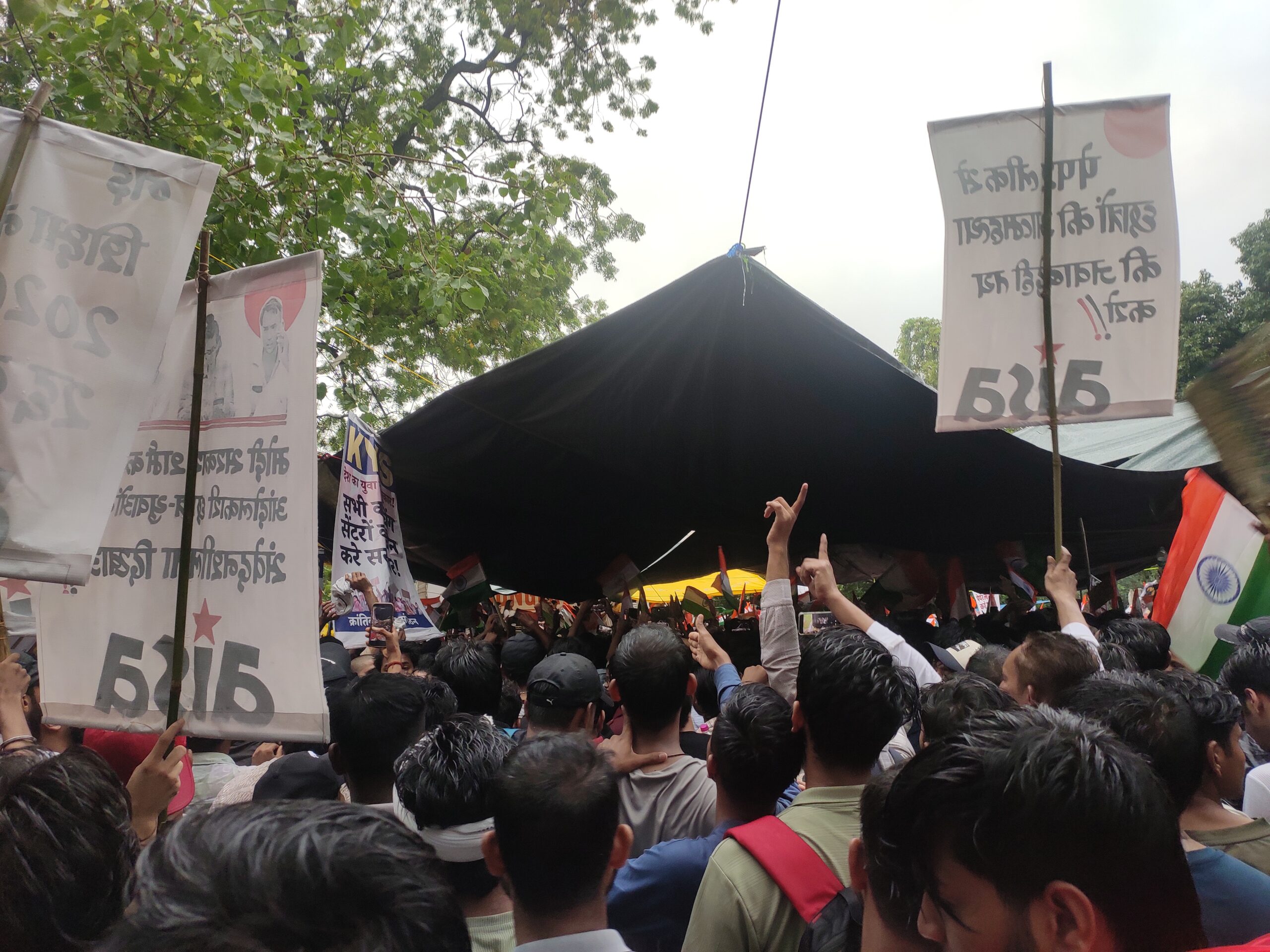
According to Al Jazeera, Schoolchildren across India are increasingly taking to the streets to demand better teachers, safer buildings and basic facilities, in a protest wave being described as the rise of the country’s “Gen Alpha”.
Students in several states have staged demonstrations in recent weeks over problems ranging from teacher shortages and unsafe classrooms to inadequate drinking water, toilets, electricity and roads leading to schools.
The demonstrations have emerged shortly after a broader youth protest movement put pressure on Prime Minister Narendra Modi’s government over education and employment.
India Gen Alpha protests spread across states
One recent protest took place at a government primary school in Samuhi Bhatpurwa village in Uttar Pradesh.
Its 122 students refused to attend classes on August 22 and demanded that authorities replace their deteriorating school building.
Part of the structure had previously collapsed and seriously injured a student, according to the report. After the protest, an education official visited and assured pupils that authorities would construct a new building.
Similar demonstrations have emerged in states including Bihar, Rajasthan, Maharashtra, Jharkhand and Madhya Pradesh.
Separate reporting has documented students protesting teacher shortages in Lucknow, while children in other parts of Uttar Pradesh have demonstrated over poor roads leading to their schools.
Students demand basic school facilities
Many of the demonstrations focus on basic conditions rather than wider political demands.
Students have called for more teachers, safe classrooms, benches, electricity, clean drinking water and functioning toilets.
In one Uttar Pradesh school, students protested in July because they said their school lacked drinking water, electricity and enough benches.
India’s official education statistics also point to continuing challenges despite improvements in the school system.
Government data for 2025-26 shows that 100,843 schools operate with only one teacher. That figure fell by about 3 percent from the previous academic year.
A new generation finds its voice
The demonstrations have increasingly been labelled “Gen Alpha protests”, referring broadly to the generation following Gen Z.
Some students appear to have drawn inspiration from older youth activists who have campaigned over India’s education system.
The protests have also attracted growing political attention as schoolchildren publicly challenge authorities over conditions in government-run schools.
India’s Right to Education Act guarantees education as a fundamental right for children aged six to 14 and establishes standards covering school infrastructure, sanitation, water, safety and teacher availability.
For the young protesters, however, the immediate demands remain straightforward: functioning schools, enough teachers and safer places to learn.