
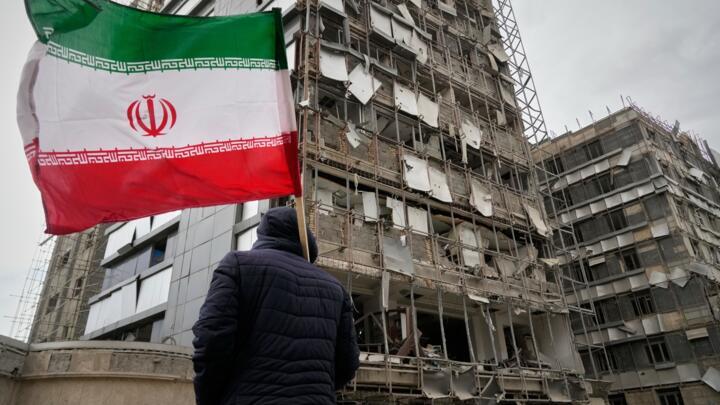
Israeli forces intensified their assault on Iran overnight, striking major fuel storage facilities near Tehran as the conflict entered its ninth day and Tehran moved closer to selecting a new supreme leader following the reported killing of Ayatollah Ali Khamenei.
Video from the Iranian capital showed thick black smoke rising over the city early Sunday after Israeli strikes hit oil storage depots, sending flames and plumes of smoke into the sky. Iranian authorities said four employees of the national oil distribution company were killed in the attacks and warned that temporary fuel rationing could be introduced to ensure supplies.
Israeli Prime Minister Benjamin Netanyahu vowed the campaign would continue, saying Israel had an organised plan to destabilise Iran’s leadership and bring about political change.
“We have many more targets,” Netanyahu said in a video statement, adding that Israel would strike Iran’s rulers “without mercy.”
U.S. President Donald Trump echoed the hardline stance, suggesting the war might only end once Iran’s military and ruling leadership had been eliminated.
“At some point, I don’t think there will be anybody left maybe to say, ‘We surrender,’” Trump told reporters aboard Air Force One.
Regional tensions escalated further after several Gulf states reported Iranian drone attacks targeting infrastructure. Bahrain said one of its desalination plants sustained material damage, though authorities said water supplies were not disrupted. Kuwait reported a large fire engulfing a government building following a drone strike, with the interior ministry confirming that two officers were killed while performing their duties.
Saudi Arabia, Kuwait, the United Arab Emirates and Bahrain all reported Iranian drone activity across their territories over the weekend, underscoring the widening scope of the conflict.
In an apparent attempt to ease tensions with Gulf neighbours, Iranian President Masoud Pezeshkian apologised to regional states for attacks targeting U.S. bases located in their countries. However, his remarks drew criticism from hardliners in Iran, prompting officials to reiterate that Tehran would continue to respond to attacks launched from foreign military facilities.
Meanwhile, Iran’s clerical establishment is moving closer to appointing a successor to Khamenei. Iranian media reported that the Assembly of Experts — the body responsible for selecting the country’s supreme leader — could convene as soon as Sunday to formally choose a replacement.
Members of the assembly said a consensus candidate had largely been agreed upon. Two Iranian sources previously told Reuters that Mojtaba Khamenei, the late leader’s son and a powerful figure within Iran’s security establishment, was the leading contender.
Israeli officials have warned that any new Iranian leader could also become a target as the campaign against Tehran’s leadership intensifies.
The war began with a large-scale U.S. and Israeli military operation against Iranian targets, which Washington says was aimed at neutralising what it described as an imminent nuclear threat from Tehran.
According to Iran’s ambassador to the United Nations, Amir Saeid Iravani, the strikes have killed at least 1,332 Iranian civilians and wounded thousands more.
Iranian attacks have killed 10 people in Israel, while at least six U.S. service members have died during the conflict.
The confrontation has also spread to Lebanon, where the Iran-backed Hezbollah group launched rockets and drones into Israel last week. Israeli forces struck a hotel building in central Beirut early Sunday, killing at least four people in what Israel said was an attack on Iranian commanders operating in the Lebanese capital.
The strike marked the first Israeli attack in the heart of Beirut during the current conflict, raising fears that the war could expand further across the region.