
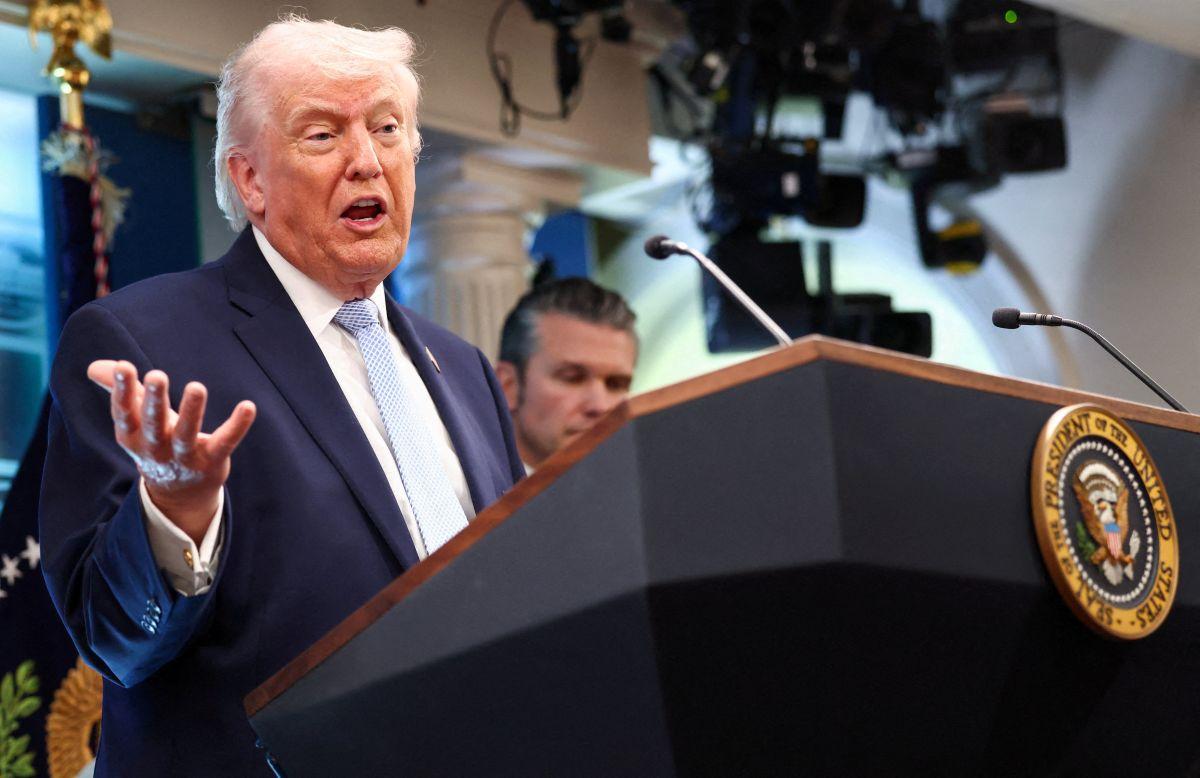
Donald Trump went to war promising surrender from Tehran. He came out offering negotiations, sanctions relief, reconstruction money, and a regional reset that handed Iran the one thing it had failed to win on the battlefield: recognition as the power that survived America’s war and dictated the next conversation.
Trump’s war conditions were clear enough. Iran’s nuclear programme was supposed to be broken. Its missile programme was supposed to be contained. Its regional power was supposed to be rolled back. The Strait of Hormuz was supposed to be secured. Tehran was supposed to come out weaker, isolated, and forced to accept terms.
Instead, Iran came out talking.
And not just talking. Talking with leverage.
Trump is now pointing to nuclear inspections as proof of victory. But inspections are not surrender. They are what powers negotiate when they cannot impose surrender. If the war was meant to end Iran’s nuclear threat, dismantle its programme and force Tehran to accept American terms, then a promise of inspectors and further talks is not a triumph. It is the receipt for failure.
Washington is now trying to sell Gulf allies on a deal many of them see as a strategic gift to Tehran. The agreement leaves major questions over Iran’s missile capabilities, opens the door to sanctions waivers and reconstruction funding, and pushes the region toward accepting Iran as a permanent power rather than defeating it.
That is why Gulf capitals are nervous. They were told America was going to contain Iran. They are now watching Washington explain why Iran must be accommodated.
Trump, meanwhile, is reduced to claiming that more talks will fix what the war failed to achieve. This is the same man who promised overwhelming strength and ended up giving Tehran a post-war package bigger than anything it could have demanded before the shooting started.
The comedy is historical.
The last time Iran, then Persia, had a clean, world-shaking military victory was Nader Shah’s triumph at Karnal in 1739, when Persian forces crushed the Mughal Empire and marched into Delhi. Since then, Persian and Iranian history has been filled with defeats, retreats, occupations, lost territories, and stalemates.
Then came Trump.
Nearly three centuries after Karnal, Iran finally got another great-power victory — not because it conquered Washington, but because Washington launched a war, failed to achieve its stated goals, and then rewarded Tehran for surviving it.
Trump did not defeat Iran. He rescued the Ayatollahs.
For Tehran, survival was victory. For Trump, anything short of surrender was defeat. By his own standard, he lost.